Beyond the LLC: Understanding the True Tax Impact of Your Business Entity
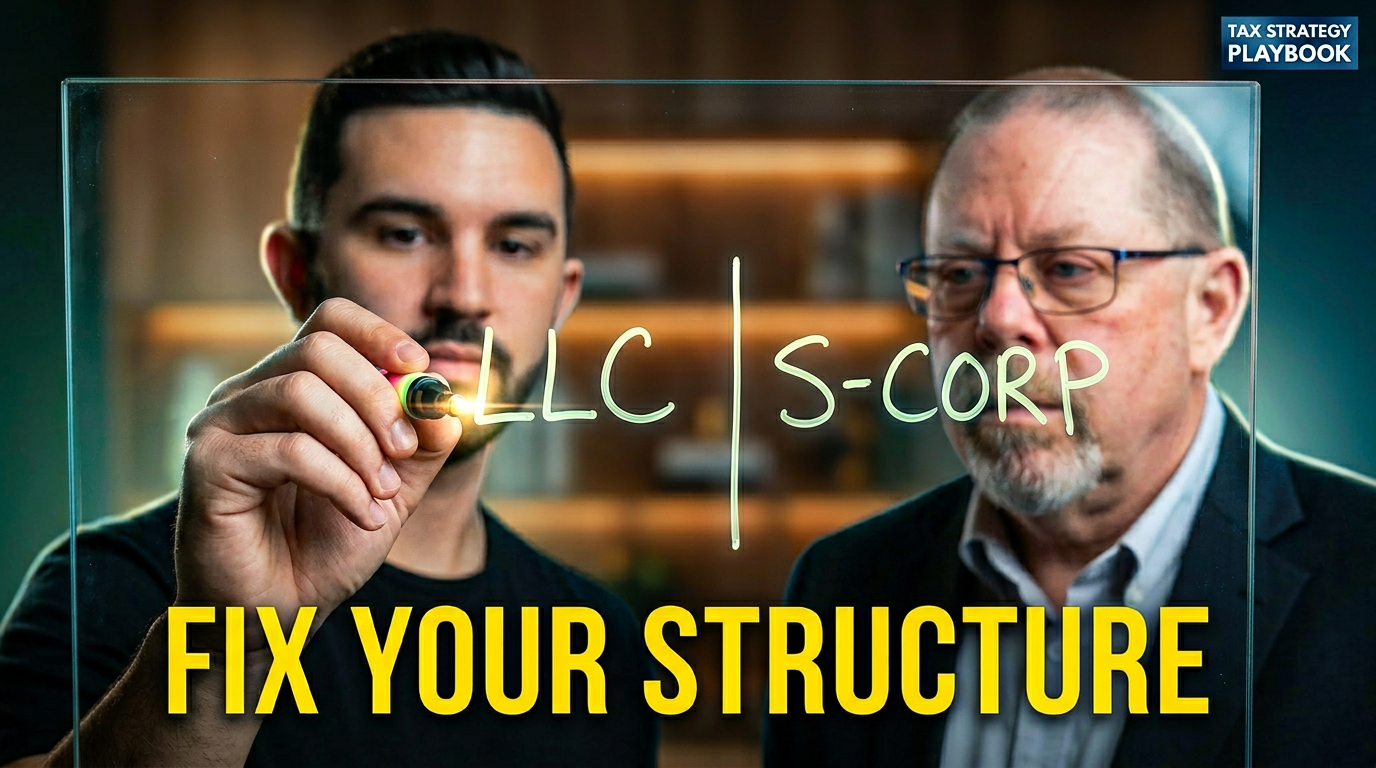
Welcome back to the blog, fellow investors and business builders! In our latest podcast episode, we dove deep into a topic that many business owners, especially those in real estate, grapple with: the choice of business entity, LLC vs S Corp, and its profound impact on their tax liability. We sat down with Matt Bontrager, CPA, who shared invaluable insights gleaned from years of working with investors and entrepreneurs. This blog post is designed to expand on those core messages, offering a more detailed exploration of how your entity decision is not just a legal formality, but a crucial strategic move that can significantly affect your taxes, your liability protection, and your future business flexibility. If you haven't had a chance to listen to the episode yet, I highly recommend it – you can find it here. It's packed with real-world examples and actionable advice that could save you thousands.
The Hidden Tax Costs of Your Business Entity
It's a common misconception that simply forming an LLC automatically shields you from excessive taxes or offers the ultimate protection. While an LLC is a fantastic tool for separating your personal assets from your business liabilities, its tax treatment is often misunderstood. In many cases, a default LLC is treated as a "disregarded entity" for tax purposes. For a single-member LLC, this means the business's income and expenses are reported directly on the owner's personal tax return (Schedule C for sole proprietors, or Schedule E for rental income). This "pass-through" taxation can be advantageous, avoiding the "double taxation" often associated with C-corporations. However, this pass-through also means that all business profits are subject to your individual income tax rates, which can be significantly higher than corporate rates, and importantly, subject to self-employment taxes (Social Security and Medicare). This is where the "hidden tax cost" comes into play. If your business is profitable, a substantial portion of that profit could be eaten up by self-employment taxes, which typically aren't a concern for owners of properly structured S-corporations or C-corporations.
Matt Bontrager emphasizes that for many real estate investors, especially those with significant rental income, the default LLC structure is far from optimal. The goal isn't just to have an entity, but to have an entity structure that is tax-efficient and provides the right level of protection. When business owners treat their LLC as just a legal shield without considering the tax implications, they are effectively leaving money on the table. The simplicity of a disregarded entity LLC is appealing, but as businesses grow and become more profitable, the tax inefficiencies become more pronounced. Understanding this fundamental difference between legal protection and tax strategy is the first crucial step in making informed entity decisions.
Why Your LLC Might Be Costing You More Than You Think
Let's delve deeper into the self-employment tax issue. For active business owners, the net earnings from self-employment are generally subject to Social Security and Medicare taxes. This can add up to a significant percentage of your business profits, impacting your bottom line. While an LLC provides liability protection, it doesn't inherently alter the tax classification of the business unless you elect for it to be taxed differently. Many entrepreneurs opt for an LLC because it's a familiar term and seemingly straightforward. They might have heard "everyone does it" or seen it recommended without a full understanding of its tax implications. This can lead to a situation where they're paying higher taxes than necessary, year after year.
Consider a scenario where a real estate investor has a single-member LLC holding several rental properties. All the net rental income flows through to their personal tax return and is subject to both income tax and self-employment tax. If this investor also has a substantial income from other sources, this additional tax burden can push them into higher tax brackets. Furthermore, the Social Security portion of self-employment tax has an annual earnings limit. Once you've earned above a certain threshold, you no longer pay Social Security tax on additional earnings for that year. However, the Medicare tax has no such limit. This means that as your income grows, the Medicare tax component becomes an increasingly larger percentage of your earnings.
The key takeaway here is that while an LLC offers essential liability protection, it's not a tax-saving strategy in and of itself. It's merely a legal structure. The tax outcome is determined by how the IRS classifies the entity for tax purposes. Without a conscious election to be taxed as an S-corp or C-corp, a single-member LLC is typically treated as a disregarded entity, and a multi-member LLC is treated as a partnership, both leading to pass-through taxation with the aforementioned self-employment tax implications.
When Does an S Corp Make Sense? Avoiding the 'Expensive Headache'
This is where the S-corporation comes into play, and it's a crucial distinction that Matt highlights in the episode. An S-corporation election allows a business owner to be treated as an employee of their own company. This means they can pay themselves a "reasonable salary" which is subject to payroll taxes (Social Security and Medicare, similar to self-employment taxes but typically split between employer and employee). Crucially, any remaining profits can be distributed as "owner draws" or dividends, which are generally not subject to self-employment taxes. This can lead to significant tax savings, especially for businesses with substantial profits beyond what would be considered a reasonable salary.
However, the S-corp structure is not without its complexities. It requires more administrative overhead. You need to run payroll, file separate S-corp tax returns (Form 1120-S), and adhere to stricter operational requirements. The "reasonable salary" is a critical component. The IRS scrutinizes this to ensure owners aren't artificially lowering their salaries to avoid taxes. If the salary is deemed unreasonable, the IRS can reclassify distributions as wages, negating the tax benefits and potentially leading to penalties. This is why Matt cautions against viewing an S-corp as a universal solution. It's an "expensive headache" if not implemented and managed correctly.
An S-corp typically makes sense when the business profits are high enough to justify the administrative costs and the tax savings from avoiding self-employment taxes on distributions outweigh those costs. For many active entrepreneurs and service providers who generate significant income, an S-corp can be a powerful tool for tax optimization. The decision to elect S-corp status requires careful calculation and consideration of your specific business income and expenses. It's not a decision to be made lightly, and professional guidance is highly recommended.
The Pitfalls of Putting Rentals in an S Corp
This is a common trap that many real estate investors fall into, and Matt dedicates a significant portion of the episode to this. The general rule is that income from passive activities, such as rental real estate, cannot be distributed tax-free from an S-corp. If you put your rental properties inside an S-corp and try to take distributions, that income is generally treated as ordinary income subject to both income tax and payroll taxes. This effectively defeats the primary tax advantage of an S-corp for passive income.
There are some nuances and potential exceptions, but the straightforward answer is that S-corps are generally not designed for holding passive rental income. This is because the IRS views rental income as passive, and S-corp owners are expected to be actively involved in the business. If you're primarily receiving rental income without significant active services provided to the tenants (beyond routine maintenance), the IRS may deem the income as passive and thus not eligible for the S-corp tax-free distribution benefit. This can lead to an unexpected tax liability, as the income that was assumed to be tax-advantaged is instead subject to higher taxes.
Many investors mistakenly believe that by putting rentals into an S-corp, they are somehow gaining additional tax benefits or liability protection. While the liability protection aspect might hold true to some extent, the tax benefits are often illusory or even detrimental. It's crucial to understand the distinction between active business income and passive income when considering S-corp status. For rental properties, a different strategy is often more effective, which we'll touch upon later.
LLC Strategy: One or Many? Balancing Risk and Administration
The question of whether to use a single LLC or multiple LLCs for different assets or business ventures is another critical decision point. This is particularly relevant for real estate investors who may own multiple properties. The primary driver behind using multiple LLCs is to "ring-fence" or isolate the liability associated with each asset. If a lawsuit arises from one property, the assets in other LLCs should, in theory, be protected.
However, each LLC comes with its own administrative costs and compliance requirements. Forming and maintaining multiple LLCs can become cumbersome and expensive. The decision, therefore, becomes a balancing act between the level of liability protection desired and the administrative burden. Matt suggests a pragmatic approach: assess the risk associated with each asset. High-value or higher-risk properties might warrant their own dedicated LLC. Lower-risk, lower-value assets might be grouped together within a single LLC.
Another consideration is how these LLCs are taxed. If each LLC is a disregarded entity (single-member LLC), all income and expenses still pass through to the owner's personal return, potentially subject to self-employment tax. The benefit here is primarily liability protection between the assets. If an LLC is electing S-corp status (which, as discussed, is generally not ideal for passive rental income), then each S-corp would have its own payroll and tax filing requirements, adding further complexity.
The key is to have a well-thought-out strategy, not just to create an LLC for the sake of it. This often involves considering how your entities interact and how the income and expenses flow. For example, you might have an operating LLC for an active business and separate LLCs for passive rental properties. The choice between one or many entities depends heavily on your specific business model, risk tolerance, and desired level of administrative involvement.
Tailoring Your Entity: Approaches for Different Investor Types (Couples, Flippers, Wholesalers, Small Businesses)
The optimal entity structure is not a one-size-fits-all solution. It needs to be tailored to the specific circumstances of the business owner and their activities. Let's break down some common scenarios:
Married Couples:
Married couples often have unique opportunities for tax planning. Depending on their filing status and the nature of their business, they might be able to operate as a husband-and-wife partnership for tax purposes, even if they have a single-member LLC. This can offer some flexibility in allocating income and deductions. Furthermore, if they are both actively involved in the business, they can potentially split a reasonable salary from an S-corp, optimizing tax savings. The key is to understand community property laws and how they interact with business ownership and taxation.
Flippers:
Real estate flippers are generally considered to be engaged in an active trade or business. Their income from flipping properties is typically considered active income, not passive. This makes them prime candidates for S-corp elections. By paying themselves a reasonable salary and taking the remaining profits as distributions, they can significantly reduce their self-employment tax liability. However, they still need to be mindful of the "reasonable salary" requirement and the administrative complexities of an S-corp. For liability protection, it's often advisable to hold each flipping project in a separate LLC, with the active flipping business operating through an S-corp that manages these projects.
Wholesalers:
Similar to flippers, real estate wholesalers are engaged in an active business. Their income is derived from finding deals and assigning contracts, which is considered active. Therefore, an S-corp election can be highly beneficial for wholesalers. They can pay themselves a reasonable salary and take the rest as distributions, minimizing self-employment taxes. Again, liability protection is crucial, so individual LLCs for each transaction or a well-structured operating agreement for an LLC holding these contracts is advisable.
Small Businesses (Service-Based):
Many small businesses, particularly service-based ones where owners are actively involved in delivering services, are excellent candidates for S-corp elections. If the business generates sufficient profit beyond a reasonable salary, the tax savings can be substantial. For example, a consultant, designer, or software developer who bills out at a high rate can benefit greatly from this structure. The key is that the owner is actively working in the business, providing services that generate the income. The administrative overhead of an S-corp is generally manageable for these types of businesses when the tax savings are significant.
The 'Two-Entity' Starting Point: Simplifying Entity Selection
For those who feel overwhelmed by the complexity of entity selection, Matt offers a brilliant and simplified starting point: the "two-entity" approach. This strategy is designed to address the core needs of most entrepreneurs and investors without requiring an immediate deep dive into every possible nuance.
The two-entity strategy typically involves:
- An LLC for Liability Protection: This entity serves as the primary shield for your assets. For real estate investors, this would be an LLC that holds the rental properties. For active businesses, it might be an LLC that owns the business operations. This LLC's primary function is to separate your personal assets from business liabilities.
- An S-Corporation for Tax Optimization (if applicable): If your business generates active income and the profit margins are sufficient to make an S-corp election tax-efficient, you can set up an S-corporation that either owns the operating assets (for active businesses) or acts as a management company that provides services to the liability-protecting LLC. The S-corp allows you to pay yourself a reasonable salary and take tax-advantaged distributions.
For real estate investors, this might look like:
- LLC 1 (e.g., "My Rental Properties LLC"): This LLC owns the actual rental properties. All rental income and expenses are reported here.
- LLC 2 (e.g., "My Property Management S-Corp"): This S-corp acts as a management company for LLC 1. It charges LLC 1 a management fee (which is an expense for LLC 1 and income for the S-corp). The S-corp then pays the owner a reasonable salary and any remaining profit can be distributed tax-efficiently. This structure helps separate passive rental income from active business income for tax purposes, while still providing liability protection for the properties.
This two-entity approach provides a solid foundation. It ensures you have liability protection while also setting you up for tax efficiency if your business qualifies. It's a practical starting point that can be adapted and expanded upon as your business grows and its needs evolve. The key is to start with a clear understanding of the purpose of each entity and how they work together.
Conclusion: Making Informed Entity Decisions for Tax Savings and Flexibility
The entity you choose for your business is far more than just a legal formality; it's a cornerstone of your financial strategy. As we've explored in this post, and as so powerfully illustrated in our latest podcast episode with Matt Bontrager (LLC vs S Corp: The Entity Mistakes Costing Real Estate Investors Thousands), overlooking the tax implications of your entity can lead to significant, avoidable costs. From the hidden self-employment taxes that can eat away at profits in a default LLC, to the common pitfalls of misusing S-corps for passive rental income, the consequences of an ill-fitting entity structure can be substantial.
The goal isn't just to protect your personal assets, which is crucial, but to optimize your tax liability and maintain flexibility for future growth. Whether you're a real estate investor, a flipper, a wholesaler, or a small business owner, understanding the specific tax treatments and administrative requirements of different entities is paramount. The "two-entity" starting point offers a clear path for those feeling overwhelmed, providing a foundational structure that balances liability protection and tax efficiency. Remember, the best entity for your business is one that aligns with your specific goals, income streams, and risk tolerance. Don't be afraid to seek professional advice from a qualified CPA or tax advisor who specializes in your industry. Making informed entity decisions today can lead to significant tax savings and greater business flexibility tomorrow. Thanks for tuning in to the blog and the podcast – until next time, happy building!

CEO, Tax Strategist, Speaker, Educator
David “Mr. Cash Flow” Wiener is a nationally recognized authority on real estate tax strategy and cash flow optimization, and the host of The Tax Strategy Playbook podcast. As Founder and CEO of Cash Flow Strategies, Inc., David has spent decades helping real estate investors, business owners, and their advisory teams legally reduce taxes, unlock hidden cash flow, and put more money back into productive assets instead of into the IRS.
Over the course of his career, David has become especially known for his work with cost segregation, 179D energy-efficient commercial building deductions, and other engineering-based tax incentives that accelerate depreciation and free up capital. He has also built a long track record in cash flow and accounts receivable optimization, helping clients improve profitability and financial stability without simply “working harder” or taking on more risk.
David is a sought‑after speaker, trainer, and educator, with audiences ranging from national industry conferences to small mastermind groups and professional associations. He is known for his clear, practical teaching style and his ability to translate complex tax concepts into simple, actionable plays that investors and advisors can use right away. Whether he is speaking to CPAs, medical and dental practice owners, or real estate investors, David’s message is consistent: tax strategy is one of the most powerful—and most overlooked—wealth multipliers available.
On The Tax Strategy Playbook, David brings that same real‑world experience and teaching approach to the microphone. Each epis…Read More

Beyond the 27.5-Year Rule: Unlocking Real Estate Tax Savings with Cost Segregation