
 YouTube
 Apple Podcasts
 Spotify
 iHeartRadio
 Pandora
 Deezer
 Amazon Music
 Podchaser
 PocketCasts
 Cost Segregation + Opportunity Zones 2.0: The Tax Strategy Nobody's Talking About
Key Takeaways
- Opportunity Zones are now permanent, offering long-term investment potential under the One Big Beautiful Bill Act.
- Opportunity Zones 2.0 introduces new basis step-up benefits, with a 10% tax-free benefit for urban and 30% for rural investments after a 5-year hold.
- The 10-year exit from an Opportunity Zone investment is tax-free, crucially avoiding bonus depreciation recapture.
- The 180-day investment window for capital gains has specific rules, but can be extended to nearly 21 months for pass-through entity gains.
- IRS Notice 2026-40 provides critical guidance on the transition, including working capital safe harbors and deadlines for existing census tracts.
- Combining cost segregation studies with Opportunity Zone investments can significantly accelerate depreciation deductions, stacking with OZ deferral benefits.
- Be aware of red flags and deadlines to avoid penalties and maximize the benefits of this Opportunity Zones 2.0 tax strategy.
Unlock the Power of Opportunity Zones 2.0: A Tax Strategy Nobody's Talking About
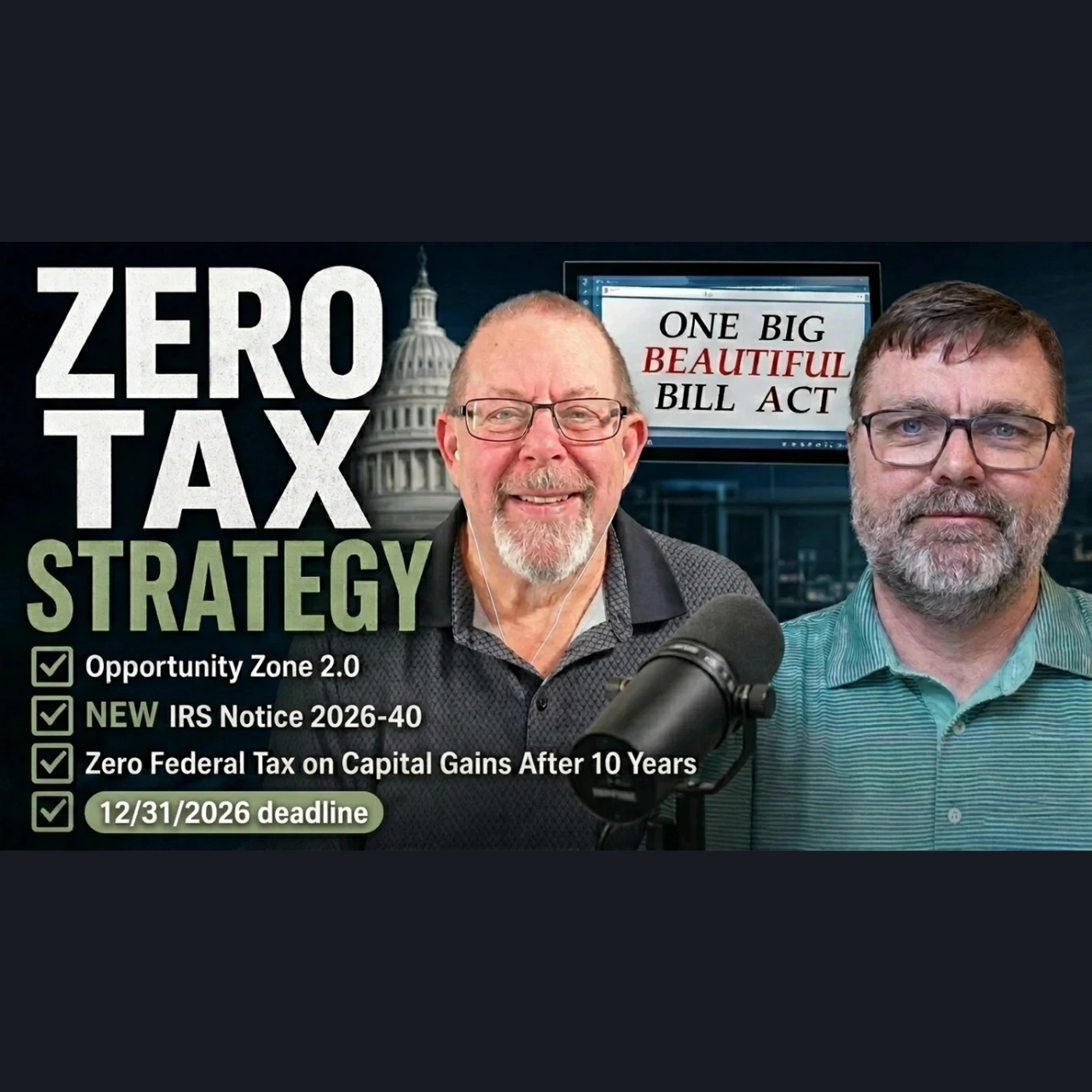
On July 4, 2025, the landscape of tax incentives for investors and business owners shifted dramatically with the passage of the One Big Beautiful Bill Act, which made Opportunity Zones a permanent fixture in the U.S. tax code. Just over a year later, on June 18, 2026, the IRS released Notice 2026-40, offering crucial transitional guidance for the evolution from Opportunity Zone 1.0 to the newly established Opportunity Zone 2.0. In this episode of The Tax Strategy Playbook, host David Wiener sits down with Jason Watkins, CPA and Chair of the Novogradac Opportunity Zones Working Group, who, with less than 24 hours to review the notice, provides an in-depth breakdown of these significant changes and their implications for anyone with a capital gain in 2026.
Understanding the Opportunity Zones 2.0 Framework
Opportunity Zones, a powerful tool for economic development and tax savings, have undergone a significant transformation. The permanency established by the One Big Beautiful Bill Act removes the previous sunsetting provision, signaling a long-term commitment to incentivizing investment in designated low-income communities. This episode delves into the nuances of this new era, exploring how investors can leverage the updated benefits and navigate the evolving regulatory environment.
Key Benefits and Changes in Opportunity Zones 2.0
The transition to Opportunity Zones 2.0 brings several compelling advantages and strategic considerations for investors:
- Qualified Opportunity Funds (QOFs): Understand the fundamental structure of a QOF and the mechanics of capital gains deferral. Learn how reinvesting capital gains into these funds can postpone your tax liability.
- Enhanced Basis Step-Up Benefits: Opportunity Zones 2.0 introduces a new rolling 5-year deferral and basis step-up. Investments in urban Qualified Opportunity Zones now offer a 10% tax-free benefit, while investments in rural zones provide a more substantial 30% tax-free benefit after the required holding period.
- The 10-Year Tax-Free Exit: One of the most significant attractions of the Opportunity Zone program is the ability to achieve a completely tax-free exit on appreciation after holding an investment for 10 years. Notably, this benefit now includes freedom from bonus depreciation recapture when selling properties acquired within a QOF, a critical advantage for real estate investors.
- Navigating the 180-Day Investment Window: The critical 180-day window to reinvest capital gains into a QOF is a focal point. Discover how this deadline works for direct capital gains and, more importantly, how it can be strategically extended to nearly 21 months for gains realized through pass-through entities, potentially allowing for investment under the more favorable Opportunity Zone 2.0 rules.
- IRS Notice 2026-40 Explained: This pivotal IRS notice provides essential transitional guidance. Key aspects covered include the working capital safe harbor requirements, the '10% raised / 5% spent' test for ongoing projects, and the critical December 31, 2026 deadline for investing in existing Opportunity Zone 1.0 census tracts.
- Understanding Inclusion Events: Differentiate between an actual inclusion event and a deemed inclusion event. This distinction is vital for understanding how and when your gains are recognized and for strategically planning to redefer gains into future tax years, such as 2027.
Synergies Between Cost Segregation and Opportunity Zones
A powerful, yet often overlooked, strategy involves combining engineering-based cost segregation studies with Opportunity Zone investments. When a property is acquired within a Qualified Opportunity Fund, a cost segregation study can accelerate depreciation deductions. These significant deductions generated in the current year can then be strategically stacked with the capital gains deferral benefits offered by the Opportunity Zone program, creating a potent tax-saving combination.
Opportunity Zones 2.0 Designations and Deadlines
With states actively nominating new census tracts, the Opportunity Zone 2.0 designations are set to be finalized by September 28th, becoming effective January 1, 2027. This creates a unique two-year overlap with existing 1.0 zones. Understanding the requirements for investing in existing 1.0 census tracts after 2026, as clarified by IRS Notice 2026-40, is paramount to avoid missing out on these opportunities.
Potential Pitfalls and Due Diligence
While the benefits of Opportunity Zones are substantial, it's crucial to be aware of potential red flags. Jason Watkins discusses common pitfalls to watch for before investing in a QOF, including understanding the implications of non-compliant funds and the potential for penalties, such as the 7% IRS underpayment penalty.
Real-World Impact and Data
Jason also shares insights into the real-world impact of the Opportunity Zone program, referencing research by the EIG on the creation of new housing units since 2018. (Note: Verify these figures directly with EIG for accuracy in your own reporting).
Actionable Advice for Your 2026 Capital Gains
If you're facing a capital gain in 2026, whether from selling a property, a business, or stocks, this episode equips you with the essential 180-day math, key deadlines, and strategic insights. Armed with this knowledge, you can have more informed conversations with your tax professional and make strategic decisions to minimize your tax liability and maximize your investment returns.
Subscribe to The Tax Strategy Playbook for a new episode every Tuesday, delivering expert insights directly to you.
Get the free newsletter at taxstrategyplaybook.com/newsletter for planning guides and cost segregation strategies delivered straight to your inbox.
Topics covered: Opportunity Zones 2.0, qualified opportunity fund, One Big Beautiful Bill Act, capital gains tax deferral, IRS Notice 2026-40, working capital safe harbor, 180-day rule, basis step-up, rural opportunity zones, cost segregation, bonus depreciation, tax-free exit, real estate investing.
Disclaimer: This content is for general educational purposes and is not personalized tax, legal, or financial advice. Consult a qualified tax strategist and CPA about your specific situation before making an investment or filing decision.
#OpportunityZones #TaxStrategy #CapitalGainsTax #QualifiedOpportunityFund #RealEstateInvesting #CostSegregation #TaxPlanning #OneBigBeautifulBill #WealthBuilding #IRS
Frequently Asked Questions
What are the main changes in Opportunity Zones 2.0?
Opportunity Zones 2.0 makes the program permanent and introduces new basis step-up benefits, including a 10% tax-free benefit for urban and 30% for rural investments after a 5-year hold.
How does the 180-day investment window for Opportunity Zones work?
The 180-day window to invest capital gains into a Qualified Opportunity Fund is strict for direct gains, but can be extended to nearly 21 months for gains realized through pass-through entities, offering more flexibility for Opportunity Zone 2.0 benefits.
Can cost segregation studies be used with Opportunity Zones?
Yes, engineering-based cost segregation studies on properties acquired within a Qualified Opportunity Fund can accelerate depreciation deductions, which stack with the Opportunity Zone tax deferral benefits for enhanced savings.
What is IRS Notice 2026-40 regarding Opportunity Zones?
This notice provides transitional guidance for Opportunity Zones 2.0, detailing requirements like working capital safe harbors and deadlines for investing in existing Opportunity Zone 1.0 census tracts after 2026.
What is the 10-year exit benefit for Opportunity Zones 2.0?
After a 10-year hold within a Qualified Opportunity Fund, your investment gains are tax-free, and importantly, this includes avoiding bonus depreciation recapture upon sale.
David Wiener: Let me ask you something. How many people in this country are sitting on a capital gain right now? They've sold a property, they've cashed out of a business, they liquidated a stock position, and they have no idea there's a strategy sitting right there in the federal tax code that lets them defer the tax, shrink what they eventually owe, and walk away from a ten year hold paying zero federal tax on every dollar that investment grew? The honest answer to that is most of them. Here's what just changed. On July fourth, 2025 the one big beautiful bill act that we were all waiting for got signed into law, and opportunity zones became a permanent part of the tax code. That's good news, and it is big. â But the part that almost nobody's talking about. There are hard deadlines built into the handoff from Opportunity Zone 1.0 to Opportunity Zone 2.0 and if you don't understand the rules right now, they can cost you real money. And I mean right now. We're talking December thirty-first of this year. And it gets better. Just this past week, the IRS dropped brand new transitional guidance, notice 2026-40. Hot off the presses. My guest today has less than had less than 24 hours with it â to to understand it before he went on on â of the podcast to talk about it. He runs the Novagradac Opportunity Zones Working Group. He wrote the Novagradac Opportunity Zones Handbook. He's been on the Novogradic Tax Credit Tuesday podcast nine times. If there is somebody more plugged in on this topic in the country right now, I haven't met him. This is the conversation you want to hear before the clock runs out. So let's get into it. Welcome to the Tax Strategy Playbook, where we cut through the noise and get straight to the strategies that real estate investors, business owners, and high-income earners actually use to stop overpaying the IRS and keep more of what they build. I'm your host, David Wiener, Mr. Cashflow, founder and CEO of Cashflow Strategies. I provide engineering-based cost segregation, 179D energy efficiency, and RD tax credit studies. Through my partnership with CSSI, Cost Segregation Services Inc. Every week I bring the best practitioners in the country and we go deep. No fluff, real numbers, real deal structures, real results. If you're watching on YouTube, do me a favor and hit the subscribe and notification bell right now. This one has time-sensitive information in it that I don't want you to miss. So let's go. My guest today is Jason Watkins, CPA partner at Novogradic and Company LLP, based right here in the Atlanta metro area. Jason leads Novogradic's Opportunity Zones practice, and he chairs the Novogradic Opportunity Zones Working Group, a group of top-tier practitioners, fund managers, attorneys, and consultants who've been at the table advocating for Opportunity Zone policy and the best practices since the program launched in 2017. Jason and his partner Michael Novogradic recorded an episode this past week, Breaking Down IRS 202640, the Transitional Guidance Treasury just released on June 18th. We're going to bring that same depth right here to the tax strategy playbook audience. Jason, I've been looking forward to this one. Welcome to the show.
Jason Watkins: Hey, great to be here, David, and â thank you for having me on.
David Wiener: Before we get into the new guidance, let's kind of lay the foundation a little bit. A lot of people listening have heard the term opportunity zones. They know it's a tax thing, but that's probably all they know. They've never actually pulled the trigger. Give us the plain English version. What is an opportunity zone? What is a qualified opportunity fund, and how does the tax deferral actually work?
Jason Watkins: Sure, happy to go through all this. So this the Opportunity Zones incentive â was originally enacted as part of the Tax Cuts and Jobs Act. As you mentioned back in 2017, â it really began to roll out in 2018. And what this incentive did is that it created â opportunity zones. What those are, those were low-income community census tracts that governors are allowed to nominate â to be able to receive investment from investors that have capital gains that they would like to defer through investment into a qualified opportunity fund. So I'll I'll sort of walk through the typical structure, but the the key here is that it's census tract level. Governors were presented with a list of eligible census tracts that meet the low-income community definition back in 2018. They were allowed to nominate 25% of those. So it's not every low-income community, it's a certain select few. And then those areas are allowed to receive investment that qualifies investors for the opportunity zone benefits. So the way it works is that an investor that has a capital gain, and it can really be from any source, they have a certain period of time, and we'll we'll talk about the some of the timelines in a bit, I think. But they have a certain period of time to invest the amount of the capital gain, not the amount of the proceeds from the sale. That generated the capital gain, just the capital gain itself, that amount into what's called a qualified opportunity fund. The fund then typically will further â invest into a qualified opportunity zone business. The business entity is the entity that owns and operates a trader business. That can be real estate, it can be operating businesses, it can really be almost anything other than a select few. what are termed "sin" businesses that are not allowed to be operated. â but almost anything works.
David Wiener: So does it work the same for an individual investor who has a capital gain who say wants to buy or build a property in an opportunity zone?
Jason Watkins: â it does. So a fund is a pretty easy entity to set up, really. there there's sort of minimal additional work that has to go into it beyond just normal entity formation, a little bit of extra language about the entity being a qualified opportunity fund. â it does have a separate tax form, but it has to file typically they're set up as L L Cs. They can be set up as corporations. But if an investor has a capital gain, they can form their own qualified opportunity fund. They don't have to locate a fund to invest into, but they certainly can.
David Wiener: So everything is done through a QOF or I I think I heard Michael call it a QOF
Jason Watkins: we we we tend to shorten things as much as possible 'cause qualified opportunity funds a bit of a a mouthful. So QOF is sort of the typical â acronym that we shorten it to.
David Wiener: Well, I wanna be one of the cool kids, so I'll use that terminology as well. â so i â a a QOF can be one investor, creates his own fund, right?
Jason Watkins: It has to be a regarded entity, so there does need to be a second partner if it is set up as a as an LLC filing as a partnership â would need to have a second partner, but it can be a one percent, a point one percent partner. It can be of a very minority interest. â we see that kind of â that kind of arrangement all the time.
David Wiener: So the program was created back in 2017 as you said, under the Tax Cuts and Jobs Act, and it was originally gonna sunset after twenty twenty six, just like one hundred percent bonus depreciation, right? Or which at the end of twenty twenty five. â changed under the one big beautiful bill that was signed back on July fourth of last year, and and why does it matter?
Jason Watkins: Yeah. Sure, it matters a lot. â as practitioners and advocates for the OZ incentive, we have been requesting a number of improvements or enhancements, I guess you could say, to the OZ incentive. And number one was permanency, because any type of temporary tax incentive like this tends to have less of a impact and less of a rollout throughout the in the entire potential investment community. I think by the time a lot of people even heard of the Opportunity Zone incentive, a lot of the benefits had already expired. And so there weren't nearly as much an investment as there could have been, we think. if it had been an a a â a permanent incentive all along. Not to say that there wasn't some investment that happened. â best estimates are over a hundred and twenty billion dollars invested in the qualified opportunity funds since twenty eighteen, since the the zones were first designated. So very significant amount of investment, but now that it's permanent, a permanent part of the tax code, everybody is taking a second look. I think that's a big reason why right that's â it's it's a
David Wiener: That's great. And it takes yeah, it takes a while for people to understand it.
Jason Watkins: Absolutely. And so now it's being incorporated into long term investment strategies. And so I'm I'm on the phone all day long, every day, talking about opportunity zones incentive with folks that have not participated in it previously. So there I I'm expecting, even though 120 million dollars is a lot of investment, I'm expecting it to be far eclipsed in the next ten years. So the I guess the question was what changed as as part of the one big beautiful bell act. That's the big one. That's the that's the headline. Is permanency. But there are some additional benefits as well. â some of the benefits, as I mentioned, in the Tax Cut Jobs Act era of the OZ incentive have already expired. And one of those is the basis step ups that are available to an investor, which sounds complicated, but really it's a percentage of the originally deferred gain that won't be taxable after a certain period of time. So with yeah, so with the 1.0 incentive.
David Wiener: â huh.
Jason Watkins: If an investor had held their investment for at least five years before the end of this year, then 10% of that originally deferred capital gain would not be taxed at the end of this year. No matter when an investor put their money in, from 2018 through now, the end of that deferral period was December 31st, 2026. So an investor that put their money in in 2018, got like an eight-year deferral, after which, in that case, because they held it for at least seven years. fifteen percent of their originally deferred gain would be tax free at the end of this year. But after we got past December thirty first, twenty twenty one, that basis step up was no longer available because an investor would not be able to have held their investment for long enough to qualify. That also changed with One Big Beautiful Bill Act. So now after that five year deferral period that investors will be entitled to, everybody gets a five year. There's not there's no longer an end date. â a a sp specific end date for all investors for the end of their deferral period. Now you get five years. Everyone gets five years. At the end of that, very much so, because there was less interest over the last few years in the OZ incentive because some of the benefits have gone away. That won't be the case any longer. So after five years, â investors get 10%. â if they're investing in non rural areas. So if they're investing in urban areas.
David Wiener: That's significant.
Jason Watkins: However, if they're investing into rural qualified opportunity funds, that tax-free piece will be 30% after five-year deferral, 30% tax-free. So that's pretty significant. â the other
David Wiener: Now you've Go ahead. â you you've called the ten year exit the real prize here. Break that down for us. What does a tax free exit actually mean and what's one condition that has to be met to get it?
Jason Watkins: No, go ahead. Yeah. Sure. So the biggest value of the the various benefits that are available to investors under the OZ incentive is a tax-free exit after a 10-year hold. So let's we'll sort of skip forward and we'll say that an investor puts their money into a qualified opportunity fund in January of next year. That entitles them to the five-year hold. We'll say that they're going into a non-rural opportunity zone. So they would be after that five-year period. They would have to pay taxes on 90% of the originally deferred gain. After another five years, so a total of a 10-year hold, any gains that happen upon either the investor selling their interest in the fund or the fund or the opportunities of a business entity that owns the property or owns the business, if they sell that, any gain that gets passed through through to the investor is tax-free. So after a 10-year hold.
David Wiener: That sounds good.
Jason Watkins: it gets even better. So you're you're a cost seg guy. â so you know the the the issue with you know cost seg's great but you do have bonus depreciation recapture at at at the at the sale â if â if you know the sales price is being allocated to the property that was sold etc. â you don't have that with opportunity zones so not only are is there no gain there's no â bonus depreciation recapture so what a benefit to investors â you get the front-end losses associated with the cost-seg study and all the all the depreciation that comes from that. And at the end of that 10-year period, you step up to whatever you sell the property for. So you step up your basis in that property. Since there's no gain, there's no gain that can be character recharacterized as bonus depreciation recapture. Yeah. Yeah.
David Wiener: Well, that's all I need to hear. I'm sold. That's fantastic. Okay, so before we go any further, if you're just joining us and you've got a capital gain event this year, don't go anywhere. Stay with me through the next segment. What Jason's about to break down about the 180-day window could change your entire 2026 tax year. So stay right there. Okay, this is where it gets tactical. And it gets time sensitive for anybody with a gain event in 2026. If your recent tax credit Tuesday episode, you said the number that matters here is 180 days. And depending on where an investor's 180-day window lands, they're looking at a very different set of choices. So walk our audience through that.
Jason Watkins: Okay, so the first thing is that it matters how the investor realized the gain. So if an individual investor sells a stock and they directly realize a capital gain, they have 180 days from the date of the gain to invest that into a qualified opportunity fund. So right now, G well, we're recording this on June 26. If you sold something today, if you David sold a stock today and had a capital gain. Your 180-day window would expire with still within calendar year 2026. So you would be stuck essentially investing into a fund and not really achieving any deferral benefits or any step up in basis because you're investing under the Opportunity Zones 1.0 set of rules. â now, if you were able to wait a couple of weeks, get into mid-July to where your 180-day window which stretch out into early twenty twenty seven, you would want to wait to make your investment in early twenty twenty seven because then you would be falling under the One Big Beautiful Bill Act, OZ 2.0 â timing rules, which would then give you that five year deferral and it would give you the basis step up at the end of that five years. So that is â set for directly realized capital gains. â however the investor is realizing the gain â through a pass-through entity. So they're going to get a K1 next year that's going to report this capital gain. Different set of rules. A lot of flexibility was built into this because many investors do achieve capital gains through a pass-through entity. So if it's a pass-through entity, the investor has optionality as to when that 180 day period starts. And there's it can be one of three different dates. It can be the date that the partnership sold whatever it was that generated the gain. That's still there. It can also be the last day of the partnership's tax year, typically December 31st, which means the 180 days would start on December 31st, which would then of this year, which would then put you into 2027 to make your investment and then be eligible for those OZ 2.0 benefits. Or the third option is the investor can set the start date as the due date of the pass-through entity's tax return without extensions. So that's typically March 15th. So an investor â who realizes a capital gain through, say, a partnership in January of this year, six months ago, could wait until as late to start their 180-day period of March 15th, which would push them out into early September of next year to make the investment into the qualified opportunity fund and still achieve the deferral and still be all the benefits will be available to them. So It's it can actually be â as long as almost twenty-one months â before the money has to go in if it's being done through a a part a partnership or another pass-through entity.
David Wiener: Okay, now I understand why Novogradic isn't quite calling twenty twenty six a dead zone, but they are calling it a dead end zone and predicting a pickup in early twenty twenty seven as investors with twenty twenty six gains wait to come in. That makes a whole lot of sense now. Is that what you're seeing on the ground with clients right now?
Jason Watkins: That's what we're seeing. We saw actually saw â a bit surprisingly, we saw an uptick in investment so far this year. I think first quarter and second quarter. I think as we go through â the year, as we get closer and closer to year end, more and more investors are going to be able to delay their investment to 2027. So I think s direct fundraising actually bringing the capital into a qualified opportunity fund is going to decrease more and more and more as we get closer to the end of this year. And then boy, the first half of next year it's going to be just an avalanche of of investment happening.
David Wiener: â yeah, bad. Do you think that's happening as a result of people not knowing what their options are and now they're learning it and it's kind of
Jason Watkins: I I think a lot of people I think when one big beautiful bill act passed, â suddenly there were a lot of news stories, a lot of chatter talking about â the opportunity zones incentive. And I think a lot of people found out about it. They realized that they had a gain that they couldn't delay until next year to invest, so they're investing now. So I think that's why there's been an uptick â in investment, a pretty significant one. â but again, â next year twenty twenty seven's really going to be the the gold rush, if you will, of investment flowing into qualified opportunity funds. And then further on into these low-income communities that are allowed to receive the investment. And that's another ongoing process right now. So starting in five days, July first, states will be the state governor's offices, the chief executive officer of each state and territory â of the United States is going to be able to start making their nominations. For the next round of opportunity zones. They have 90 days in which to do that. So that runs through about September 28th. at which time the â the Treasury Department will start reviewing all of these nominated census tracts and then officially designating those census tracts as the opportunity zone's 2.0 census tracts. So remember back in 2018, all the 1.0 census tracts were designated, and those actually maintained their designation through the end of calendar year twenty twenty eight. So December thirty-first, twenty twenty eight. The new opportunity zones, the new tranche, goes into effect j â January first of twenty twenty seven. So there's actually a two year overlap of of opportunity zones from the one point â and the two point â era of designations. So that is a very, very busy process right now.
David Wiener: Fantastic. No kidding, I bet. Let's talk a little bit about the news that is literally just a week old or so. The IRS released the notice 2026 40 on June 18th, transitional guidance on the move from 1.0 to 2.0. And you and Michael did your breakdown with less than 24 hours to review it, right? So give us the headline. What is the notice? What does it address? And who really needs to be paying attention right now?
Jason Watkins: Well, this is very impactful. â I won't go through all the details of it and there's still much to be learned and Novagradac Opportunity Zones Working Group will be submitting some commentary to Treasury with some recommendations as well around additional clarification that practitioners would like to see to make this rollout as as successful as possible. But the big item here, and this has been a question that's been ongoing with investors for some time, is well, there's a two year overlap. with these opportunity zones. So can I take my investments from twenty twenty-seven into a qualified opportunity fund and can I use those in the existing Opportunity Zones 1.0 census track? Big question. A lot of folks are planning to do that. There's a lot of follow-on investment that could really be impactful in these existing census tracts. But the notice of a notice of proposed rulemaking. So this isn't even proposed regulations yet. This is basically preliminary to allow practitioners and investors to start the plan of what the regs will likely look like â under this. If an investor, any tangible property that is being acquired after December 31st of this year in an existing opportunity zone census tract, that can only happen if two exceptions are met. The first is that the qualified opportunity zone business entity, remember, this is the entity that the qualified opportunity fund invests into. And if it's a real estate deal, this is the entity that acquires, constructs, and operates the property. So that qualified opportunity zone business entity. We're going to get into the weeds here a bit, David, but I'll I'll do my best to keep it â as concise as possible. So when an Opportunity Zone business receives investment from a fund, it doesn't have to spend it immediately, which makes sense. If you're developing a business or if you're constructing a property, it takes time. So the business, the qualified opportunity zone business or QOZB is allowed to take up to 31 months. To spend the cash that it receives, either from equity, investments from a fund, or also if it receives debt, if it takes out debt to construct a property, it has 31 months from when it receives the cash to spend that. â it can have multiple overlapping 31 month periods up to a maximum of 62 months. And it's called a working capital safe harbor. So that cash that's being received is allowed to be treated. â as reasonable working capital as long as it's spent within 31 months of receipt. So in order for property that is treated as acquired after this year, a qualified opportunity zone business, first it has to have a valid working capital safe harbor written plan and schedule in place. It can be a bit of a complicated document because it tells how you're going to use all the received and expected to be received capital. â what you're going to use it for and when you're going to spend it. â so typically folks need some assistance in putting those together. So you have to have a valid plan in place. The property that's being acquired has to be â acquired substantially consistently with what that plan is. And then the two big ones, and this is the two that are giving a lot of folks pause right now, is that the Opportunity Zone Business by the end of this year must have already received at least 10%. Of the expected â working capital that it will receive under the entirety of the plan. And it has to have already spent five percent of it by the end of this year. Now that spend they do allow â if an opportunity zone business has entered into a binding contract to acquire property by the end of this year, that also counts as expended. But basically, what it means is that if you want to construct something under this
David Wiener: Mm.
Jason Watkins: you know potential rule if you want to construct an asset or or before of or in in an existing Opportunity Zones one point â census track, then you have to get started this year.
David Wiener: That makes sense. So committed is pretty much the same as spent.
Jason Watkins: â you mean committed and Yeah, it has to be binding. Yeah, if you enter into a contract and you're going to acquire a property, you don't have to necessarily close on it by the end of the year as long as it's binding that you're going to going to to buy a property.
David Wiener: As long as it's legally committed. So that's the ten percent acquisition safe harbor, right?
Jason Watkins: That's the the ten percent is the amount of capital raised. So if you if you have a large project, â you're intending to raise fifty million dollars of capital, you have to have raised five million of it by the end of this year, and you have to have spent or or have a binding contract â committing you to spend two million five hundred thousand.
David Wiener: That way they know that's viable, right? I mean that's basically why, I would assume.
Jason Watkins: it is. â And you there there's a lot of questions there because it sorta cuts â the as mentioned, those 1.0 census tracts are they maintained their designation through the end of twenty twenty eight. So it sort of cuts short the investment period â that those that those existing zones can receive investment. And we're hearing a a lot of feedback from states and cities and others that you know, they're expecting to be able to continue to receive investment and grow these areas and see them expand through the end of twenty twenty eight. And now there there's that will be more limited, particularly for investors that just start the process next year.
David Wiener: So the notice draws a line between an actual inclusion event and a deemed inclusion at the end of the year, and only one of those lets you redefer into a new QOF. Explain that one in plain English for us.
Jason Watkins: Well that That is a big one. â that's sure, sure. So when an investor defers a capital gain into a qualified opportunity fund, if that w when that deferral ends, it's called an inclusion. And they can happen in one of several ways. â so but the inclusion means you they have to include the capital gain on their tax return again. It's it becomes realized again and it has a new date. If it happens early. So an inclusion event can be a return of capital to the investor. So let's say we have one of these deals set up, investor puts their money in a fund, fund puts the money in an opportunity zone business, which builds a multifamily housing property, it sells the property and returns all the capital back out to the investor. At that time, the investor has an inclusion event. If that happens, â or when an actual inclusion event happens, That creates a new date of the gain. And then the investor has 180 days to invest that gain. But it has to be an actual inclusion and not a deemed inclusion. So if that same investor just holds their investment through the end of this year, December 31st, 2026 is a deemed inclusion for all investors who haven't had an actual inclusion. Those deemed inclusions are not eligible to be redeferred. You'll owe the taxes on it. So if you are looking to try to redefer the gain and not have to pay taxes in 2027, then a actual inclusion event would need to happen between now and the end of the year â in such a manner that the 180 day window to defer the gain would occur in twenty twenty seven sometime.
David Wiener: That makes sense. Let's take a quick pause here for a second. If this conversation is handing you some information you've never heard anywhere else, that's the whole point. This is what we do every single episode, every Tuesday morning. Hit subscribe on YouTube right now, and if you're on Apple Podcasts or Spotify, follow the show. The deadlines Jason is walking through could cost or save somebody in your network real money, so share this one. All right, let's keep going. Here's here's a layer I don't hear anybody else talking about on an OZ podcast. When a qualified opportunity fund buys real estate, you can run an engineering-based cost segregation study on that property in year one. That accelerates the depreciation. With bonus depreciation, it creates a huge current year deduction sitting right on top of everything OZ is already doing. So we talked a little bit about it, but let's talk a little bit more in detail about how those two strategies work together. When a QOF acquires a commercial or a multifamily property, Who orders the cost segregation study, the fund, the the business, or the individual investor? And at what point in the deal should that study happen?
Jason Watkins: Sure. So it it generally happens at the business level. â the business is the entity that owns the assets. So typically it's the one we see engaging â with a cost segregation â professional for for a cost segregation study. But those tend to be directed by the fund. So the fund quite often is a 99% owner. If it's a if it's a single single investor, single asset fund, the fund might own the vast majority of the ass the underlying business that then owns the assets underneath that. â so typically, you know, that kind of stuff's written in the operating agreements that they commit to having a cost segregation study done. So you go ahead and plan for it up front. we typically see them done in the year that the property's placed in service.
David Wiener: It's the most likely time to do a study.
Jason Watkins: You can certainly do one later. I mean, the it doesn't have to be done, and then there's a catch-up that can happen for tax purposes. So if you're sitting on a property that hasn't had a cost segregation study and you're looking to get some â some tax benefits â in a later tax year, you can do that. â so I I I know we see that frequently, but certainly I would say the vast majority to get done in the year placed in service. â you know, there are some other considerations in an opportunity zones deal that need to be dealt with.
David Wiener: Absolutely.
Jason Watkins: So, first off, is basis for the investors. So when an investor defers a capital gain by investing into a qualified opportunity fund, they are required under the OZ incentive to take a $0 basis in their investment. So an investor has a $10 million capital gain, they put that into a qualified opportunity fund. Their initial basis is zero. And they're not going to see any basis, you know, unless there's net income for five years. So typically what we see in an opportunity zone structure is that some portion of the capital stack stack in a real estate deal is going to be qualified non-recourse debt. The qualified non-recourse debt is it's a bank loan secured by real property. It sounds fancy, but that's really all it is. You have a bank loan secured by real property. What that does is that gives the investors basis. And then they can take debt finance distributions and they can also take losses against that outside tax basis. So that's very important. A pure equity deal is going to have suspended losses for five years, likely, until the investor eventually pays the taxes on that deferred gain. And then those suspended losses could be released for tax purposes. So that's important to realize.
David Wiener: Okay, so it's probably a good idea. If they're going to be selling property and investing in an opportunity zone, the relinquished property they should probably already have done a cost segregation study on. I mean that that just â allows them to take all the bonus and all of that kind of stuff. â does it create any issues inside a a qualified opportunity zone business â under the substantial improvement test or the original use rules?
Jason Watkins: Not at all. So the tangible property that's acquired â has to meet one of two things. Either has to be new new property, or if it's an existing building, then there have to be substantial rehabilitation costs, or it's called a substantial â improvements done to the assets that exceed the cost basis of the assets. So a building that cost a million dollars, you have to put at least a million and one dollars into that building for it to count. as original use. That's â something built into the code to allow for used property to still qualify as long as it's substantially rebuilt rehabilitated. So you can't buy a building and replace the carpet and call that substantially improved unless it was some really expensive carpet.
David Wiener: So that makes sense. So just somebody buying a piece of property inside an opportunity zone is not the big benefit for them. They have to either they have to significantly upgrade it.
Jason Watkins: Right. And and â Right. And the other trick is that it can't be property you already own. So if you already own a building that happens to be in an opportunity zone, â unless you acquired it after the date that that census track became an opportunity zone, that building cannot qualify in your hands as the previous owner. It could be sold.
David Wiener: And it doesn't it doesn't become a part of the opportunity zone until Treasury says it is, right?
Jason Watkins: Exactly. So that would require a current business owner to either sell the property to someone else who would like to operate as an opportunity zone business, or it can also be leased. There's a there's a mechanism by which property can be leased and the lessee can use leased property to qualify for some of the tangible property tests as well.
David Wiener: That's good too. That's good to know. So let's make sure everybody understands exactly what 2.0 looks like going forward, because this is a permanent program now, and we've talked a little bit about it, but I want to make sure it's clear. Walk us through the new incentive structure, the rolling five-year deferral, the basis step up, the rural bonus, and the 10-year exit.
Jason Watkins: Absolutely. And because you know you noted that it's permanency, which means every 10 years, there's going to be a new set of opportunity zones that gets designated. But they did they do last for 10 years. So then the next round they go into effect January 1st next year. They last till the end of 2036. And then in January 1st, 2037, there'll be another set of opportunity zones that'll be designated. Now the other changes for from the investor standpoint is that any investments into a qualified opportunity fund. That are made with deferred capital gains will get a five-year deferral before taxes are due on them. Starting with investments made January 1st, 2027 or later. The investor who defers the capital gain at the end of that five-year period, if they are invested into a non-rural opportunity fund, then 10% of the amount that was originally deferred will be tax-free. If they're investing into rural Qualified opportunity funds, then 30% of the amount deferred will be tax-free after five years. â
David Wiener: Let me stop you right there. â because who qualifies for the rural designation? Is that just something that Treasury d designates? And is â Novogrado seeing investors deliberately going after rural zones to grab that bigger step up?
Jason Watkins: They â people really are â rural rural opportunity zones saw a disproportionately small amount of total investment under opportunity zones one point â and so this is an intentional device â used by Congress to try to steer more investment into these rural areas. There's a definition of what rural is and it's not that rural. It's a basically it's a an area that has less a population less than fifty thousand people. â so in Novergradic has a mapping tool that â folks can look at if they'd like to. If you Google Opportunity Zones 2.0 mapping tool, Novogrado, it'll pop right up. â shows all the eligible census tracts right now, also shows which census tracts are â deemed to be â rural by Treasury. And then once these designations are made by the governors, which we expect that to be finalized by the end of October. There'll be a full list available of census tracts of which ones of those are rural. Of the current zones, almost 40% of all current zones are rural census tracts. So it's a very significant number. Again, there's a lot of interest now in trying to â cobble together funds that will use â this additional basis as a as a way to raise capital and to invest in these rural areas.
David Wiener: So when we say rural, w we're not talking about farmland, you know.
Jason Watkins: No. Yeah, it's basically it's it's anything outside the sort of the direct suburbs of these metropolitan areas. â you can look again, if you look at our mapping tool, we've got the you can check a box to see what the outline looks like, but it's really anything out. And I grew up in a really rural part of Kentucky and â fifty thousand would be a huge population where I'm from. So there's a lot of places that I think people would be surprised are considered rural when they look at the map.
David Wiener: That's good to know. I I also saw that EIG research found that opportunity zones were responsible for a net increase of 313,000 housing units over a five-year period. More recent data puts it at over four hundred and sixteen thousand new residential addresses between twenty nineteen and Q1 of twenty twenty-five. That's a program that's demonstrably working.
Jason Watkins: Right. â absolutely. It's â I'm very familiar and I I work closely with EIG. â those numbers, that four hundred sixteen thousand number, I think is a the latest one, those aren't just new addresses that happened in a zone, in an opportunity zone that would have otherwise happened elsewhere. Those are addresses that just would not have happened at all. That's additional â investment into affordable housing really, â quite quite frequently in these opportunity zones. So it's had an amazing impact. I don't think when the OZ incentive came out that we anyone really expected it to have such an impact on the housing crisis. I think it was seen as as an operating business type of investment strategy, and it really turned into a real estate strategy and particularly with multifamily housing. So we're very excited to see that. And there are a lot of practitioners now and and funds that are raising for workforce housing, for affordable housing. â very impactful incentive on on the housing crisis in this country.
David Wiener: I'm sure that changes kind of the case you make to investors on OZ 2.0 point â
Jason Watkins: Absolutely. â they're they're impact oriented investors are really jumping into the OZ space now too because there's still there there's more return available for the investor because of the O Z incentive, but they're still able to be impactful on their communities and
David Wiener: It's yeah, I was gonna say it's also a really good thing for for affordable housing in in the United States, which we definitely need. So to the listeners, I don't want you losing track of all these moving pieces.
Jason Watkins: Absolutely.
David Wiener: Do me a favor, head over to TaxstrategyPlaybook.com slash newsletter. Sign up for our free newsletter. It'll only cost you your email address. We've got free resources available to you that cover all of the strategies we're talking about. That taxstrateglaybook.com slash newsletter. It's free. Sign up now. Let's finish strong. There are thousands of QOFs in the market. Some are excellent, some are not. Let's give the audience what they need to steer clear the bad ones. What are three to five questions every investor should ask a QOF sponsor before they commit a dollar? And what are the red flags that tell you walk away â
Jason Watkins: Okay. I'm not often dealing directly with the investors into the funds, but I would advise do your due diligence. Look into the funds, see what they invest into, review their offering documents, â make sure they're investing in the geography that you want to invest into, that they're investing into the asset classes you want to invest into, see what their prior performance has been, see if they are maintaining compliance with the OZ rules. Because that impacts you directly as an investor. If the fund is investing into an opportunity zone business and that business is not meeting all the different requirements that the opportunity zone business has to meet, then the fund's investment fails. And guess what? Your investment fails. And â the penalty for a fund that does not meet the requirements is significant. It's based on the IRS under penal underpayment penalty rate, which is currently 7%. So think about a seven percent tax penalty that would then be passed along to you as yeah. So very important â to make sure that you understand what you're investing into. you also don't
David Wiener: Ouch. How do they get that information?
Jason Watkins: That's gonna have to come directly from those funds. they're they're typically the larger funds are going to have offering documents. â they're typically offering these out to accredited investors. â there's typically minimums of I think 250,000, 250,000 is sort of the minimum I see at the larger fund level when they're fundraising. But smaller investors or investors that don't want to go that route can also start your own fund and it's not that complicated to do it. So if you'd like to keep it closely held. Or maybe friend a few friends and family, you can go that route as well. There's really a lot of options.
David Wiener: And in two in two point â Treasury's gonna have to issue a lot more transparency, right? A lot more reporting, â investment sectors, housing units created, employment impacts. That's gotta help the due diligence picture for investors who are going into a new program.
Jason Watkins: It it will, but it won't yet. â we don't know when that's going to be released. We're expecting that this additional data will likely be collected on tax forms, which means that it's going to take some time for everybody to get their tax returns filed, for Treasury to aggregate the data and to publish it in a way that does not disclose any private taxpayer data. That's a big one. So â it's
David Wiener: And nothing moves fast in government.
Jason Watkins: It just it just takes time. I mean we don't we don't re and that's that's w when you asked about where can someone go to find out about investments, you pretty much have to go directly to the funds because there is no government data that's out there that's current at all. I mean the most recent data I think we have is through twenty twenty one or twenty twenty two and it's only at the state level and not it certainly not at the fund level or even at the census track level. So we we just
David Wiener: But it's coming.
Jason Watkins: It's coming, it's g definitely going to be better. We're all excited about that â from from our standpoint because the more information the better. It makes it easier to decide â design an incentive that is impactful if you know what the impacts of the incentive are. And so we'll start to know that it may be a couple of years though before we really start to see that data being published in a way that we can use it. So
David Wiener: Sure. At least it's coming. So for somebody who's never done an OZ deal and they're sitting on a twenty twenty six capital gain, what would you just suggest is the one thing they should do first to start figuring out whether this fits their situation?
Jason Watkins: It is good. First off, make sure determine your one hundred and eighty day period. Where where did you get the gain from? Can you stretch it into twenty twenty-seven before you have to make your investment? And then decide what you would invest into, asset class wise and geography wise, and then go look for a fund. Because the opportunity zone incentive does not make a bad investment good. It's not that it's it's a fairly shallow incentive, really. â they make it makes Borderline deals good, it makes good deals great. â so you need to understand what you're investing in, and you don't want to let the â the tax tail wag the dog. And that's â that's something we hear all the time. â there's certainly no difference in investing, right? So
David Wiener: Absolutely. That ties Yep. That ties exactly in with the with the playbook I want to give people on this. So let's bring this home with exactly what I believe you need to do this week. Number one. Figure out where your 180 day window lands, like like Jason said. If you have a capital gains event in 2026, real estate, a business sale, stock, calculate your 180 day deadline from the date of that gain. Whether that window closes before or after December 31st, 2026 changes your entire decision tree. Don't guess. Run the numbers with your tax professional. Number two, if you're if you're a QOF investor or a Qualified Opportunity Zone Business Operator with projects in in progress in OZ1.0 zones. Get a working capital safe harbor plan in place before December 31st, 2026. Jason called that the flashing neon sign of the IRS notice 2026-40. I love that. That's not hyperbole. The deadline does not move. And then number three, if any QOF you're looking at holds real property, ask whether an engineering-based cost segregation study has been done on it. The first-year depreciation benefit stacks right on top of the OZ capital gains deferral, and most opportunity zone investors never think to ask. Now you know. We started today talking about investors writing the IRS a giant check and calling it the cost of success. After this conversation, you have no excuse to be one of them. Jason, this was a masterclass. I think this is great. Thank you for bringing the real-time depth and expertise, especially with the new IRS notice still hot off the presses. I really appreciate you joining me.
Jason Watkins: â my pleasure and â I I hope your listeners â are able to use this advice to their benefit.
David Wiener: And we're going to put all of Jason's contact information â and a link to that Tax Tuesday episode in the show notes. So if today's episode opened your eyes, again go to that taxstrategy playbook.com/slash newsletter right now. Sign up for the free newsletter, get the 2026 planning guide. Cost segregation strategies and strategies and tax planning moves delivered right to your inbox. And if you got value today, do me a favor, share this episode with one investor in your network who had a capital gain event this year, or will. The December 31st deadlines Jason walked us through are real. They're coming, and plenty of investors have no idea about them. That one share could be worth real money to somebody you care about. If you're on YouTube, subscribe, hit the bell, drop a comment below. What's your biggest question on opportunity zones? We read every one. And I'll get Jason to help me answer the questions. On Apple Podcasts or Spotify, follow the show, leave us a review. It helps us get these conversations in front of people who need them the very most. I'm David Wiener, Mr. Cashflow. I'll see you next Tuesday morning on the next episode of the Tax Strategy Playbook. That was great. I I learned a ton.
Jason Watkins: â fantastic. If you wanna if you wanna cut out where I hedged at the â like well I don't usually talk with the investors directly into the fund.
David Wiener: I'll I'll clean that up a little bit, but even even the way it is is fine.
Jason Watkins: Yeah, I I don't. I mean I we're you know, something I didn't mention that you probably should mention is folks need to make sure that their practitioners know what they're doing. There have been hundreds now of private letter rulings that have been issued by the IRS for people that did not do their fund tax work correctly. Hundreds of them and they're expensive. And I I
David Wiener: Wow. Well, I'm gonna recommend they contact Novograddock.
Jason Watkins: Yeah, I we we do a significant amount of the marketplace for Opportunity Zones work. â we're certainly more cost effective and higher than a big four, you know. â and
David Wiener: I'm gonna stop the recording so the video goes away, but but I'll still be on the line here.
Jason Watkins: â for sure. â

Partner
Jason Watkins is a partner of Novogradac & Company LLP. He works out of the metro Atlanta office, where he specializes in the opportunity zones (OZ) incentive, federal and state new markets tax credits (NMTCs),and federal and state historic tax credits. Watkins leads Novogradac's OZ practice and regularly consults with qualified opportunity funds (QOFs), qualified opportunity zone businesses (QOZBs), developers, and investors on properly structuring OZ deals. Watkins joined Novogradac in 2012 and works extensively with QOFs and QOZBs on financial statement audits, tax return preparation, cost certification audits, OZ compliance reporting and consulting services. He also regularly chairs the firm’s OZ conferences and has been a panelist on OZs at numerous Novogradac and other conferences. He leads and coordinates the Novogradac-hosted Opportunity Zones Working Group, a membership organization that provides a platform to address technical issues with the OZ incentive. Watkins received a bachelor’s degree in business administration from Kent State University and is licensed in Georgia as a certified public accountant.