
 YouTube
 Apple Podcasts
 Spotify
 iHeartRadio
 Pandora
 Deezer
 Amazon Music
 Podchaser
 PocketCasts
 Former IRS Attorney Reveals 7 Real Estate Tax Traps Destroying Investor Wealth

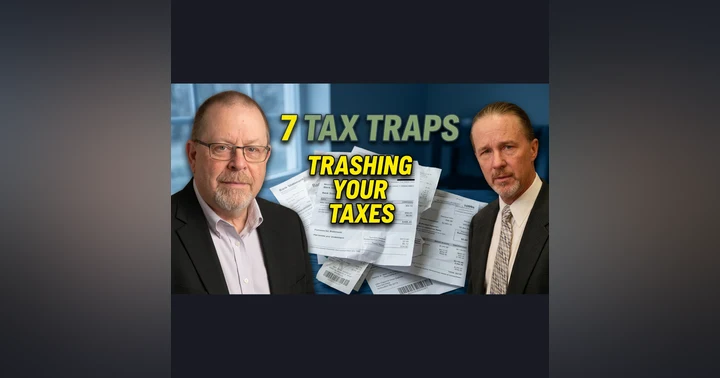
Tax Traps. Most real estate investors often get crushed not by bad deals, but by poor tax decisions they weren't even aware of. This video features a former IRS senior trial attorney who shares insights on how common tax pitfalls, such as incorrect entity choices or inadequate documentation, can lead to significant financial losses during a tax audit. Understanding proper tax planning and tax strategies is crucial for business owners to avoid IRS red flags and protect their wealth.
In this episode of The Tax Strategy Playbook, host David Wiener (Mr. Cash Flow) sits down with Scott Estill, a former IRS Senior Trial Attorney turned nationally recognized tax attorney, speaker, and author, to expose 7 real estate tax traps quietly destroying real estate investor wealth in 2026.
Tax Traps. Most real estate investors often get crushed not by bad deals, but by poor tax decisions they weren't even aware of. This video features a former IRS senior trial attorney who shares insights on how common tax pitfalls, such as incorrect entity choices or inadequate documentation, can lead to significant financial losses during a tax audit. Understanding proper tax planning and tax strategies is crucial for business owners to avoid IRS red flags and protect their wealth.
In this episode of The Tax Strategy Playbook, host David Wiener (Mr. Cash Flow) sits down with Scott Estill, a former IRS Senior Trial Attorney turned nationally recognized tax attorney, speaker, and author, to expose 7 real estate tax traps quietly destroying real estate investor wealth in 2026.
Scott spent years inside the IRS. He’s seen both sides of the audit table. Now he’s revealing exactly what the IRS looks for, what trips real estate investors and small business owners up, and how to legally protect your wealth before that audit letter ever shows up.
You’ll discover how entity choices, sloppy record‑keeping, and poor tax planning create hidden tax traps that trigger audits, penalties, and five‑ or six‑figure surprise tax bills. Whether you own rentals, flip properties, or run a closely held business, this conversation is your playbook for avoiding the worst real estate and business tax mistakes in 2026.
📌 TIMESTAMPS:
00:00 Introduction: Why bad tax decisions crush investors and business owners
02:57 Meet Scott Estill: Former IRS Senior Trial Attorney
03:30 Trap #1: Record‑Keeping Nightmares
09:22 Trap #2: Entity Misalignment & Dealer Status Danger
21:33 Trap #3: Self‑Directed IRA Prohibited Transactions
33:40 Trap #4: Travel & Education Documentation
36:23 Trap #5: Dealer vs. Investor Status
40:08 Trap #6: Tax Strategy vs. Exit Plan
44:36 Trap #7: The 3‑Question Filter
51:46 Your Do‑This‑This‑Week Checklist
52:43 Where to Find Scott Estill
🎙️ ABOUT THE TAX STRATEGY PLAYBOOK:
Hosted by David Wiener (Mr. Cash Flow), The Tax Strategy Playbook delivers practical, battle‑tested tax strategies for real estate investors and business owners who want to keep more of what they earn and build durable, tax‑efficient wealth.
Each week, David sits down with top tax attorneys, CPAs, and real‑world investors to break down the latest tax traps, IRS red flags, and planning opportunities in plain English you can actually use.
📧 Newsletter: http://taxstrategyplaybook.com/newsletter
📺 Subscribe on YouTube | 🎧 Apple Podcasts | 🎵 Spotify
#RealEstateTax #taxTraps #irsaudit #realestateinvesting #wealth #taxstrategy
David Wiener: Most real estate investors that get crushed don't get crushed by bad deals. They get crushed by bad tax decisions. Decisions they didn't even know they were making in some cases. Today's guest spent years inside the IRS as a senior trial attorney. He's watched investors lose six figures over something as simple as the wrong entity or a sloppy paper trail. And the worst part? Most of them had no idea until that audit letter showed up in the mail. So going to talk about 7 tax traps that are quietly destroying investor wealth in 2026. Record keeping nightmares, entity landmines, self-directed IRA mistakes that can literally blow up your entire retirement account. So if you even own one rental, flip, â you're thinking about using an IRA for real estate, this episode could save you years of pain. Stay until the end because I'm giving away a free checklist that'll let you audit your own setup this week. Welcome back to the Tax Strategy Playbook. I'm your host David Wiener also known as Mr. Cash Flow. And on this show we break down practical battle-tested strategies so real estate investors and business owners can keep more of what they earn and build durable tax-efficient wealth. Today we're looking at what really happens inside IRS exams and the tax attorney consults, not theory. The actual mistakes investors are making right now with their books, with their entities. their self-directed retirement accounts and how to avoid becoming the next horror story. My dad was a CPA and he always told me tax evasion is a crime but tax avoidance is mandatory. That's exactly what this episode is about. Knowing these traps so you can avoid them legally. Comment below as we go. Comment which one of these seven traps scares you the most. Number one through seven. I'm going to read every single comment and I'll get back with you on it. My guest today is Scott Estill, a former senior trial attorney with the IRS who spent years inside the system before switching sides to help taxpayers, investors, and business owners protect themselves and legally minimize their taxes. He's a nationally recognized tax attorney, speaker, and author who's trained thousands of investors on how to structure deals, choose entities, and navigate the IRS without losing sleep or their shirt. Scott, I'm excited for this one. You've seen both sides. The IRS is going after investors and investors are trying to stay clean. Welcome to the show.
Scott Estill: Great. Thank you very much for having me. It's my pleasure to be here and hopefully I can shed some light on some of these tax issues that, you know, some of the tax traps that like you mentioned, people get into and can really take a really good solid real estate investment and turn it into a nightmare.
David Wiener: Let's hope we can do that. Let's get right into it. So, Scott, trap number one. And this is the one the IRS counts on investors failing at, record keeping. Walk us through a case where somebody had solid deals but terrible documentation. What happened?
Scott Estill: Well, there's, you know, there's lots of different things that can happen when the IRS decides to audit you. And the first thing that they're going to ask for in pretty much any audit is we want to see records. We want to see your bank statements. We want to see copies of the last couple of years of tax returns. And we want to see the records to support your different expenses. And so, you know, you look at a typical real estate investor, let's say I have a couple of rental properties. I look on my schedule E and what do I see there? Well, You know, there's the typical mortgage interest. There's real estate taxes, there's insurance. but there's other, other things like automobile mileage and meals and entertainment used to be with â entertainment. Now it's just meals, but, but the bottom line is that there's a lot of record keeping requirements. â And you don't keep those records â and get audited, those deductions that may have been totally â legit, That you may have really had $5,000 for this expense go away. And so instead of getting a $5,000 deduction, it goes to zero and in an effect, your income goes up by five grand and you got to pay taxes on something that really you shouldn't have had to pay taxes on, but for the fact that you had really crappy records. And I think that's the number one thing I can into my clients heads when they, when they venture into real estate, just like if they venture into a small business is, â you don't have to become a total tax geek or a tax nerd, far as, somebody like myself who, who really gets into this stuff, but you do need to have enough education, enough information to know what records you need to keep, how you need to keep them and in what format. So that if you do get that, you know, love letter from the IRS saying, Hey, today's your lucky day. We're going to audit your 2025 tax return. It's not something where It's a horrible event. It's something where you can say, okay, it's a cost of doing business in the United States. going to get audited at some point. â let's go. You know, here's my records. â if you don't have them, that's where things become a problem.
David Wiener: So even if an investor had the properties, they had the expenses, but they just couldn't prove it through good documentation, they lose, right?
Scott Estill: They absolutely do. mean, you know, I've had several cases. I mean, I just give you a couple that were, you know, on the automobile expenses. So I'm in Denver, Colorado is where my hometown is. Let's say I have half a dozen rental properties, somewhere in the metro area, maybe a couple of places up in the mountains where we can go skiing. And I've got to check on these properties or I've got to do some maintenance. Maybe I want to paint them or whatever. So do I have automobile miles? Absolutely. So now I get audited and you know, I claim to my mileage and the first thing that the auditor is going to say is let me see your mileage log. And guess what? I don't have one. I don't know anything about it. Or I thought, you know, I don't really need this or whatever. So I'm claiming, you know, 12,320 miles business use for my real estate properties. â here's what the choices are for the IRS when I say, â or if I'm representing you, say, hey, know, Joe over here doesn't have a automobile mileage log. The IRS has three choices. They can say, oh, okay, well, we believe you, Joe. We're going to give you all those 12,000 miles and let's go on, right? How many people think that that's going to be the result? Not much. I mean, I've had one audit over the years where my client got about 95 % of them. And that's, and that's because the auditor, I think, felt sorry for this person, knew that they drove.
David Wiener: you I bet not. â my.
Scott Estill: and whatever. â but that was one time. The other two choices are much less charitable though. They can say, well, you were going to give you nothing since you can't prove anything, or we're going to give you something in the middle because we know you drove, but we just don't know how much either one of those two choices. And I'll say, for the most part, you're going to get nothing is what we're going to end up with. But even if you got something, you're losing the deduction for all the miles that you really did incur. but you can't prove. And I think that that's just a bad situation that is so easy to remedy. It's like, we, we know that there's certain rules. We know we need to keep these records. So keep them. And it doesn't have to be like a separate mileage log, or it doesn't have to be some journal. I mean, you can use an app for it, right? Every time you get, go in the car and you're going to travel for business or for, your rental properties, just punch it in. And at the end of the year, after you've backed this up over and over again, right? Cause you're not going to lose your data, but at the end of the year, then we can just print this out and then hold it. And if we get audited, great, we'll give it to them. If we don't get audited, well, we use those numbers to prepare the return. either way they're going to be valued. It's going to be valuable information. you know, in my, in my opinion here, how you really value what's a good real estate deal? right? I mean, if you, if you end up buying a property, you think you got a good deal, but then you hold it for a year or two. What's your cashflow looking like? What's your tax situation like when you throw in depreciation or amortization or something that doesn't necessarily show up on a cashflow statement, but how do you know if you have a good investment or not, if you don't have good records? So, so even if the IRS doesn't audit you and you, whatever, we still want good records to know. â you know, this property over here, property A, this one's a beautiful investment. Property B, not so much. So maybe we look at selling it or doing a 1031 exchange or doing something to get that asset that's not really performing the way we were hoping to out of portfolio and get into something that's more financially viable. â think the records are key to it either way.
David Wiener: Absolutely. I provide cost segregation studies for real estate investors as well as some other studies that we do but I had a client, he was referred to me by his CPA who's a good friend of mine and when we asked him for the capital improvements to the property so that we could figure the basis out he said oh well I spent $10,000 on this and I spent $5,000 on this and I spent $3,000 on this and he gave me a whole list and I said Is that the actual amount? They were all even dollar amounts. were all... And he said, well, I didn't really keep track. And I said, well... You talk to your CPA and see what he wants to do because you know It's it would look very very strange on a depreciation schedule to show all even dollar amounts The CPA helped him go back and find his records and we got the thing done But that's the part most investors don't understand the the burden of proof is on you not on the IRS IRS doesn't have to prove you didn't spend it or you didn't drive those miles You have to prove you did and if you can't and you don't, those deductions are gone.
Scott Estill: Yeah, yeah. You're sort of guilty until you prove otherwise. You know, we're not talking about a criminal case where the government has the burden to prove you guilty beyond a reasonable doubt. That's not what an audit is. The audit basically comes out and says, we're going to look at these five issues. And if you can't prove that you incurred those expenses, you don't get it. And that's just the way it is. And I think too, you you mentioned the cost segregation analysis. That's something that know, we'd be operating at our own time here, right? That we'd be looking at, bought this building. I want to see if I can accelerate some of the depreciation over a much quicker period than the 27 and a half, 39 year, um, residential versus commercial issues. And so, but, but in a little bit different, right? That, know, we're in a, right now we're in 2026, just hopefully filed our 2025 returns. Um, or we have an extension. to file them a little bit later, but think about if that's going to get audited. You know that these expenses were incurred in 25, you filed in 26, sometime in maybe 27 or 28, because the IRS has three years to audit you. The IRS now wants to know what you were doing three or four years ago. And if you're like me, I don't necessarily know what I was doing three or four weeks ago, right? Let alone three or four years ago. And I don't want to have to make this stuff up.
David Wiener: you
Scott Estill: And I don't want to have to the IRS looking at it and seeing I had 2,500 repairs and 3000 of maintenance and 2000 of insurance. You look at that and you could say, well, I suppose that's possible. It's just a coincidence that they're all nice fat rounded numbers. But the reality is that that just screams estimates or guesstimates, you know, to me. And when I was an IRS attorney, I loved that because I knew they weren't good numbers. I didn't know what the numbers really were.
David Wiener: Exactly.
Scott Estill: But again, that wasn't my job unless it was a criminal case. So if it's a civil case, it's like, Hey, that's your job. You know, you're the one that put 2,500 here. Where'd that number come from? And if you don't have pieces of paper to show, you know, some sort of a, â an expense or, or whatever, you're not going to get it. I mean, that's just the bottom line.
David Wiener: Exactly. Let me pause right there. If you're listening to this and thinking, think my records are okay but I'm not sure, that's a problem. â IRS counts on that uncertainty. So â you comment the word audit below, I'll send you my record keeping checklist for free. â what about a person mixing business and personal accounts? I see that all the time.
Scott Estill: Yeah. And I see it all the time too. And it's like, you know, one of the first rules I have is don't mix business with pleasure, right? That's sort of a, yeah, it's sort of like a Godfather line from the movie is basically, you know, that's business. This is personal and we need to keep them separate. Tax reasons may be a little bit different than the Godfather, but for tax purposes, don't want to mix the two up. And, and there's lots of reasons for it. one you may be, â you miss out on deductions.
David Wiener: important.
Scott Estill: You know, you have all this personal stuff in there that know, you can't deduct. You've got some business stuff in there that you be able to deduct but you just miss it. I I've seen it where the IRS then will look at the records and they can't figure out what's going on in an audit. And again, if they don't know what's going on and you can't prove it, you lose.
David Wiener: If they look at your bank statements and they say, this doesn't match what you filed, game over, right?
Scott Estill: Exactly. And it's not only just necessarily this co-mingling of the business versus personal, but I've seen many audits where maybe let's say my client has four or five different business entities. We give them all the records and there's some receipts or income and we say, well, wait, that's not for this business. That's for this business. And the other business happens to be maybe a C corporation that doesn't show up on the personal return. Well, guess what's going to get audited? The C Corp. And so we brought in another audit because of our sloppy bookkeeping.
David Wiener: Alright so here's your minimum viable system for real estate record keeping and write this down. Number one, separate bank accounts for every property or entity. No commingling ever. two, â receipts with notes. Who, what, why and which property it relates to. Reconcile monthly, not at tax time, â month and if it's not in your accounting software by the 15th it didn't happen. Did I miss anything Scott? â
Scott Estill: I don't think so. I think that's, you I use checklists all the time, not only for my clients, but for myself. And do the same thing with any of my rental properties. â I do you know how long it takes me every month to do, let's just say one rental property â of and expenses? I mean, you're talking about a minute of my time, right? To say, â okay, got rent in April â and paid the mortgage and maybe, you know, an insurance bill came up or maybe I had a plumber come out. but we're talking about a very minimal amount of work. Now you may have a lot of rental properties, but still you're talking about a very short period of time relative to the benefits you're going to get.
David Wiener: Okay let's talk about trap number two. And this one could cost an investor hundreds of thousands of dollars in a single year. Entity misalignment. Tell me about an investor who had one LLC holding flips and rentals and partners all together.
Scott Estill: Well, yeah, I mean, it's a total mess if you're going to do that. mean, I to see, if I have five rental properties, maybe use a series LLC or use some, but â there's of strategies you can use, but I like to see those individualized. So I don't like to see them mixed together. â I like to see multiple entities or basically multiple properties in one entity, I guess, the way I meant to say that. I think really important. â The other thing that's that can be really bad here is if you're using an entity, a single entity for multiple purposes. And this is where I've seen audits go really, really poorly. Let's say that I've got one rental property. I've been holding it longterm, right? And now I'm going to do some fix and flips. Nothing wrong with that strategy at all. If presumably I know something about fixing a property and flipping it and making money on it. don't do it in the same entity. â Why is that? Well, beside the fact that it's messy, beside the fact that it goes against our first rule, and that is don't commingle, whether it's personal and business or two different businesses, but it can have really, really bad tax effects if you do that with a rental property and a flip. Because when we start looking at flips, we have to get into what the IRS calls dealer activity. And that has some really negative tax consequences. And if you're going to do your flips, with properties that you're holding for long-term rents, the flips are going to taint your rental properties and you're not going to get the deductions that you're entitled to. And so we really need to look at what's your intention with this property. You know, I bought the property today. What's my plan with it? Well, I'm going to hold it for five or 10 years and then sell it, rent it out in the meantime. Okay. Typical long-term rental property versus I bought the property today. I'm going to fix it tomorrow and I'm going to sell it the next day. Different total real estate transaction.
David Wiener: I've seen one guy who had his flips in the same LLC with an S-corp to it where he wound up paying self-employment tax on flip income and he was not prepared for that.
Scott Estill: Well, yeah, and it can also the whole entity then can be considered a real estate dealer. And so at that point, you get a really bad result because your rental properties in there can now be considered the income can be considered ordinary income. And so it's you may lose your capital gains treatment when you sell the property. You just mentioned self-employment tax. That's a huge, huge problem. I mean, if I said to you, know what, I've got this great tax strategy. but it's going to require you to pay an extra 15.3 % in tax, you're going to look at me and say, what's so great about it? You you better be saying, is there a way I can get around it? And of course there is, but the bottom line here is why do we want that? Why do we want that self-employment tax headache on our rental properties when all we had to do is get a proper setup, a property entity setup?
David Wiener: And the thing is somebody could save a few hundred bucks on entities. You know why they put them all in one entity. They don't want to have to spend the money to set up another one. But they could save a few hundred bucks on an entity setup and it costs them hundreds of thousands of dollars in the long run. I've seen that happen too.
Scott Estill: Yeah, yeah, they'd or they don't want to do multiple tax returns, you know, and so they they end up with, know, I don't want to do a five LLC tax returns. Well, you may not have to if it's a single member LLC and it's structured properly. So, you know, there's ways that we can get around that. But yes, you do have to pay the secretary of state and a resident agent fee if you have one, you know, whatever, and the cost of setting it up if you don't do it yourself. So, yes, I'm going to I'm going to save myself 500 bucks upfront with a potential exposure of six figures on the backside. If the IRS wants to look at me. No, and we're just talking about the IRS here too. We're not even throwing in the 40 some States that could be auditing you for their own income tax. Right? So you've got all these other different possibilities here. And the way I look at it is just do it right. The first time, you know, get the proper advice.
David Wiener: Just not smart.
Scott Estill: make sure you're not just getting it through, you know, some chat with, you know, AI or Tik Tok or, know, YouTube video that you can't trust or verify the source. but you know, it's amazing to me. mean, when I'm preparing a webinar, let's say I'm going to, I'm doing a webinar in a few weeks and I've got to brush up on a few things. I start Googling stuff and some of the stuff that AI comes back with, I know it's just simply not right. Um,
David Wiener: Absolutely.
Scott Estill: But I know it because I've been doing this for 30 some years, you know, maybe a little bit longer if I really want to do the math and out myself on my age. the reality here is it doesn't take that much effort to do it right at the beginning. And then you're set so that you now have good records. You can go through, you know, if you've got good investments from a cashflow perspective, from a tax perspective, and if the IRS wants to audit you, we're not worried about it. You know, not that we necessarily welcome the audit, but we're not going to, we're not going to be afraid of it because we've done things the way we're supposed to.
David Wiener: I know anybody who welcomes the audit. But what about â Corp or S Corp used wrong for rentals? I see people electing S Corp for rental property and it backfires. â
Scott Estill: Yeah. Well, and when we have the C Corp or S Corp, we're going to use one of those two entities for rental properties. And again, I'll ask the client, why are you doing this? What are you trying to gain from it? Is it a tax decision, which S Corp is? Or is it at a liability protection, asset protection sort of thing? â Why you trying to accomplish this? Because â typically don't like to throw rental properties into a corporation. I mean, you can do it. There's nothing illegal about doing it, but the question is, why are you doing it? And if you can't answer that question, beside, well, I'm doing it because somebody on YouTube said to do it, no, that's not going to be â good enough answer from my perspective.
David Wiener: What a lot of people don't understand is an LLC is not a tax strategy. It's a protection strategy. It's a legal strategy. When you get into the S-Corp and the C-Corp, really have to know what you're doing. So I always tell people, you know, it's first, then the entity, â not other way around. Determine the entity based on the deal that you want to put into it, whatever you're using it for. and don't start an entity and then figure out what to throw in there.
Scott Estill: yeah, and I've seen people do exactly what you just said multiple times, right? â I'm to set up and, you know, I want to set up a couple entities here. It's like, okay, what are we going to do with them? Real estate. Okay. Real estate. That's a big, you know, big topic. What kind of real estate? Well, maybe some flips, maybe some rentals. Maybe I'll some partnership stuff. Maybe I'll do some private money lending. Maybe I'll do, â it's like, Okay. Those are all legitimate. They're all, they could all be very valuable, but until we know what you're doing, why set the entity up? Right. I'd rather go the, the other way, which you mentioned would be, you know, Hey, what do you want to do? Well, I'm getting ready to buy my first rental property. And what are you going to do with it? Well, I'm going to hold it for, you know, several years, assuming it's a good investment. And at some point then I'll look to it down in the future.
David Wiener: Exactly.
Scott Estill: Okay, that that we can set that entity up so that it's in place when you close on the rental property, but we don't have to set that up six months before you even know that you're going to buy a rental property. mean, you know, in most States, I haven't found a state that I can't get an entity set up within 24 hours, if not within 24 minutes.
David Wiener: And even if they bought it in their personal name, getting it transferred into an LLC is no big deal.
Scott Estill: I would say, mean, that's, very common. You know, we'll, we'll see that all the time where I bought it in my personal name and now, uh, what do I have to do if I want to move that into an LLC? Well, it depends on the jurisdiction, but typically it's a quick claim deed of some sort and you just move it right in there. It's not a tax event. So doesn't mean that you sold it. We're just making a transfer. Um, basis stays the same. Everything stays the same. The only difference here is now you've got protection. You get the the limited liability, the LL component of an LLC.
David Wiener: without the tax complications you find in an S-Corp or a C-Corp.
Scott Estill: â And think in a lot of people here, the C Corp and they they love it. They want to do that. Well, you I can do a C Corp â and I have to pay taxes on my personal return. Like, yeah, if you don't take any money out of it as income or whatever, you're right. â You don't to pay taxes on your 1040. â But guess You have to pay taxes on an 1120. And that's not nearly as favorable â as your schedule E go to sell the property. â There's different rules for the capital gains and it's just, know, putting rental properties in a corporation again, I really don't like. â If you're going to be flipping properties, â may come to a very different conclusion. â again, those are two different real estate tax strategies. â
David Wiener: very much so. I think we could probably do an entire episode on just this but I want to move on to tax trap number three and this is one that can literally destroy your entire retirement account in one move. Self-directed IRA mistakes. Scott what's the biggest prohibited transaction that you've seen with a self-directed IRA?
Scott Estill: self-directed IRAs, you they can be great, but boy, you make one mistake â you've got a major problem. And â I could say the one thing that I've seen that â seen a few of my clients get spanked for was â where basically â using the within your IRA in some personal way. And it have to be necessarily a bad thing. And let me give you an example of a client that that had a rental property, that they were gonna use it, this is in their IRA, â decided that they were gonna take the family â the place use it for a week. Okay, no problems, right? Yes, there is a big problem here. â But come back to me and they say, well, â you I'm renting this out for, let's say 1,500 bucks for a week â is the market rate was, â and paid $1,600. So I didn't even get, a break here. It's not like I rented it for, you know, $50 or something because I could. the IRA totally benefited and I would agree with them. did. It got the full rental, just like if some unrelated party rented it, but you can't do that. You can't use an IRA asset in your IRA personally. And that's just, that's a straight black and white tax rule. And if you do it, client found out what happens here. The whole IRA is basically considered distributed as of January 1st that year. So what happens then? Well, what's in this IRA? Well, maybe there's a few hundred thousand dollars and guess what? Maybe a couple hundred thousand dollars hits your income tax return this year that you weren't expecting. Anybody want that pleasant surprise? Yes, it's ugly.
David Wiener: Ouch. So I also heard and you can tell me if this is right or not. If you do on the property yourself or you use your own contractor, that's also a prohibited transaction, right?
Scott Estill: It is, it is. And some of these are not necessarily intuitive. think, well, as long as the work is getting done and it's all, you know, we're not manipulating prices or anything. who cares? Well, the rules say you can't do it. I mean, that's who cares. And so if you're going to do that, what you're really saying is â want to play the audit lottery. I want to bet that the IRS isn't going to audit me. And it's like, man, that's just. You know, you may end up getting, you know, being right on that. Who knows? but I don't want to take that chance personally. â
David Wiener: I wouldn't take that chance myself either. They don't just lose the deduction, they lose the whole IRA, Wow.
Scott Estill: They do. They do. you know, and that becomes just absolutely killer depending on what's in that IRA, but it, but it kills your planning. And so, you know, when, when I'm giving advice on small businesses, my typical advice can be, I think on the aggressive side that we can push for. If we don't know if an expense can be deducted, why should we not deduct it? Right. If we don't know one way or the other, let's do it. When I get into the IRAs my advice turns totally the opposite and that is very conservative This is your retirement that we're messing with this is something that you know Maybe you're gonna be it's gonna impact you in five years when you retire or 45 years when you retire right? But it's something in the future that we don't want to mess with and I don't want to get in a situation where you know I use this property for a week and now all of a sudden everything becomes taxable in that IRA. I don't want that.
David Wiener: And once a transaction is prohibited, there is no way to go back and fix it, right?
Scott Estill: Hey, can't undo what's already been done in that situation. So you, so you're really stuck on something like that, you know, and, and think that the best, the best way to put it is just don't do it. If you're going to get into a self-directed IRA, there's nothing wrong with that in theory, â you better understand the rules. â better know, or your custodian better know, you know, and be able to advise you on what you can and you can't do because there's lots of so-called disqualified persons out there. And so it's not just me and it's not just me and my spouse, but go up and down sort of â food chain here â that this â and this disqualified person rule â to my parents, â to my grandparents and their spouses, applies to my children, grandchildren and their spouses. So my children can't use this rental property for a week. Now, you know, there's some relatives, aunts and uncles or whatever, cousins, that it doesn't apply to, but that's a very small pool relative to who is a disqualified person.
David Wiener: Absolutely. What about partnering the IRA with personal funds? I see that in Facebook groups all the time.
Scott Estill: Yeah, yeah, yeah, we can do this. It's no problem. You know, like, you just need to be so careful because anytime you're going to be â money or going into deals with your IRA, you're getting into that real close prohibited transaction rule. And I don't like it. You know, I prefer to keep it very clean. If my IRA needs a $50,000 loan. I'm not going to make it. Even though I could say, â look, going to give the IRA a 6 interest rate when they're going to have to pay 8 % to a bank. So the IRA is getting a good deal here. It doesn't matter. If I make that loan to my IRA, it's a prohibited transaction. Whether my interest rate was reasonable or not is irrelevant in the discussion.
David Wiener: Wow. And you know where people are getting this bad information that they can do all this stuff. It's social media.
Scott Estill: Yeah. Well, I mean, yeah. I mean, it's, it's just so ripe for it because you know, we'll go ahead and partner with your IRA. mean, this is great or go ahead and make this loan. Who's going to find out. Right. Well, that might be true. Maybe you won't get audited, but again, I'm not willing to play that game. I'm just not willing to do it. I'm not willing to do it for myself and I'm not willing to do it for any of my clients when I provide advice. It's just, you know,
David Wiener: But maybe you will. I'm sure they would appreciate that.
Scott Estill: Well, I think that's what they're paying for, to sort of verify. you yeah, you want to be verifying any information that you get from an online source. mean, I can't be any clearer than that on this issue. â
David Wiener: Absolutely. So if you're thinking about your self-directed accounts in real estate, here's the safe lane rules. Write these down. You cannot do any work on an IRA-owned property yourself, not even changing a light bulb. You cannot use your own contractor, your own realtor, or any disqualified person. You can't personally guarantee a loan inside the IRA, non-recourse loans only. If you partner personal funds with IRA funds, the capital stack and income expense split must be exact. No commingling. When in doubt, treat your IRA like a silent partner you can never talk to. That's kind of the way that I would prefer to do it. Just silent partner, you never talk, just leave it alone. if you've realized you might have a prohibited transaction or you're not sure, comment below this podcast. maybe we can do a follow-up episode answering your specific questions maybe with Scott if he'll join me again and we get the questions. Four more traps. I'm going to go more rapid fire here so pay attention these are the ones that don't seem like a big deal until they are. Trap four we talked a little bit about poor documentation for travel and education. Scott how hard does the IRS come after this?
Scott Estill: Well, I think a lot of it depends on the education and where it's located. it's something that I've seen, you know, when I speak at a lot of events, they're typically in places that people want to go. I mean, especially if there's going to be a live audience there. mean, I've done â many Well, Las Vegas is the, is the common one, but â I've â events Hawaii. â I've done them on cruise ships. I've done them on different places. â And the is looking at that saying, you're trying to deduct your vacation and we're not going to allow it. you know, â and I think that, you know, they've got a point here. I mean, how do you, how do you determine what purpose of the trip was? And if the purpose of the trip is business or in this case, let's say real estate education, you got to document it. What did you do? Well, I went for four days, â you the first, the first day and the last day were travel days, â two in between. I was at this event. keep a copy of the seminar, the agenda. did you do there? How does it relate to your real estate business? Because â you like you mentioned at the beginning, you've got the burden of proof, not the IRS. They don't have to, â know, they don't have to prove it's a vacation. They just have to say, we think it's a vacation or it's not business. Now you tell us otherwise. And now â got to prove that. â
David Wiener: Absolutely. and I'm traveling to Las Vegas to speak next week. can best believe I've got all the records. I've got all the invitations and the schedule and all those things that they sent to me. I'll speaking for the Greater Las Vegas Real Estate Investors Association. So and it's a multi-day thing. â so documentation important. I've learned that.
Scott Estill: yes, it's huge on that. And the education, the same thing. Is this education personal or is it business related? Now, when you go to like a tax event that I'm putting on, let's say, or somebody has me as a speaker on real estate tax strategies, pretty obvious that that's probably not going to be a quote unquote fun sort of event and vacation sort of event, right? We're going to get into some issues where â You know, it's not fun, but you need to understand this stuff. â the location can make a huge difference. And â long are you there? You know, I went to, â know, that's whatever, let's say I do a three day event in Hawaii â and go there and you spend three weeks there. You know, can you deduct all your travel expenses and three weeks of hotel â for couple of days of a real estate convention? well, â better not be better. Hope you don't get audited. Right. So.
David Wiener: Absolutely.
Scott Estill: So I mean, there's lots of rules as far as what you can and can't do when it comes to these expenses that could be business related, real estate related, or they could totally be personal.
David Wiener: Alright, trap number five. And you started to touch on this a little bit before, dealer versus investor status incorrectly. So what if somebody flips a house and they reported as investment income?
Scott Estill: Right. And can do that. think the dealer activity is something that's a negative as far as the taxes go. You self-employment tax that comes in. â You can't do 1031 exchanges or different investor type tax strategies. No capital can come in. So it's ordinary income because the real is treated as inventory. â So when you're dealer there, â you have to at what your intent was. â And we had an audit and this was an interesting one because the holding period was about one month. And so the IRS said dealer activity and we said no and we won. How did we win that? You know, because the guy bought the property, let's say April 1st and sells it on May 1st. And you say, well, how is he going to win that audit? Well, his intent when he bought the property was to rent it out. April 1st, he buys it. April 2nd, he goes there, puts the for rent sign in there, puts it, you know, online or whatever. â comes by and says, I like your property. â want to buy it. And my client's like, â not for sale. like, it's a rental property. You can rent it. And he goes, you don't know what I'm going to offer you. And he offered them about a hundred K more than what he had just paid for it. â so my client comes to me and says, am I a dealer if I do this? And the answer was no. Now, if he does five more of those during the year, not going to like the result. â here we were able to show that this was his intention. had, he wasn't soliciting purchase offers. In fact, that wasn't even, even on his radar, but we had all the records to show that he was going to make this a rental property â he had made the others like it rental properties in the past.
David Wiener: Yeah.
Scott Estill: Now, again, like I said, that's a one-time deal. So you can't just look at the holding period and say, well, it's a short-term hold. Therefore it was a flip. No, you have to look at it as what was the intent. Now, if we had done the opposite here, let's say we bought it on April 1st, April 2nd, we put it in the MLS. We start, you know, we put a for sale sign out there and then we sell it. And then we say to the IRS, well, my intent wasn't to flip it. It was to rent it. It was like, Okay, what sort of proof do you have of that? You know, we wouldn't have any. So don't necessarily look at the holding period, but look at the intention. What are you trying to accomplish with this property and take it from there? But if you're going to do flips, there's nothing wrong with it. Just we want to isolate them and put them in their own entity. So we put them into our, you know, flipping entity. I call it a dealer, dealer entity, whatever. Because we want to segregate those from properties that maybe aren't flips. So maybe I've got a flipping business where I do four or five of these a year, but I also buy, you know, four or five rental properties every year to go into my portfolio. Those are two completely different animals and we want to put them in two completely different entities.
David Wiener: So figure it out ahead, not after.
Scott Estill: Absolutely. I mean, when you start, it's another example of co-mingling where you've got dealer activity with investor activity in the same entity. And the IRS is going to call that entity a dealer entity. And it's going to taint your investor activity that shouldn't be tainted if you just did it right at the beginning.
David Wiener: So trap six, this is a sneaky one, and I see it a lot. â aligning your tax strategy with your exit plan.
Scott Estill: I get a lot of weird looks when somebody comes in to me and says, okay, I want to set up an LLC for a rental property that I'm going to close on. And I say, okay, what's your plan with the property? How long are you going to hold it? What are we going to do when it ends? And the look you get is, wait a second, I'm here setting this up to start. It's like, no, you need to begin with the end in mind. And so, To give you an example, I bought a rental property 2008 and my goal was to hold it for about five or six years until my one daughter hit college. â then if I was short some cash, I could sell it and pay for her college. So that was my plan when I bought it. Well, five or six years later, I didn't need the money, thankfully. So I just kept the property, but â knew in my head â I was going to hold this for five or six years. â maybe that could have been five or six months. right? Or five or six weeks or something where my intention would be completely different. So the first thing I want to know is, you know, what are you going to do with the property? What's your plan? I know they can change over time and you know, things happen with, you know, COVID hits or something happens. get a divorce or somebody dies or, know, something happens that you've got to change your plan. But at least when we set it up, let's know what's your exit strategy and not having that. Yeah. Not having that's a big problem.
David Wiener: I see it from the cost segregation side too because people, you know, they hear about this great cost segregation and 100 % bonus depreciation is back and they're really eager to do it and my first question is how long are you planning on holding the property? Because they'll say well don't know maybe a year or two then you don't want to do a cost segregation study. â
Scott Estill: you
David Wiener: because depreciation recapture will eat your benefit alive. mean unless you plan on doing a 1031 exchange which a lot of smaller or newer investors really aren't familiar with unless they listen to the tax strategy playbook but see that all the time.
Scott Estill: Yeah. And that gets into the overall plan as well, right? As far as what are you planning on doing with this property where, you know, â I'm going to, you know, I'm going to sell it after a couple of years. It's like, okay, let's say we're going to do it after two years. Well, you mentioned depreciation recapture, which our cost segregation study is basically a way to accelerate the depreciation, right? Move it upfront and not spread it out over a long period of time. But if we've got to recapture that depreciation when we sell it, then that's something that we may want to know about before we do the study. if we're going to do a 1031 exchange, we know then that we could do the cost seg â knowing that when we do the 1031, the basis that we transfer over is going to be lower. But, but still, â doesn't mean you can't do it, but again, it's that long-term plan. What are you thinking about here now that you're going to buy this property next week? You know, what do you, what do you want to do with it? And I think once we know that, once you and I know that, we can then put our heads together and go, okay, a cost seg makes sense, doesn't make sense in this situation. it's a single family residence that they paid, â know, a hundred thousand for, and it's just not gonna be worth doing a cost seg study on. â a lot of different things that come into play here, but â have to know what you wanna do. â that means that you need to know what you wanna do. â when you buy the property so you can get a good tax plan in place today.
David Wiener: And again, it seems to be a topic that I harp on all the time on this show. But tax planning is vital for an investor. You know, if you just use a tax preparer who you send all your stuff to on, you know, hopefully before April 14th, all they do is look backwards at what you did. They're good at putting stuff on the right lines on the tax return and â it in. But you've got no plan at all. You need somebody who's going to look forward, not just for this year, but for the long term and say, here's the best situation you can be in and help you get into the right position everything for tax benefits. â trap seven. â this is something I read from Scott. Hopefully he remembers it. It's three question filter that every investor should run every big move through. Do you remember the three questions?
Scott Estill: â no, here we go. I don't. You're gonna have to remind me.
David Wiener: First one, what's the tax result if this works perfectly? Important, right? What's tax result if it falls apart? And then third, can I prove every deduction if I get audited tomorrow?
Scott Estill: Totally, totally important. Right. I think, you know, if we look at the third one there, it's like that, that's just record keeping. And I say just because it's something that we all should able to handle. It's like, you've mentioned checklists. â use them. You use them. Everybody that has real estate should use them. Make sure that we're not missing any expenses, deductions, any, any costs that we can somehow take on our taxes. But with respect to the first two questions, you know, what happens if things go perfectly well? Well, all right, you know, let's look at the tax plan here. but, but I always look at it from the negative perspective, right? â that is, you know, let's say that two people are going to go into business together. â assume they're going to have a falling out because if they don't have a falling out and everything goes perfectly, what we set up is probably, is probably fine. But â but I've got to say, okay, in two years, these guys are going to have a massive blow up. if we don't have a buy sell agreement, or if we don't have some sort of documentation â we can get while they're on good terms, we could have a problem down the road. And I think that's what â planning really does. And â yourself in the â position here, â It's April â You I'm not a CPA, I'm an attorney, but let's say you come to me as a CPA and you say, here you go, Scott, do my taxes. there's nothing I can do for you with those numbers other than put them in the right place and hopefully make some right elections. You know, if there's bonus depreciation, I can claim that as opposed to taking it over five or seven years. Lots of stuff I can do, but I can't change the numbers in any way as opposed to you coming to me, let's say on, you know, February 1st and saying, all right, I just retired and I'm going to get into real estate. let's set up a tax plan now so that December 31st, when the year ends, we know what done and we know that we've done it to the best of our ability from a tax perspective. â So can't just blame the CPA and say, â I've got a crummy CPA because I didn't get any deductions. And it's like, no, that's not on the CPA. Now, the flip side of that is â make that your CPA knows real estate.
David Wiener: Absolutely, yes.
Scott Estill: So, you know, when I was preparing tax returns, I was an expert in small business in real estate. â you had brought me oil and gas tax returns, I knew something about it, but I didn't have an expertise on it. Or if you, you know, if you would have hired me as a fortune 500 company, I've never advised publicly traded companies before. So it's not like I'm incompetent or stupid or anything else, â it's not what I do for a living. So make sure that your accountant or your tax professional that you use understands, knows real estate and hopefully does real estate investments on their own as well so that they really, they have skin in the game and they understand, you know, what is an investor? What is a dealer? What are they thinking through all of this? What kind of records do I need to keep? How do I need to keep myself out of trouble? What's some good entity protection? planning, tax-wise, asset protection, estate planning, how can I put it all together? This is all stuff that needs to be done in the planning stage, not at the time the return's gonna get prepared or we've seen, unfortunately, when the audit letter comes and now it's like, â my God, what do I do now? That's not the result. That's not what we wanna see. â
David Wiener: Exactly. that's when people scramble. I think the documentation is probably the one that hits people the the worst people are sloppy with it and it's easy to be sloppy with it during the year but you gotta you gotta stick to it and be be absolutely careful about how you document everything that happens unless really don't mind having an audit. So if of these... go ahead â
Scott Estill: Well, yeah, I was going to say, yeah, I mean, even if, even if you don't care, you know, about the IRS audit, you look at it and you say, statistically, I'm, there's a 1 % chance I'm going to get audited. That means there's a 99 % chance I'm not. So I don't really care. Let's say that's your attitude. I not necessarily would agree with you, but that's who you are. You still don't want these sloppy records or, whatever, because you're going to miss tax deductions. And the other thing too, is that. you know, you've got personal expenses in with your business expenses â your corporation, and now you get sued, we may be able to pierce the corporate veil here and say, â operating this business as a personal piggy bank, â you don't get the asset protection shield â a corporation provides. â can break it down and now go after you personally for whatever the lawsuit's about. â even if you don't care about the audits, There's other reasons why you want to understand the record keeping and you want to understand why it benefits you immensely to have these good records and keep them in the right places, the right entities.
David Wiener: That's a great point and really important. If any of these seven traps hit close to home for you, hit subscribe right now, however you're listening, whether it's YouTube, Apple, Spotify, or whatever. We cover exactly this kind of thing every week on the Tax Strategy Playbook. And if you're already subscribed, share this episode with one investor who needs to hear it before they get a letter from the IRS. Okay, so let's land this plane. your â This This Week checklist. Seven moves, â traps. One, a separate bank account for every property or entity. Do it today. â Second, audit your entity structure. Does it match your ideal deal type? 3. If you have a self-directed IRA, run through that Safe Lane Rules checklist. Log every travel expense with who, what, why, and which property. 5. your dealer vs investor status with your CPA. 6. Align your depreciation strategy with your exit timeline. You may not know exactly, but you got a good idea. And then 7th, Run Scott's 3-Question Filter before your next big move. I put all of this into a one-page resource, the Real Estate Investors Tax Pitfall Checklist and Record Keeping Playbook. It walks you through every trap we covered, tells you exactly what to check, and includes the 3-Question Filter. Grab it right now by subscribing to the Tax Strategy Playbook newsletter at taxstrategyplaybook.com/newsletter. Doesn't cost you a thing, just your name and your email address. Scott, anything we should add to that list?
Scott Estill: I think that's a really, really good starting point there. And I think if you, if you go through those seven different questions, through those seven different hoops â you do what's needed to, â able to answer and satisfy all those questions, â should put yourself in a really solid position. And that would say â only other thing maybe is, you know, every year you might want to have a meeting with your tax professional, let them look at the tax return if they didn't prepare it just to make sure that â We're not missing anything. Maybe a new law came out this year that you didn't know about. Maybe they gave us bonus depreciation or they took it away or lots of things change over the years. make that I think with the flexibility of your plan that you can be able to move if the law changes and knowing again, you follow the seven rules, you're going to be set up for success. with the taxes and with your real estate enterprise.
David Wiener: powerful stuff, Scott. So where can people find you if they want to connect or learn more?
Scott Estill: Well, I'm on LinkedIn. can go to or scottestill.com, my there if you want to â learn I think â staying however you â best do that, whether it's checking out different podcasts, webinars, educate yourself, stay â work with a competent tax professional, and Hopefully at that point, then you just do your due diligence on the real estate, which is really why you're in this game to begin with.
David Wiener: Exactly. And I'll put all of Scott's links in the show notes at TaxStrategyPlaybook.com under the episode. If you got value from this, I'm going to ask you three things to do. of all, subscribe to the Tax Strategy Playbook on YouTube, Apple, or Spotify so you don't miss the next one because it's going to be a good one. Second, subscribe to the newsletter to get updates and access to my free resources. And third, â Share this episode with one investor, one owner, or one CPA who needs to hear about these traps before it's too late. One conversation could save them a massive check to the IRS and change how they invest going forward. I'm David Wiener Mr. Cash Flow. This is the Tax Strategy Playbook, where we turn tax code into your competitive advantage. I'll see you in the next episode.

BAR ADMISSIONS: Illinois and Colorado and United States Tax Court
LEGAL EXPERIENCE:
January 1995 to present Scott M. Estill, P.C.
July 2003 to May 2016 Estill & Long, LLC
January 1998 to March 2020 Judge- Jefferson County Liquor Licensing Commission
May 1991 to January 1995 United States Department of Treasury General Attorney (Tax)
May 1989 to May 1991 Judicial Clerk- Hon. Lawrence D. Inglis
December 1988 to May 1989 Judicial Clerk- Hon. Robert McLaren Illinois Appellate Court (Second Judicial District)
EDUCATION: The John Marshall Law School, Chicago, Illinois
- J.D., June 1988, with High Honors
- Academic Standing: Top 3% (5/214)
- Member, the John Marshall Law Review
University of Illinois, Urbana, Illinois
- B.A., May 1983, Political Science