

 YouTube
 Apple Podcasts
 Spotify
 iHeartRadio
 Pandora
 Deezer
 Amazon Music
 Podchaser
 PocketCasts
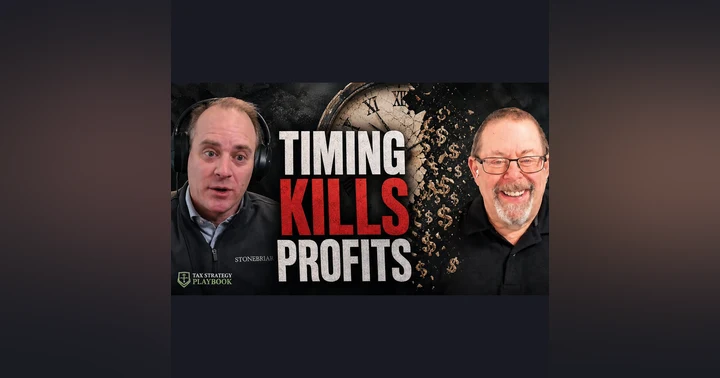
 Tax Timing Mistakes That Cost You More Than Any Bad Deal
Key Takeaways
- Bad timing, more than bad investments, is the primary reason financial plans fail and wealth is destroyed.
- The Cash Flow Clock framework helps categorize assets based on when they'll be needed, moving beyond simple asset allocation to strategic asset location.
- Shifting from reactive tax preparation to proactive tax planning is crucial for lifetime wealth maximization.
- Strategies like cost segregation and bonus depreciation create cash flow optionality, preventing forced asset sales or desperate financial moves.
- CPAs should evolve into proactive tax planners, initiating timing-first conversations to guide clients towards better wealth design.
Bad Timing Costs You More Than Bad Investments Ever Will - The Cash Flow Clock
On The Tax Strategy Playbook, host David Wiener, known as "Mr. Cash Flow," dives deep into a critical financial concept with guest Gary Preisser. Gary is the Managing Partner of Stonebriar Wealth Advisors and the innovative creator of the Cash Flow Clock, a revolutionary framework designed to help business owners, real estate investors, and their CPAs move beyond reactive tax planning to proactively design wealth that truly works on their terms. The central thesis is powerful: bad timing destroys more wealth than bad investments ever will. This episode unpacks how strategic timing, rather than poor investment choices, is the true linchpin of financial success and how understanding the cash flow clock tax strategy can transform your financial future.
The High Cost of Bad Timing in Financial Planning
Gary Preisser articulates a stark reality: most financial plans are derailed not by flawed investments, but by poor timing. This often forces individuals into desperate, suboptimal decisions when liquidity is most needed, leading to significant wealth destruction. The episode emphasizes that the problem isn't always the deal or the tax code itself; it's the forced timing of actions. As Gary puts it, "The best time to ask for credit is when you don't need it." When financial distress strikes, securing favorable terms becomes nearly impossible.
Introducing the Cash Flow Clock: A Framework for Strategic Wealth Design
At the heart of this episode is Gary Preisser's Cash Flow Clock. This isn't just another financial model; it's a design methodology that categorizes assets based on the timeline of when you'll actually need the money. The framework divides your financial life into three distinct zones:
- The Lazy Zone (0-5 years): This zone is dedicated to immediate liquidity needs. Assets here should be stable and readily accessible, ensuring you can meet short-term obligations without market volatility.
- The Safe Zone (6-10 years): Here, the focus shifts to guaranteed returns with minimal risk. These assets are earmarked for medium-term goals where capital preservation and steady growth are paramount.
- The Volatility Zone (10+ years): For long-term objectives, this zone accommodates higher-risk, higher-growth potential assets. These investments are designed for wealth accumulation over extended periods.
Understanding and applying the cash flow clock tax strategy ensures that your assets are working optimally for your financial timeline.
Asset Location vs. Allocation: A Crucial Distinction
The conversation highlights a critical nuance often overlooked in financial planning: asset location is as vital, if not more so, than asset allocation. It's not just about *what* you invest in, but *where* you hold those investments. Strategically placing assets in the right type of account, whether taxable, tax-deferred, or tax-free, based on their intended use and associated tax implications can save individuals hundreds of thousands of dollars over their lifetime. This proactive approach to asset location is a cornerstone of effective cash flow clock tax strategy.
Beyond Tax Preparation: Embracing Proactive Tax Planning
A recurring theme is the essential shift from reactive tax preparation to proactive tax planning. Waiting until April 14th to address tax liabilities is, as the episode notes, far too late. Effective tax planning, ideally discussed in October or November, focuses on minimizing lifetime taxes by strategically timing income, deductions, and major financial events. This forward-thinking approach ensures that tax considerations are integrated into your overall wealth design, not treated as an afterthought.
Strategic Deferral, Roth Conversions, and Avoiding the Tax Trap
While tax deferral is a powerful tool, the episode cautions against viewing it as a means to defer taxes forever. That is a common trap. Instead, the discussion delves into the strategic use of Roth conversions. These conversions make sense for individuals who anticipate being in a higher tax bracket in the future or need to strategically manage taxable income in the present. Understanding when and how to implement these strategies is a key component of a robust cash flow clock tax strategy.
Mitigating Pitfalls: The Widow's Tax Trap and Retirement Readiness
The episode shines a light on specific financial planning pitfalls, such as the Widow's Tax Trap. This common issue blindsides surviving spouses, often thrusting them into a higher tax bracket with reduced income after the loss of a partner. Proactive planning, informed by a clear understanding of one's financial timeline, can significantly mitigate this impact. Furthermore, the conversation re-frames retirement planning, challenging the conventional question of "How much do I need to retire?" Instead, it prompts a deeper consideration of one's purpose in retirement and the income versus expenses required, leading to a more accurate assessment of financial readiness.
Leveraging Tax Strategies for Future Optionality
Strategies like cost segregation and bonus depreciation are presented not merely as tax reduction tools for the current year, but as powerful mechanisms for generating cash flow and creating future optionality. By strategically utilizing these deductions, business owners and real estate investors can avoid forced asset sales or making desperate financial decisions when cash is needed, thereby preserving and enhancing wealth.
CPAs as Proactive Tax Planners
The episode issues a call to action for Certified Public Accountants (CPAs). The narrative urges them to evolve from traditional tax preparers to proactive tax planners. This transformation involves initiating timing-first conversations with clients early in the year, focusing on lifetime tax strategy rather than just compliance. Collaboration among CPAs, financial advisors, and tax specialists is also emphasized as crucial for comprehensive wealth design.
Immediate Steps for Business Owners and Real Estate Investors
For business owners and real estate investors looking to implement these principles, the episode outlines three immediate steps:
- Forecast Cash Flow and Taxes: Develop a clear projection of your expected cash flow and tax liabilities over the next 5-25 years.
- Define Your Purpose: Clearly articulate your personal and financial goals, including your purpose for retirement and major life events.
- Project Financial Needs: Estimate your future financial requirements based on your defined purpose and lifestyle.
These foundational steps are critical for informed decision-making regarding major life events like selling a business or retiring, all guided by a strong cash flow clock tax strategy.
🔗 CONNECT WITH GARY PREISSER:
(See show notes for Gary's contact info and Stonebriar Wealth Advisors)
📩 FREE RESOURCES: Subscribe to the Tax Strategy Playbook Newsletter:
👉 https://taxstrategyplaybook.com/newsletter
- 2026 Tax Planning Guide
- Updates on every new episode
- Free tax strategy resources for business owners and investors
🎙️ ABOUT THE TAX STRATEGY PLAYBOOK:
Hosted by David Wiener, Mr. Cash Flow, the Tax Strategy Playbook breaks down real-world tax and cash flow strategies for business owners, real estate investors, and the CPAs who serve them. Every episode delivers actionable insights to help you keep more of what you make, smooth out your cash flow, and avoid the "I had no choice" moments the tax code loves to create.
⭐ If this episode helped you, please leave a rating and review. It helps more business owners and investors find this content!
Frequently Asked Questions
What is the Cash Flow Clock tax strategy?
The Cash Flow Clock is a framework that helps business owners and real estate investors categorize their assets based on when they will need the money, ensuring strategic financial planning.
How does bad timing destroy wealth more than bad investments?
Bad timing forces individuals into desperate financial decisions when liquidity is needed, leading to suboptimal outcomes and wealth destruction, rather than stemming from the investment itself.
What is the difference between tax planning and tax preparation?
Tax preparation focuses on the current year's liability after the fact, while tax planning is a proactive strategy focused on minimizing lifetime taxes by strategically timing income and deductions throughout the year.
What are the first steps for business owners regarding timing?
Business owners should start by forecasting cash flow and taxes, defining their life and retirement purpose, and projecting their financial needs over the next 5-25 years to inform strategic timing.
David Wiener: Every blown-up financial plan has a convenient scapegoat. The market crashed, the tenant left, the tax bill was bigger than expected, but when you peel back the layers, a different pattern shows up. The problem isn't always the deal or the tax code. It's when you were forced to act. Today we're talking about how to design your cash flow and tax strategy so you're never backed into a corner, no matter what the market or Congress does. Welcome back to the Tax Strategy Playbook where we break down real-world strategies for business owners, real estate investors, and the CPAs who serve them. I'm your host David Wiener known as Mr. Cash Flow and every week we dig into practical ways to keep more of what you make, smooth out your cash flow, and avoid those I had no choice moments the tax code loves to create. in this episode we're tackling a brutal truth. Good investments get destroyed by bad timing. We're going to show you how to design your cash flow and your tax moves so that you're not forced to sell assets, drain your business, or make panic decisions just to pay a bill. Joining me today is someone who's built his entire practice around fixing that timing problem. Preisser is the managing partner at Stonebriar Wealth Advisors and the creator of the Cash Flow Clock, a framework that helps business owners and real estate investors structure their wealth by when they'll actually need the money. He works at the intersection of tax planning, cash flow design, and investment strategy, often in partnership with CPAs and tax professionals who are tired of just cleaning up messes after the fact. Gary, welcome to the Tax Strategy Playbook. I'm glad to have you here.
Gary Preisser: Thanks so much for having me, David.
David Wiener: Before we dive into the Cashflow clock, which sounds like something that I should have invented, â give your list. Hey, I appreciate that just because I use the name Mr. Cashflow. Give the listeners a quick snapshot. Who do you work with and what problems are you solving for?
Gary Preisser: I'll give you partial credit for it, That's right. Most of our clients are retirees or on the verge of retirement, but they the full gamut of we got real estate investors, we've got business owners, we've got â employees. All of them are dealing with taxes in a different way as they shift from the accumulation side of the mountain to the distribution side. There's a lot of assumptions about taxes when you get into retirement, that your taxes can be lower and it becomes a completely different situation. So we are a holistic firm. of financial are actually just investment advisors. We talk about the taxes, we talk about the income, we talk about the cashflow. We talk about the estate planning, all of those things affect each other and each individual situation, each business owner, each real estate investor, each retiree has such a unique situation and a unique tax liability associated with that. The we use, the cashflow clock, the other things that we do allows us to provide customized advice and â for each one of those clients.
David Wiener: Let's zoom in on the problem behind all of this because you and I both see something that doesn't get talked about enough. The real villain is timing. You've said that it's bad timing, not bad investments that derails most plans. What does that look like in the life of a business owner or a real estate investor?
Gary Preisser: Well, especially with business owners in real estate, they've invested so much. Business owners, I'm a business owner. I understand this. You understand this. We invest so much in our business. And then when you need cash, especially when you're not prepared to need cash, it's very difficult to liquidate that investment or even liquidate a portion of that investment. It takes time to do so. And if you're in a rush to do it, if you're doing it out of desperation, then you're unlikely to get the best deal.
David Wiener: I do.
Gary Preisser: If you're asking, I tell my clients the best time to ask for credit is when you don't need it. When you're in that desperate times and then you go to the bank and say, I really need this money, the terms are not gonna be very beneficial for you. So one of the reasons I recommend to my clients to have a home equity line of credit at all times when they don't need it, so that when those times come up, when they need liquidity, when they need money to expand their business or to put a down payment on real estate, that money, they at least have optionality. I'm not saying they should use it, but they have that optionality and they have that as part of their structure, not just a desperate, the moment having to make that decision.
David Wiener: It does always seem like the bank is more likely to loan you money when you don't need it than when you do. Do you have a story anonymized, of course, where the investment itself was fine, but the timing of the cash flow or taxes forced a tough decision?
Gary Preisser: That's right. That's right. So we have a prospect that working with right now. He's worth about $10 million. 75 % of it is in non-qualified assets in a trust account. 25 % is in an IRA. And he came to us and said, here's my plan. And it's not a bad plan. He's living off of dividends from his non-qualified account. The problem with the plan is the timing and the tax, the asset location. Because he's over 80, he has to pull money out of his IRA, whether he wants to or not, thanks to those RMDs. That's over $100,000. He's got $170,000 a year in dividends. He's only spending about $60,000 a year. So he has created a huge tax bill, and also he's misplaced volatility in his portfolio. It's not a bad investment, but because of the timing of the income needs, it's in the wrong place. those high growth, low dividend investments in his IRA, I would much rather have in his non-qualified account so he can take advantage of the step up in cost basis for his estate plan and put those dividends in the IRA because he's using that for income anyway and he can control to a certain extent as much as â RMDs allow when that money is being taxed.
David Wiener: Sure. How hard is it to unwind it when it happens? mean, at this point, is there a way to unwind it and make it better?
Gary Preisser: Inside of qualified accounts, IRAs or Roths we can make changes to the investments, the location, and it's very simple. With the non-qualified, to your point, it makes it very difficult. Once we've made that decision, now we have capital gains considerations. We can't just go in and just shift it without having, without understanding at least the tax implications. Now it may be worth it to take that tax implication or that tax liability in one year and get it over with, but it may not be. Each situation is different and this is why it's so important, I think you'll appreciate this, â look forward and look at the tax liability as a whole over a lifetime and as well as throughout the duration of an estate instead of just looking at it as a one year occurrence.
David Wiener: Absolutely and mantra is â you need tax planning not tax preparation. know look forward and of guys that I had on one of my episodes made the point tax planning is not so that you pay zero taxes this year it's so that you pay as little taxes over the course of your lifetime as possible.
Gary Preisser: â I could not agree more.
David Wiener: My dad was a CPA. My dad always told me tax evasion is a crime, but tax avoidance is mandatory. So for the tax pros that are listening, where do you see them stuck reacting to timing problems that they didn't create?
Gary Preisser: It absolutely should be mandatory. Yes. That's a great question. think a lot of, especially the good CPAs, and I know all the CPAs listening are great CPAs, especially if they're listening to what you're talking about because it's so important. But I find that too many good CPAs get overwhelmed with the preparation they're just trying to keep up. And I appreciate that. It's tough out there because there's not enough good CPAs. There's not â good tax preparers out there. The is... By the time you're looking at tax preparation on April 14th, typically when the clients get that information to you, it's just too late to do a majority of things. So we meet with all of our clients and with their CPA at least in October and November. Throughout the year, we want to try to do that as regularly as possible, but especially in October and November when we can at least have an â
David Wiener: you Absolutely. Yep.
Gary Preisser: to do something about it. Because to your point, it's not about paying less tax necessarily this year. It's about paying less tax over time throughout the duration of the life and the estate. And one of the things that I see a lot of, especially with some of my lower net worth clients, we have a lot of retirees because of the extra standard deduction that everyone has access to if you're over 65. You have an opportunity to do Roth conversions and have the government pay the taxes for you. That's a huge opportunity. And most clients are not even considering it because by the time they're talking to a CPA who's giving them that advice, it's too late for that year. And so we've got to be more proactive.
David Wiener: Right, absolutely. Definitely. I'm pushing 70. â at the point now of looking at Roth conversions and those kinds of things to get money out of the IRAs and know. â
Gary Preisser: Deferring taxes is not a bad thing. It's a great tool. Absolutely. But the problem is when most clients just continue to look at defer, defer, defer forever, that's not a good long-term plan. We need a plan to determine the timing of the tax. When we pay tax determines how much tax we pay. We want to be intentional about the timing and that can make a huge difference in how much we end up sending to the government.
David Wiener: deferring taxes is a great thing. And Uncle Sam doesn't need my money. Well, he might need it, but he's not getting as much of it as he'd like.
Gary Preisser: That's right. He appreciates it, but no, they've got plenty.
David Wiener: you've brought up design a few times and that's kind of a perfect setup for the framework you built to fix this timing problem. So explain to me what the cashflow clock is in plain English. If we were in a room with a client and their CPA, â would you explain the cashflow clock to both of them?
Gary Preisser: Yes. Absolutely. So the cashflow clock is a design methodology. We see typically these pie charts where everything is just segmented by allocation, by volatility, risk. But what importance of assets is not just in their accumulation, especially as you're getting closer to retirement, it's in their utilization. Assets are not trophies, they're tools. So we want to use these assets. We spend a lot of time with our clients encouraging them to spend more and to use their assets more. They're so used to saving for retirement, they don't realize that they're here and that this what the money is for. So assuming that now it's time to start to distribute these assets, when we distribute them makes all the difference. So money that is going to be used in the next five years. We call this the lazy zone of the cashflow clock. It's money that cannot be exposed to any volatility at all. The key is liquidity. I want to still get as much growth as possible. I see way too many people that have their money in a savings account making 0.1%. Let's at least get it in some kind of high yield savings, getting at least 3 to 4%, if not a little bit higher. But I'm much more worried about liquidity. Some people say, well, what about inflation? Well, I'm not worried about inflation, but I'm not worried about it within a three to five year period as much as I am over a 25 or 30 year period. So liquidity is the key for lazy money. Money markets, high yield savings accounts, maybe some CDs. Once we get to year six through 10, I still can't afford to take on any volatility. So this is our safe zone. It's guaranteed not to lose, but I've got to earn about five to 6%. This is where index CD, structured notes, and some other options, maybe a fixed index annuity can provide that liquidity and provide that protection. This is not where bond funds go, by the way. because bond funds are not safe enough as we saw in 2022 when the bond index lost 13%. Once we get past 10 years of cash flow and liquidity covered, assigned, that's where we can be in the volatility zone. Now, a lot of my clients, especially as they get older, they're worried about volatility, but people come in, I'm retired, I gotta take out all the volatility from my portfolio. Well, are you gonna spend all that money in the next five years?
David Wiener: Right.
Gary Preisser: If you are, then that's a different story. We got to talk about that, but we're planning for a 20, 30, maybe a 40 year retirement. We can't abandon the volatility that provided the growth that got us to this point. We just need to make sure that it's in the portion of the portfolio with the purpose and the timing where it can afford to absorb that volatility, where it becomes an opportunity and not a threat. So any assets that we're not going to need for 10 years, that's where we can use investments like individual stocks and ETFs because we have time. We have time where we're never going to have to sell out of those investments out of desperation.
David Wiener: That's great. Desperation is always a bad idea. So I can see how a clock like this changes the conversation from what should I invest in to when will I need the money and what tax moves do I want available each each place in the in the clock. So basically the clock is laid out in three segments, it sounds like. Once once you see your world laid out on that clock, then the next question is which tax levers to pull and when, right?
Gary Preisser: That's right. Yes.
David Wiener: That's where lifetime tax planning and sequence risk comes in. So when you talk about lifetime tax planning for a business owner or a real estate investor who's listening right now, what exactly does that mean?
Gary Preisser: Yes. It's making sure that we are being intentional about the timing of when we pay taxes. And we talk about this, you put it in the framework of the cashflow clock. We understand kind of the level of volatility based on the timing, but the taxes are equally important. These are not separate decisions. They have to fit together. And especially as you're going getting closer to retirement or into retirement, whether you're a business owner or a real estate investor, whatever the case may be, it's interesting to me how many of my clients still rely on that $200,000 that they have in their savings account, making not enough money typically to start. But they're using that for income and letting their IRA continue to grow. Now, I love that their IRA is growing, but The IRA, the longer it grows, the more tax that will have to be paid by somebody at some point in time. The only way to get out of that tax is by donating that money to charity. And that's not necessarily a good tax savings. If you're going to donate to charity, great. But we want to make sure that we're efficient. So the timing of when we pay that tax and the lever that we pull, we should be we should be pulling income from the IRA first. The Roth, any tax-free accounts, we want those to grow as long as possible. And so the Roth should be the last money that we spend. I still want you to spend your money, please. It's your money. You should spend it. But the Roth should be the last money that we spend to get as much tax benefit as possible. Now, that goes along the lines of asset location. And this is something that I think is very important for anyone to understand, but especially if you're dealing with managing your money from a business owner's standpoint, from a real estate investor, you are involved in making decisions on a very granular level that a lot of investors don't really have to deal with. And so it's important to understand where are your investments held? Because the Roth is the last money that we spend, not only do you have time to endure or to take on more volatility, you want to take on the highest volatility of your portfolio in the Roth because more volatility over time leads to more growth. I want that growth to be tax-free. Whereas IRA should have less volatility and we still want it to grow. But if I have a choice of a 5 % return or a 10%, which one do I want to be tax-free? I'll take the 10 % any day of the week.
David Wiener: Absolutely. Absolutely. Yes. So people are making big lifetime decisions often, I believe, that tend to get missed time. So, know, â are some of those like selling a business or selling a property or retiring or taking on partners? I know my wife asks me, when are you going to retire? Are you ever going to retire? I'm not because I enjoy what I do. I â to make people money, you know, â of kind of like what you do, but
Gary Preisser: You Yes.
David Wiener: You know, I'm a provider of cost segregation studies, D studies, R &D studies, and a lot of tax consulting. I love what I do. And I'm going to continue to do it until my head hits the desk, I think. â That was great lesson I learned from my dad. He said, you know, if you find something that you love doing,
Gary Preisser: Yes. You've never worked a day in the, you've never worked a day in your life, have you?
David Wiener: do it and you'll never work a day in your life. And it took me years to find it. But when I found it, it was I could just relax and do what I love to do. You know, and I hang out in my office just because I like doing what I do. So â â do they how do all of those big lifetime decisions get get factored in like selling a business, when to sell a business, when to sell a property, when to take on partners?
Gary Preisser: That's right. You a great question. And there's never an, it's never an easy answer to any, to those questions. But the important thing is to start asking those questions very early and not wait until you're almost 70 years old. And you can't, you physically can't perform the business anymore. It's very different for you to, â to talk about tax strategy that rather than, driving a forklift, right? It's just a different type of business. And so we have to start. with asking about purpose first. What's the purpose of the business? What's the purpose of the investment? What's the purpose â for each of us, right? What are we trying to accomplish with these assets, with this income? And then it becomes, I think, easier to decide when is it enough? When do you have enough to retire? That's the question I get a lot. Do I have enough to retire? I've had clients come into my office and they are terrified of running out of money. and I look at their situation and I do that cash flow forecast and a tax forecast for them, I'm like, okay, let's be honest here. If you doubled your spending right now, you would still leave behind $2 million to your beneficiaries. And they have no idea. I've talked to...
David Wiener: Yeah. I think it's because I think it's because of what you hear on social media. You know, are posting infographics saying how much money do you need to retire? How much money do you need to retire? You know, they used to say if you retired with a million dollars, you were fine. Now it's if you retire with two million dollars, you're fine. Well, there's a lot of people who don't have that kind of money and they're panicking.
Gary Preisser: Well, and that's the wrong question. To your point, Mr. Cashflow, what makes the biggest difference for success in retirement is not your amount of assets, it's what's your income compared to your expenses. Because I have clients that between their Social Security and their pension, they're making $6,000 a month and if their expenses are only $4,000 a month, they can retire today and they would never really need to touch their assets. They should, I want them to, but they don't need to. That's very different than someone with $6,000 of income that's spending $10,000 a month. They need those assets and they need to be allocated. Their investments need to be very different. And the problem, part of the problem is with our industry, you take a 60 year old and they're in two different situations as far as their cashflow is concerned, but their investments are put in the exact same, or mutual funds because they both answer that they're moderately conservative on a risk questionnaire. Instead of asking them about their cash flow because that is what determines every decision that we make.
David Wiener: Yeah. So, you know, I think where do you see the well-timed tax strategies, like doing cost segregation, bonus depreciation, big deduction years, or credit years, making the difference between forced to sell and having options?
Gary Preisser: Yes. I think have to look at it as â whole picture because I love these strategies that you talk about on your podcast, that you're talking about with your clients. â of the problems that I see, â I have seen with some of the prospects and people that I've been in contact with is they look at those opportunities as a way to not pay tax at all this year. instead of looking at it as a lever and an opportunity to pay tax intentionally at lower rates and avoid taxes at higher rates down the road. Because you could put in all these effort, the effort to create these strategies that reduce the tax liability, but then you end up not taking full advantage of that and then paying higher taxes at higher tax rates down the road. So understanding how this fits, it's not just a tax strategy, it's a tax strategy to add value to your life, to your financial situation. And when we look at it from...
David Wiener: And you have to kind of understand the trajectory of your tax rate and your income as well.
Gary Preisser: Absolutely. You know, we talk a lot about Roth conversions, okay? And some people say, well, I don't know if a Roth conversion is worth it. And the reality is for half of people, it probably is. And for half of people, it might not be. It's literally like 48, 52 based on the statistics. It all comes down to a simple question. Are you, are your, is your tax bracket higher now than it will be in the future? Or is it lower now than it will be in the future? And everybody's different. The assumption is when I get to retirement, I have less income. And so I'm going to have be in a lower bracket. But if you are have more time on your hands to do the things that you want to do, in your case, you just want to do podcasts, which I appreciate. But if you have more time and you're and you have time to travel and and spend time with the grant, whatever that is, but you're pulling that money from IRA money that's been tax deferred. I see a lot of my clients, especially that are in the highest tax rates they've ever been in, in retirement because of where their money has been structured, where the money has been placed. And so we, by simply looking forward and doing a tax forecast, doing a little bit of tax planning, it's never going to be perfect. We don't know exactly what's going to happen in the future, but we do know that tax rates are likely to be lower than they will be on a macro scale. The question is for each individual, are tax rates higher now than they will be in the future or lower? So one of the things we talk to our clients about is the widow's tax trap because for our married clients, statistically speaking, one will likely pass before the other. And I tell them, I'm not looking for volunteers. I'm not making predictions here. But when that spouse passes, the surviving spouse ends up with less income because they're going to lose out on at least a social security, if not more. and often in a higher tax bracket because now they're filing single instead of filing jointly. It's a lot easier to jump into that 22 % tax bracket or in some cases 32 % tax bracket when you're single as opposed to being as opposed to when you're filing jointly. So if we have the opportunity to convert Roth to Roth in the 12 % tax bracket compared to 22, it's all relative, right? Then we want to take advantage of that.
David Wiener: All right. Absolutely. Yes. Yes. Well, that's something that people don't always think about. And I talk to clients all the time are looking to get a cost segregation study. And the question I get is absolutely the wrong question. How many properties do I need to do this year so I don't pay any taxes? That's the wrong question. So we go back and we start teaching them the right questions.
Gary Preisser: It's the wrong question.
David Wiener: I don't let somebody do a cost segregation study if it's not going to be beneficial to them and beneficial to them in the long run. So I work with a lot of tax planners. I work with a lot of tax strategists as well as CPAs to kind of join our efforts a little bit to help the client out the best way they can. we've talked about concept. We've talked about risks a little bit. Let's get really practical. Let's give each group listening a simple starting playbook. So if a business owner or a real estate investor is thinking, you know, I probably do have a timing problem. What are the first three, four five steps you want them to take in the next 30 days?
Gary Preisser: I think the first thing is to look at forecasting, forecasting their cash flow, forecasting their taxes, forecasting their life. What do they want their life to look like? Do they want to work forever? Do they want to have a specific, is there a specific retirement date that they have in mind? Or do they need to arrive at a certain place financially where they feel comfortable retiring? And one of the things along those lines, and I think this goes back to your point, what are they retiring to? It's not just what you're retiring from, but what are you retiring to? is going to provide purpose and provide value for you? If we don't start with that question, then â answer that we have to any other question is incomplete because it really doesn't give us the add that we're looking for. It's more reactive.
David Wiener: Exactly.
Gary Preisser: It depends on how they feel at that time, which is a very dangerous way to make decisions. So start with purpose, look, and that will determine timing. Let's project that timing throughout the next five, 10, 25 years, whatever the case may be, and then decide, okay, what's the best And life doesn't always work out for the best, I get that. But let's aim for the best. If we aim at nothing, we hit it. â let's at least have a plan here. â
David Wiener: Absolutely it is.
Gary Preisser: and understand, okay, what are those factors that are important to you? For a business owner, is it important for you to just get a huge lump sum at the end and walk away into the sunset and have that and then create income from that big lump sum? Or is it something where you want to take the next three to five years to transition that business so you know that your clients or your business is taken care of properly? That's a very different process and it needs to start at a very different time. And so that you understand the options ahead of time before that moment of inflection so that when that moment arrives, you're as prepared for it as you can be. That puts us in a better situation to have a successful result.
David Wiener: all about preparation, isn't it? Okay, so let's flip that over. For CPAs and tax pros that might be listening, what's a simple way to start bringing this kind of timing-first conversation into their client meetings without just overhauling their entire practice?
Gary Preisser: It absolutely is. tricky because â practices have moved more and more to preparation and â reporting has happened as opposed to actual planning. But the first thing that we do for â any that comes into our office is education. There's 3.7 plus million words, however many more words there are in the tax code now, but your tax for the most part in three main ways, maybe four. â but understanding the difference between non-qualified accounts versus tax-deferred accounts versus tax-free accounts. Helping the clients understand that. I talk to so many people that are worth millions of dollars and say, tell me about what a Roth IRA is. And they have no clue because they've heard it, but no one's talked to them about it. And it takes time, it takes education, and it takes people like you doing the good work of podcasts to get this information out.
David Wiener: Absolutely.
Gary Preisser: But the clients need to understand what decisions they're making now and understand the impact of those decisions 20, 30 years down the road so they can make the best decision. so that that CPA now, instead of a tax preparer, they become a tax advisor and they're actually make they're creating better outcomes instead of just delivering the bad news of, OK, you didn't pay tax very much this year, but 30 years from now. you and your widow are going to have a huge tax burden that's going to be overwhelming for you.
David Wiener: And fortunately, I work with a bunch of guys, a bunch of CPAs that I work with doing cost segregation that absolutely do that kind of thing. And they feel like they're actually helping create wealth for their clients, which is a great thing. Unfortunately, too many investors and business owners say, I'm not going to pay all that money for a tax strategist.
Gary Preisser: They absolutely are. Yes.
David Wiener: And of the guys that I work with was my first guest on the podcast made the comment, â batting 1,000. They've never had a client â didn't save more than paid them. That's a pretty good deal. â So it.
Gary Preisser: It's a pretty good deal. But it takes time and it takes education and it takes taking responsibility for that business owner to actually make that happen.
David Wiener: Absolutely. So when a CPA, if a CPA wanted to collaborate with a firm like yours or with a specialist like my team, what should they look for so they're adding value without feeling like they're losing control of their relationship?
Gary Preisser: Yes. Yeah, there's a lot of things that decisions affect each other â intricately. They cannot be separated. They are intertwined. And yet our industry, have financial advisors that are just investment advisors and that tell you in no uncertain terms, don't ask me about taxes. I'm not responsible for your taxes. Even though every decision they're making, every recommendation that they're making affects their taxes in some way, or form. And then you have the tax advisor that's just the tax preparer on this side of it. Let's bring those. They have to be brought together. If you have over $20 million, you go to Goldman Sachs, you will get a team. But if you have less than that, which is still a lot of money, you tend to get just an investment advisor that puts you in a generic portfolio. So you need to be looking for a financial advisor that is actually a holistic wealth manager. that's looking at all aspects of wealth. We're trying to create wealth. We're not just trying to manage investments because that's the bottom line. It's not what you have is what you can keep, right? Something I think you've said a couple times.
David Wiener: I think that's so important. That's so important. That's exactly right. â has just been full of ideas. My head is spinning with ideas right now. So let's this up with one big takeaway for each group. Let people know where they can go from here. If you had to boil this down to one sentence for each group, business owners, real estate investors, and CPAs, what would you want each one of them to remember about timing and design?
Gary Preisser: It's tough for me to only speak in one sentence. For business owners, it comes down to the purpose of your business. How is that going to fit and add value to you? Once you know the purpose of the business, then the timing and the design become very clear. For real estate investors, it's a little bit different because typically those could be more passive.
David Wiener: Hahaha. Good.
Gary Preisser: But again, what is the purpose? What's the timing? Are you planning to utilize this asset for income for yourself and your immediate family? Or are you passing this to the next generation and taking advantage of step up in cost basis and those types of things that changes everything? That's right. So a whole different discussion. And for CPAs, it's about, what what type of impact do you want to have on your clients?
David Wiener: That's a whole different discussion, right?
Gary Preisser: Do you want to keep them compliant with the IRS do you want to help them build wealth for them and their family? And everybody's different, but for those CPAs that really are in a unique opportunity to make a huge difference for their clients, for better or worse, clients trust their CPAs implicitly. So please take advantage of that trust. to introduce these ideas of lifetime of tax planning as opposed to just tax preparation because the impact can be huge not just for your business but for your clients as well.
David Wiener: And I think part of the problem with some tax pros is they kind of feel like if they don't know the answer to everything, if they can't handle everything for their clients, they're going to lose them. You know, my dad, and I quote my dad a lot because he was a huge influence on me, but he said to be a CPA or a tax professional in today's world, you've got to be about 10 miles wide and a foot deep. You know, you've got to know a little bit about a whole lot of things. And then he said, and then surround yourself with people who are a foot wide and 10 miles deep on certain things that you can help. your clients get into. And that's exactly where you fall and it's exactly where I fall. â CPAs can't do cost segregation. They just can't. They can take a swing at it but they're not going to do a very good job and so they refer people to me. They can't do the kind of planning and forecasting and things that you do and so they refer people to you and we all work together when we do it becomes a great fit for their clients.
Gary Preisser: Yes. makes a huge difference. Could not agree more.
David Wiener: It does. This has been fantastic Gary. I appreciate it and I have a feeling we may be talking again. But thanks for joining us. Thanks for breaking down how timing and design and tax planning all fit together. It's been great to have you.
Gary Preisser: I hope so. Thank you, David. I appreciate it.
David Wiener: So if you're listening and you're a business owner or a real estate investor, here's your challenge for the week. Take 15 to 20 minutes to sketch your own version of the cash flow clock. Mark the big cash flow events and tax spikes you see coming over the next 10 years. If that picture makes you a little bit nervous, that's your sign it's time to redesign the plan, not just hope the market or the tax code are kinder to you the next time. If you're a CPA or a tax professional, Think about one client where you're always in firefighting mode. Big April surprises, forced sales, last minute cash scrambles. Share this episode with them and use it as a starting point for different kind of meeting. How do we design your cash flow so this stops happening in the future? And if today's episode was helpful, the best way to support the show is simple. Share it with one person who needs to hear it and leave a quick rating or review wherever you're listening. It helps more business owners, investors, and CPAs find these conversations. And subscribe to the Tax Strategy Playbook newsletter at taxstrategyplaybook.com/newsletter to receive free resources like my 2026 tax planning guide and updates on all our new shows. Gary's information is going to be in the show notes. So if you want to get more information on the cash flow clock and you want to connect with Gary, do that as well. I think it would be really, really worth your time. Thanks for listening to this episode of the Tax Strategy Playbook. I'm David Wiener and I'll see you on the next episode.
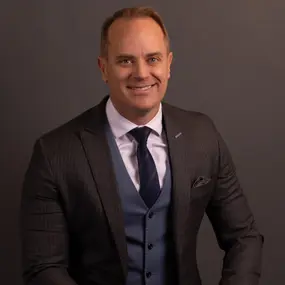
Gary Preisser is the Managing Partner and Cofounder of Stonebriar Wealth Advisors - an RIA thats story is summarized here: Stonebriar was founded on a simple belief: wealth management should do more than manage money. It should bring clarity, coordination, and confidence to every financial decision a family makes. From the beginning, the goal was to create a firm that helps families move from uncertainty to assurance, from complexity to simplicity, and from financial questions to lasting confidence.