


Former IRS Agent: Why Syndicated Conservation Easements Are About to Blow Up
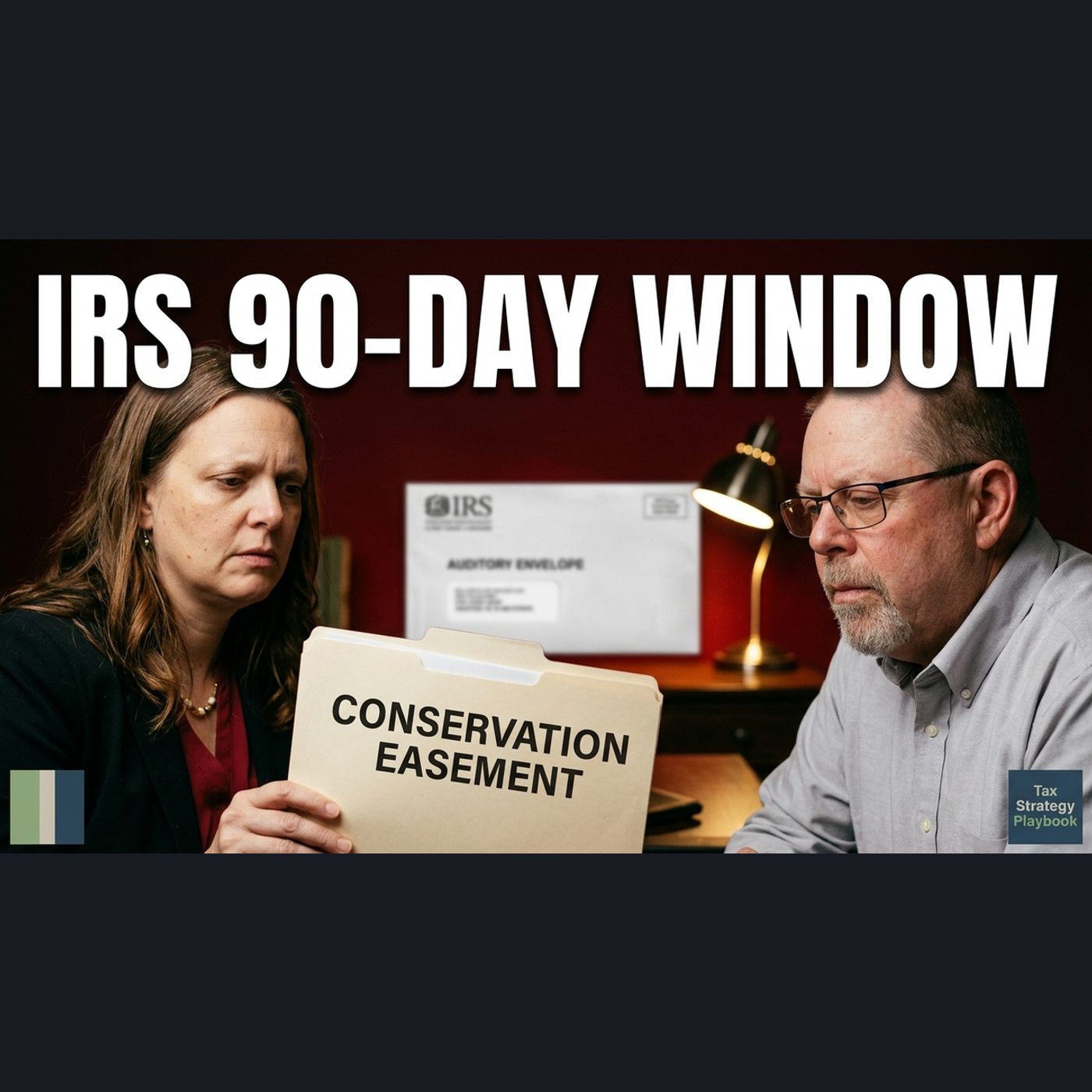


Former IRS agent Victoria Boon discusses the IRS's crackdown on syndicated conservation easements. Learn about the 90-day settlement window, the severe penalties for non-compliance, and crucial steps for those involved in these deals to navigate audits and potential deduction wipeouts.
Key Takeaways
- The IRS has opened a 90-day settlement window for syndicated conservation easements, after which significant penalties (up to 40%) and deduction loss are likely.
- Legitimate conservation easements differ from abusive tax shelters primarily through proper valuation and substantiation; syndicated deals often fail IRS scrutiny due to these issues.
- Tax courts consistently rule against improper conservation easements, often disallowing deductions entirely due to strict documentation requirements.
- Audit defense for conservation easements hinges on critical documentation like the Qualified Conservation Contribution acknowledgment and Form 8283, alongside property sales and deed information.
- A common misconception is that intent or incomplete documentation like Form 8283 is sufficient; strict IRS code adherence is mandatory.
- Proactively addressing potential issues is often wiser than waiting for IRS contact, as the IRS actively identifies discrepancies.
The IRS has recently announced a critical 90-day settlement window for syndicated conservation easements. After this period expires, participants could face a staggering 40% penalty and a near-complete loss of their claimed deductions. If you or your clients have ever been involved in a syndicated conservation easement, this episode is essential listening.
Joining host David Wiener is Victoria Boon, a former IRS Senior Revenue Agent and Subject Matter Expert from the Large Business & International Division. With over two decades of experience, Victoria was deeply involved in the IRS's conservation easement enforcement campaign, contributing to agent training and updating official IRS publications and forms, including Form 8824. Today, she leads Boon Tax Group and Boon Tax Educators, guiding taxpayers and tax professionals through complex IRS actions.
In this in-depth discussion, Victoria Boon and David Wiener explore the intended purpose of conservation easements, the reasons behind the widespread issues with syndicated deals, the specific findings of tax courts, and, most importantly, actionable strategies for those currently involved in these arrangements.
The conversation delves into crucial aspects such as:
- Understanding the fundamental principles of conservation easements and their legitimate applications.
- Identifying the critical distinctions between compliant conservation easements and those structured as tax shelters.
- The IRS's perspective and the genesis of their focused enforcement campaign on syndicated conservation easements.
- Details of the IRS's 90-day settlement offer, including timelines and potential penalty structures.
- The recurring problems with valuation that plague syndicated deals.
- The consistent rulings and findings from tax courts regarding conservation easement deductions.
- Guidance for individuals who participated in these deals five to six years ago.
- Key steps in audit defense when facing IRS scrutiny for conservation easements.
- Common and dangerous assumptions made by tax professionals in this area.
- The potential for legitimate conservation easements to still be viable.
- Strategic considerations: whether to proactively address issues or wait for IRS contact.
- The most significant misconception that real estate investors hold regarding conservation easements.
This episode provides clear, tactical advice and straightforward action items to help you navigate the complex world of syndicated conservation easements and protect your tax position.
🔔 Subscribe for weekly tax strategy breakdowns: https://www.youtube.com/@taxstrategyplaybook
━━━━━━━━━━━━━━━━━━━━━━━━
Guest Information:
Victoria Boon is a former IRS Senior Revenue Agent and Subject Matter Expert with over 20 years of experience. She specialized in conservation easement enforcement and now runs Boon Tax Group and Boon Tax Educators.
━━━━━━━━━━━━━━━━━━━━━━━━
About David Wiener:
David Wiener is the founder of Cash Flow Strategies and a nationally recognized cost segregation and tax strategy expert. Every week on The Tax Strategy Playbook, he breaks down the strategies real estate investors and business owners use to legally keep more of what they earn.
📩 Work with David: https://www.taxstrategyplaybook.com
💼 LinkedIn: https://www.linkedin.com/in/davidwiener
━━━━━━━━━━━━━━━━━━━━━━━━
Disclaimer:
This content is for educational and informational purposes only and does not constitute legal, tax, or financial advice. Consult a qualified tax professional before making any decisions related to your tax situation.
#ConservationEasement #TaxStrategy #IRSAudit #RealEstateTax #TaxPlaybook #SyndicatedConservationEasements
Frequently Asked Questions
What is a syndicated conservation easement and why is the IRS targeting them?
A syndicated conservation easement is an investment where multiple taxpayers collectively donate land for conservation purposes, claiming significant tax deductions. The IRS targets them because many are perceived as tax shelters with inflated valuations and insufficient documentation, failing to meet conservation requirements.
What is the IRS settlement window for syndicated conservation easements?
The IRS has opened a limited 90-day settlement window for taxpayers involved in syndicated conservation easements. This offers an opportunity to resolve cases with potentially reduced penalties compared to facing full audit consequences.
What happens if I don't settle within the IRS's 90-day window?
If you don't take advantage of the settlement window, you face a high risk of substantial penalties, potentially up to 40% of the disallowed deduction, and a near-total wipeout of your claimed tax benefits.
What are the most common mistakes tax professionals make with conservation easements?
Common mistakes include assuming that simply possessing Form 8283 is enough, believing that charitable intent can override strict documentation rules, and underestimating the IRS's enforcement focus on proper valuation and substantiation.
If I participated in a syndicated conservation easement deal years ago, what should I do?
For older deals (5-6 years), the standard audit limitation might apply. While specific documents like a Qualified Conservation Contribution acknowledgment cannot be recreated, other supporting evidence, such as board meeting minutes, can be used to bolster your case.
David Wiener: The IRS just opened a ninety day window to settle, and after that it's forty percent penalties and a nearly total deduction wipeout. If you or any of your clients touched a syndicated conservation easement, this episode could be the most important thing you listen to all year. My guest spent twenty years inside the IRS running the actual conservation easement enforcement campaign. She's seen both sides of the table. What she's about to tell you will either save you a fortune or Confirm you need to pick up the phone today. Welcome back to the Tax Strategy Playbook, the show where we break down the strategies that real estate investors and businesses use to legally keep more of what they earn. I'm your host, David Wiener, Mr. Cashflow, founder of Cashflow Strategies. And if you're a real estate investor, business owner, or the advisor who serves them, you're in the right place today. Today we're going to go deep on one of the most scrutinized and most misunderstood tax strategies in the entire IRS playbook, conservation easements. The IRS has over eleven hundred open cases right now. Tax courts has been issuing opinion after opinion, slashing deductions by ninety seven percent or more, and hitting taxpayers with forty percent gross valuation misstatement penalties. And as of may thirteenth, the IRS has opened what they're calling a final time limited settlement window for eligible taxpayers ninety days to settle or face the courts. There's no better time to understand exactly what's legitimate, what's abusive, and what your options are if you're already in the crosshairs, so stay with us. My guest today brings something almost nobody in the private sector can offer. She was on the inside building the enforcement machine. Victoria Boone is a former IRS senior revenue agent and subject matter expert for the IRS Large Business and International Division, where she spent more than 20 years. She worked directly on the conservation easement and aircraft compliance campaigns, helped develop the national training for IRS agents, and coauthored updates to core IRS publications and forms, including Form eighty eight twenty four for Like Kind Exchanges. Today she's the founder of Boon Tax Educators, where she provides continuing education as CPAs and enrolled agents, and she serves as the director of tax representation strategy at Boon Tax Group. where she advises clients on audit defense, IRS representation, and pre-audit strategy. Victoria doesn't just understand how the IRS thinks, she helps shape it. Victoria, I've been really excited to have you on the show. Welcome to the Tax Strategy Playbook.
Victoria Boon: Well, thanks for having me. It's exciting to be here share my knowledge and hopefully provide some insight that â will be helpful for others.
David Wiener: thank you. For listeners who've heard the term, but they're not sure â what a conservation easement actually is, walk us through the basics. What was the original purpose of this deduction and how does it work when it's done correctly?
Victoria Boon: So, what a conservation easement is, it is you have you keep the ownership of a property, but you say, okay, I'm not going to develop it. You know, I'm going to conserve this property for the use recreation or other activities. It's not going to be built on. There's not going to be any kind of development on that activity. So it's restricting the use of the land. And doing so, it's preserving wildlife, it would preserve just green areas and spaces. â and and â it is. It's definitely important. It's very
David Wiener: Which is really important.
Victoria Boon: responsible, right? It's it's a responsible way for the government to say, okay, we can't just build everything up. We need to give back and preserve what we have and use our natural resources â in in a way that's productive. Yeah.
David Wiener: And that's a good thing. Now on this show we talk a lot about legitimate accelerated depreciation strategies. Cost segregation is my world. I'm a cost segregation provider. And I think a lot of real estate investors hear conservation easement, and they put it in the same bucket as bonus depreciation, a legal IRS recognized tool. So where does the legitimate conservation easement â the tax shelter begin? What are the hallmarks of a properly structured defensible transaction versus one that's been engineered purely to generate a deduction.
Victoria Boon: Think it really just comes down to documentation, documentation, documentation. What can you support? Exactly. It comes down to okay, well, here is and it the IRS is looking mainly at valuation, right? They're they're not that's what's flagging things. Okay, you have this huge donation. It's â it might be valid, it might not be valid, but because there's a huge amount there, â targeting that and they're looking at it and they're saying, okay, was this.
David Wiener: Like everything else.
Victoria Boon: Allowable or was it not? And a lot of the times when I was working in the conservation easement campaign, it wasn't because things didn't fail because there wasn't a donation. It failed because they didn't have the right documentation. They didn't fill out this form properly. They didn't, â know, kind of fill in the blanks. But 170 has very, very strict substantiation requirements and In fact, I've been teaching courses on this on my platform and other platforms, â it's so strict and that's what a lot of times throws people out. And that's why the courts you had mentioned, you know, the the percentage â of cases that are being upheld but for the IRS's position, and that's because of the strict substantiation. And and the judges even mentioned it in some of the cases that, well, I'm sorry, my hands are tied, I can't do anything, this isn't right, but. The law is you either checked the box or you didn't check the box.
David Wiener: You worked inside L B and I at the IRS during the rise of syndicated conservation easements. were you seeing on the government side that told you this had become a problem?
Victoria Boon: You can see just the pattern of the large adjustments, the large amounts of deductions. and then you would look into them further and would see, okay, well, this isn't done right and that isn't done right. And and you would I helped create checklists for the IRS of okay, go down the list. You know, here's the here's the form for the charitable contribution, here â is how relates to the code sections. If there's something missing on this form, go back to the code section. a colleague of mine often refers to refers to it as the death trap. You know, it's the it's the death trap. It's it's where the conserv it's where conservation easements and any charitable deductions die if it's not filled out properly. and that's in addition to the the CWAs.
David Wiener: And you know what what strikes me from what I've been reading and and what I've been hearing is that the abuse wasn't subtle. It was it was brazen. And yet investors kept pouring money into syndicated conservation easements because the promised deductions were so large. And and we'll get into exactly what the IRS is doing about it right now and what the numbers look like in court. But first, before we go any further, if this is something that you're getting value out of right now, don't touch that dial. What Victoria's about to share in the next segment is the stuff that most CPAs and financial advisors still don't fully understand, and it directly affects you or your clients' exposure right now. So stay locked in. The IRS just announced a new time-limited settlement program on May 13th. It was IRS 2026-65. Reportedly, over 1,100 open cases, including 740 of them currently in tax court. Walk us through what the settlement offer actually says, the ninety day window, the ten percent penalty tier, the twenty percent tier, and why Treasury's calling this the final push.
Victoria Boon: Well, I'll start off with why they're calling it the final push. And that's because they have offered multiple settlement options. They've gone through and they've gone through this process multiple times. They've offered this. And I don't know if it'll actually be the final one, but there it's their way of saying, look, we've we've done this over and over and over and over again. We've given you so many opportunities. Like, come on, let's take care of this. And
David Wiener: Okay. Take care of this.
Victoria Boon: Let's free up the tax court. Let's, you know, settle these cases, free up the resources at the IRS, and and move on, â I mean, that's the whole point of this. That's why it's the final offer. â
David Wiener: Ha have most of the problems wound up being in the syndicated conservation easements?
Victoria Boon: I mean, there's a whole campaign just for the syndicated conservation eastments, but there's
David Wiener: Because because sit because syndicators tend to overstate the deductions.
Victoria Boon: Right. I mean, that's really what this all the whole campaign boils down to is the valuation. when I was at the IRS, initially it was we're just gonna go down the 170 checkbook, right? We're gonna go through and we're gonna say, You don't have this, you don't have that, you don't have this, you don't have that, you don't get the deduction, right? We're we're just gonna throw it out from that. but recently you can see that the courts have started addressing the valuation side. They've address started addressing the appraisers and all the valuation aspects of it. So that background, it doesn't make sense to continue â with something that's overvalued. I mean, look, the IRS already in Congress already passed Treasury regulations specific to conservation easements because of the, because all of the abuse, they're saying, okay, we're gonna no, no. â I they came in and they said, okay, we we have this campaign and we're doing all this stuff about it.
David Wiener: So so this is not a new problem.
Victoria Boon: And so they issue the regulations and they say, okay, well, we're gonna limit it and and this will be better, but they're still finding issues. So still finding issues, and there's there's still deductions out there. I mean, the campaign goes in it it reads things on the tax return, right? It it's looking for all the charitable deductions and seeing what it is. â It can read that stuff. It reads the 10Ks. It reads all of this information and it puts it together and says, okay, based on this, you know, here's a kind of like a list of cases, you know, a bunch of people that might have some issues. so I guess maybe this is a good idea to just go through the the process of how the this works. so after they identify a whole bunch of potential cases. â They then have someone go in and review it and say, okay, is this issue present? Is it not present? the reviewer will go in and they'll classify it and say, yes, it's present. No, it's not present. And then it will be sent out to someone to audit it. And when it's sent out to audit, there's a whole list of stuff. It says, you must look at â Y, and Z. â it'll say, for conservation easements example for example, it'll say, hey, look, you need to look at conservation easements. Here's all the information we have on it. Here is checklists that you need to go through. â lead sheets, here's everything you need to do. You have to do this, â and it's required. so there there is a process that it goes through. It's not that the IRS is just saying, â we're gonna if they s â right, right. mean, they're they're sitting here going, okay, well, we're we're still seeing this, these big deductions.
David Wiener: Just gonna jam the people.
Victoria Boon: And if we're still seeing the big deductions, we're gonna look at them. And if we're still tr having trouble with the deductions, we're gonna continue on. So they were hoping that having the the regulations out there would help with that. â unfortunately it hasn't. And so they're going, Okay, well, let's continue on then. And you know, it's not going anywhere.
David Wiener: And Absolutely. And and I while we're talking about the abuses and those kinds of things, I don't want to scare people off. Conservation eas easements are legitimate if they're done properly, right? Okay. Because seen tax court opinions in a couple of cases like Jackson Stone South and and Beaver Dam Creek Holdings, where deductions were slashed by ninety seven percent or more and forty percent gross valuation misstatement penalties were upheld.
Victoria Boon: They are, yes, they are definitely there.
David Wiener: And you think this is mostly in the appraisals or the structure or the intent or all three?
Victoria Boon: So a lot of these disallowances are due to the strict substantiation rules of 170. That's why it's really if you're going to get into a conservation easement and you're going to do go down that path, it's definitely a viable path to go down. But you wanna make sure that you have someone that is specializes in that area, whether it be me or someone else. Someone that really specializes in making sure that all of the boxes are checked, because otherwise you end up losing the deduction. And I don't remember what court cases have come out recently, but some of the judges have said, man, I wish I could do more, but my hands are tied. There is a valid transfer, there's a valid charitable interest. Everything is valid, but you didn't check the boxes. And because you didn't check the boxes, I have no wiggle room. My hands are tied.
David Wiener: Isn't that a shame?
Victoria Boon: And so it is, and that's exactly there are too many, it's not just one little either you have this or you don't. No, it's you have to have this and this and this and this. You have to have charitable intent. You have to have an actual interest that was transferred. You have to have appraisal attached, you have to have the the form filled out properly, you have to, you know what I mean? Like it's just adds and adds and adds. It's not like a colleague of mine.
David Wiener: Absolutely.
Victoria Boon: kind of explained it as kind of a Christmas tree, right? You have a tree and and then there's some lights you put on it and then there's some ornaments and then you go on a trip and you have some more items that you put on the tree. And then you go in and you add your kids come along and they add items. Nothing gets taken away but all of a sudden you look at your tree and you're like that's really great but where did all this stuff come from right? I mean if I had to recreate that that'd be insane. So â
David Wiener: Yeah exactly. And Treasury's also said that the IRS is also ramping up scrutiny on historic preservation easements with improper valuations. know, for somebody who's sitting at home right now who participated in one of these deals five or six years ago, what they need to do?
Victoria Boon: Well, if it was five or six years ago, they're probably okay the IRS has a three year limitation to audit returns. And it's three years from when it's due or from when it was filed. But for a lot of this is just going through and making sure you have the documentation. â some of the stuff you can recreate and some of the stuff you can't, like â CWA, for example. it that n
David Wiener: Okay, good.
Victoria Boon: Can't necessarily be but there are things that you can do to corroborate anything that's missing on it, if that makes sense. So you can't say, okay, I'm just gonna create a new CWA and I'm all good and I'm gonna get upheld in the audit. That's not gonna happen. But if you do have other documentation that corroborates it, right? It doesn't have to be a specific form that's filled out, unlike you know, other things, you can. piece together other information. You can piece together board meeting minutes or different things like that that can piece that together. So if you're involved in that, it really gets into making sure that you have the substantiation. Find a way to figure out, with someone, right? You're going to want to consult with someone that says, hey, let's look at this. Let's make sure that you have all the documentation. If you don't, let's look into it and â into it.
David Wiener: Is there something like a checklist that somebody could look at to to go kind of go through and make sure that they've done everything right? Or do they really need to work with somebody who can walk them through it?
Victoria Boon: I'm not a aware of I would really highly suggest having someone walk them through it if they're really concerned. you can go and look at the IRC 170 rules. they are very strict, there's a lot of them. I would say if you want some reading material right before bed and can't fall asleep, you're welcome to do that. â But also, can look at the publications, is what I would really suggest, is because the publications really do provide a lot of
David Wiener: Yeah.
Victoria Boon: good material on what you need to do. It's written in plain language, it's updated. Make sure it's the most recent one. So it's most updated. and and read through those publications and also through the instructions. Because the instructions will say, hey, put this on this line or â leave this blank if this is the case. So that really if you don't want to consult with someone Go through the publications, go through the instructions. They're really informative. They're written at, I think when we were told to write them at like a maybe high school grade level. So they're not legalese. They're easy to understand. so that would be my biggest suggestion there.
David Wiener: That's great. It's it seems very similar to what I tell my clients a lot of times if you have insomnia, get the â get the IRS audit guide on cost segregation and and just read through that. it's the same kind of thing. You can't go back and you can't recreate your time logs for real estate professional status. You can't you can't go back and recreate your time logs for material participation. You you have to have it, you know, and if if it's ever called into question, you gotta have it. So Let's get let's get into in a in a minute what do you do when the IRS actually comes knocking? But let me ask the listeners to do something real quick. If this is hitting different for you, I need a favor. Hit the subscribe button right now wherever you're listening. Apple, Spotify, YouTube. It literally takes two seconds and it means the world to this show. And if you're watching on YouTube, drop a like while you're at it. We bring guests like Victoria on specifically because they have the information that can change your financial life. The least we ask is that you help us. get in front of more people. Okay, so let's get back into it. And Victoria's contact information will be in the show notes for this. If you need to contact her or want to contact her for more information or for somebody to actually walk you through the process, you'll be able to do that as well. So you now advise clients on audit defense at Boon Tax Group. When a client comes to you and says, I claimed a conservation easement deduction and I just got an IRS notice. What are the first three things you look at to Assess their exposure.
Victoria Boon: Well I definitely wanna look at the CWA. I wanna look at the the form. â
David Wiener: And for somebody who's not that familiar, what exactly is a CWA?
Victoria Boon: CWA is contemporary written acknowledgement and it's provided from the charity, and that's is used â it is one of the strict requirements in the conservation easement, or for anything actually for charitable contributions is is required. â so that's what
David Wiener: Okay. That's the first thing. What what else would you look at?
Victoria Boon: the 8283 and sure that that's filled out properly what's on it and then also what other â any other documentation related to it right so if it's property you know if it's a conservation easement there's property look at the sales document look at the deed all of that kind of background information that really starts to paint a picture
David Wiener: You you also teach CPAs and enrolled agents through Boon Tax Educators, right? Including courses specifically on how how the IRS evaluates charitable contribution appraisals and conservation easements. What the most dangerous assumptions tax professionals make when they see these deals come across their desk that aren't experts in it, like you are?
Victoria Boon: the main issue is that they think that, well, I have this form, â 8283, that's sufficient. I don't need a CWA. or they think that, â well, there was intent, right? I mean, I can just prove things. It's it like they they just assume that something similar to the Kohan rule would apply, that I can just paint a picture and based on the painted picture. the auditor will just allow it. And that's not the case because the rules are so strict and they're so
David Wiener: The auditors, I would assume, don't have that kind of discretion.
Victoria Boon: â they don't. That's the problem. I mean, even the auditors get to the point where they're like, I'm I can't help you. They're similar to the judges that we were talking about. They're going, I want to give you the deduction. I can see that you gave something to charity and the charity benefited from it. And you wanted to do this. It's it's not like there was quid pro quo, you know, like. I scratch your back you scratch mine going on, but I can't do it because you didn't meet the requirements. You didn't check off all the boxes, you didn't do that. So â the auditors are human too. They didn't feel they wanna sometimes the get the all a bad rap that they just want to just disallow everything, they're mean and horrible. And when I was at the IRS, just mentioning that you were an IRS auditor. would just shut down conversations because people are like, I don't want to talk to you. But that's not the case. They're just human and they are doing their job. And â when the code section is strict, it's it's it puts them in the same predicament that their their hands are tied. They can't do anything.
David Wiener: I spoke. I spoke one time for a group of retired â revenue agents they introduced themselves as the most hated people in in America. â
Victoria Boon: luckily s since I've left, people have had a bit of the opposite reaction. They're like, wait, you worked at the IRS? Like, how does that work? What's going on? You know, and they have Right. They they're shocked that I'm just a real person and I'm going, Okay, yeah, all right.
David Wiener: You're just like a real person. I met a lot of people who used to work for the IRS and I've had guests on the show that used to work for the IRS and they seem like real normal people. But â
Victoria Boon: They are. And I will say that on Boon Tax Educators, the platform that I have, all of the people that teach classes are former IRS. And so you can see that over and over and over again through all of the different classes that we're teaching is that it's all just normal people that are very knowledgeable in their specific area.
David Wiener: We're who are doing the job. So from what I'm hearing, a qualified conservation easement contribution today can be very legitimate. And I'm assuming that the ones that could actually survive the IRS scrutiny just are the people who worked with an advisor, made sure they checked all the boxes and and went through it in the proper way. Is that pretty accurate?
Victoria Boon: Pretty much. Yeah, that's definitely accurate.
David Wiener: That's exactly what I want people to walk away with today. There is a right way and there is a wrong way. And the difference between them is documentation, â an actual credible valuation, and then working with somebody who actually knows what survives an audit. So bring this whole discussion home with some rapid-fire takeaways so our listeners have a clear action plan.
Victoria Boon: Yes.
David Wiener: So if a listener's client or a listener is sitting in a syndicated conservation easement deal right now and hasn't been contacted by the IRS yet, should they wait or should they proactively reach out to get ahead of it?
Victoria Boon: That's really up to them. That's it's I kind of call it the audit lottery, right? You know, you you're you wanna how risky do you want to be? Do you wanna risk an audit or do you want to just take care of it and have peace of mind? And so that really comes down to much risk aversion do you have? Do you want to go ahead and clear everything up, be proactive, take care of it, then then go ahead and do it. â if you're already in the pipeline, definitely. â You have to be a little bit more than proactive, right? I mean, you've already been contacted, you know what the consequences are, you know where the path is eventually re leading. So there's a bit of a different approach of, you know, I would definitely â that there is a possibility of an exam. And if you are examined, there there's a higher than normal possibility of being examined because there is a campaign on this. And if you know that. â
David Wiener: Yeah. Just like somebody who claims real estate professional status.
Victoria Boon: Right. You know, there's definitely and and I would say even more so than those that claim real estate professional status because the IRS is actively looking for there's not a box on the 1040 that says I'm a real estate professional. Right. But there is a box, there's a whole form that says, hey, I contributed something to charity. Well, the IRS is looking at that. And they have transcribed that recently so that everything is all comes up.
David Wiener: Yeah.
Victoria Boon: and is easily searchable. They're they're looking at that. So when you're
David Wiener: And I'm assuming if they're reach gonna reach out, if if you know, if they don't w wait to see if they get contacted, if they're gonna reach out, they're gonna reach out to somebody like you.
Victoria Boon: I yeah, I definitely yeah, review it. and and just see, okay, is this okay? Is it not okay? Is there something I need to worry about? Even if you don't proactively go â the settlement or do different things like that, you know, just having peace of mind of knowing, hey, even if I'm audited, this is gonna uph this is gonna be upheld or or high likelihood of it being upheld. So yeah.
David Wiener: To re to review. Sure. That's that's good to know.
Victoria Boon: the IRS is also â doing a lot with matching, right? So 8283 and then the 8282 â is being matched up if it's filed. the 8282 is what's filed on the nonprofit side, and the IRS is starting to match those up. And sometimes that may happen a couple years later, and that may also trigger an audit. So just that also is another way that. Not only is there a a campaign, but they're also doing matching. They're doing more and more of the focus in on how can they easily match numbers and send out audits and letters and things like that.
David Wiener: I kinda get the feeling like when you file your taxes, IRS already knows all that information. So they're just w seeing if you tell the truth.
Victoria Boon: say that filing a tax return is the first step in negotiating with the IRS.
David Wiener: They already know.
Victoria Boon: A lot of a lot of the things they do already know. â there are things that they don't know and they don't know facts and circumstances. And a lot of times that's exactly what matters. But they are gonna be able to match up numbers. And then when they match up numbers, they're gonna say, hey, not quite right here. Let's go ahead and back up and let's send you an audit notice or a a letter like saying something doesn't match. Something's not quite right.
David Wiener: Sure. I'd rather get that CP two thousand than than an audit letter, but the biggest misconception if you know one you hear from real estate investors about conservation easements?
Victoria Boon: Of any specific but it's it kind of falls into two. I think they just don't understand the documentation requirements that there are specific requirements that have to be met, or the whole donation goes away. It's not that, okay, we're gonna adjust the value of the donation. No, it's like you don't do this, you get zero.
David Wiener: Or just where they don't understand it.
Victoria Boon: It's either you get the full amount or you get zero. There's no gray area, there's no in-between. It's zero or a hundred. And that really is what a lot of people don't realize is that okay, if something goes wrong, it's all gone. It's not that there's some kind of wiggle room in the middle, there's not negotiating on amounts, it's it's just completely all gone.
David Wiener: Yeah, it's win or lose. So where can people find your courses, follow your work, get in touch with you if they need help?
Victoria Boon: Yes. You can find me at www.boon dot tax. And you also, and that has all the consulting and things like that that you can contact me with. And also Boone Tax Educators is â www.boon taxeducators.com. And you find all of our courses there. We just recently did one on not only â Charitable deductions, but also appraisals. So those will be up on our website soon for self-study. And you can contact us through that, or you can email me victoria at boon.tax. Again, remember no ease in boon.
David Wiener: Excellent. And like I said, Victoria's contact information will be in the show notes at taxstrategyplaybook.com I can't thank you enough, Victoria. This is the kind of episode I wish existed when some of my clients were first asking me about these structures. because I have people contact me and say, All I have is a piece of land, what can I do? â I can't do cost segregation on a piece of land. and so they said, Well, there's gotta be something I can do, you know. the fact that you were literally inside the IRS building these campaigns and now you're kind of on the other side helping people navigate the aftermath of these these things. â That perspective is invaluable. So thanks so much for joining us.
Victoria Boon: Thank you for having me. It's been great.
David Wiener: Listeners, the IRS settlement window is open right now and it will not stay open. If anything Victoria said landed for you today, don't sit on it. Reach out to a qualified tax representative who understands the the conservation easement space. And here's what I want from you this week. Go leave us a review on Apple Podcasts or Spotify or YouTube and tell us: are you or someone you know sitting on one of these deals right now? What's your situation? You can also Find us again on YouTube and drop your question in the comments. I read every one of them. I'll respond to them. If you want a direct conversation, shoot me a message on LinkedIn. may even do a follow-up episode answering your questions with Victoria if we get some good questions. So make some noise. Let us know that this topic matters to you. And if the episode gave you value, please subscribe. Share it with a real estate investor or advisor who needs to hear this. And we'll see you on the next episode of the Tax Strategy Playbook.
