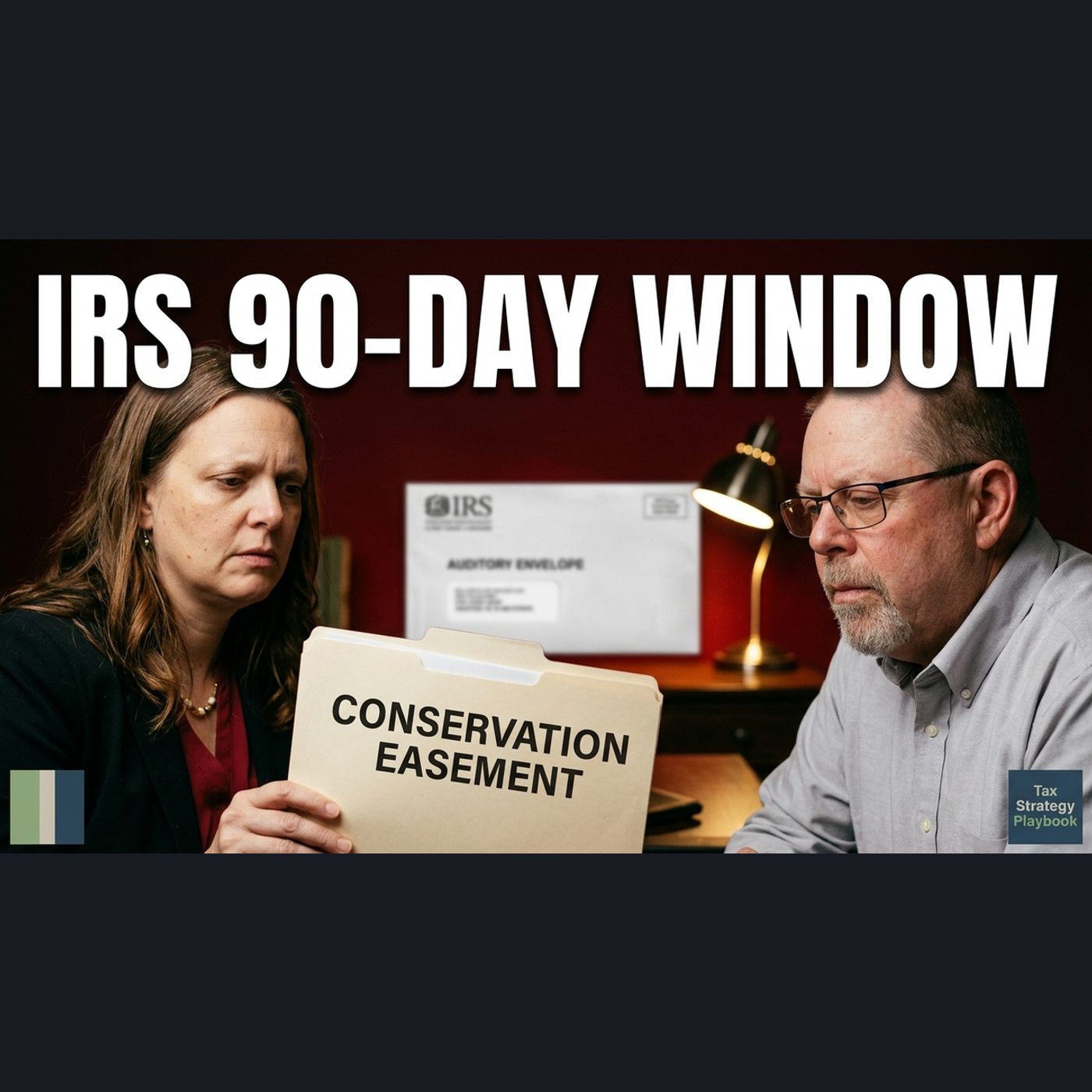
IRS Audit Defense: Navigating Conservation Easement Documentation Challenges
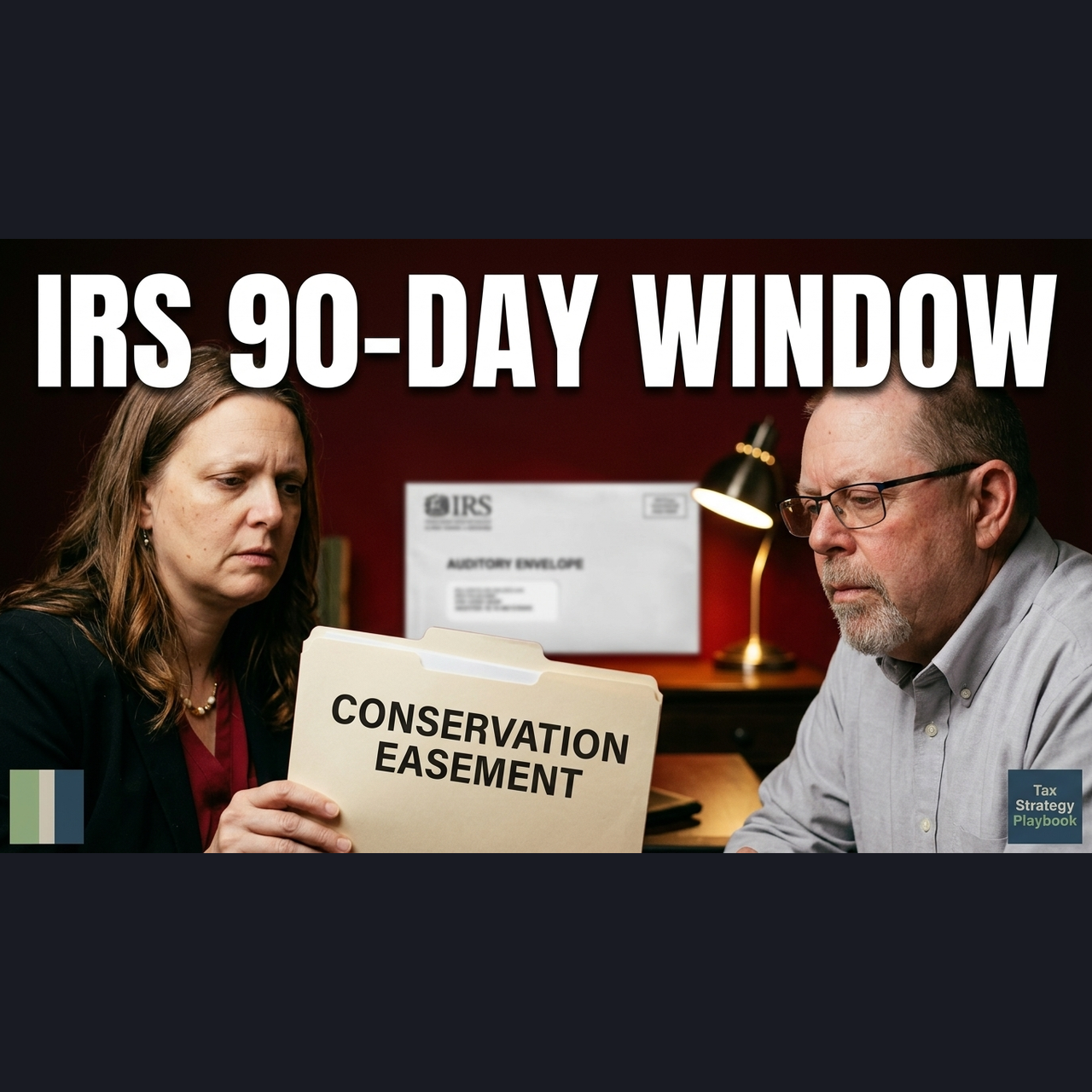
Facing an IRS audit for a conservation easement deduction? Understand the critical documentation the IRS scrutinizes to defend your claim. This guide, informed by a former IRS agent, focuses on the specific forms and acknowledgments essential for a successful audit defense against common IRS challenges.
Key Takeaways
- The IRS places paramount importance on the Qualified Conservation Contribution (QCC) written acknowledgment and Form 8283 for conservation easement deductions.
- Missing or improper documentation is the primary reason these deductions are disallowed, often leading to zero recovery, even with genuine charitable intent.
- Tax professionals frequently err by assuming Form 8283 alone suffices or that the charitable intent can override the need for specific substantiation.
- For older deals where original documentation is incomplete, corroborating evidence such as board minutes or appraisals can sometimes support the claim, but a lost QCC cannot be recreated.
- Proactive and meticulous documentation is the most effective strategy for defending against IRS scrutiny on conservation easement deductions.
The IRS Focus on Documentation for Conservation Easements
When the IRS investigates conservation easement donations, their primary concern often boils down to one word: documentation. It's not necessarily about whether a conservation project is inherently worthy, but whether the taxpayer has followed the strict letter of the law in substantiating the donation. Victoria Boon, a former IRS Senior Revenue Agent, emphasizes that the IRS looks for specific proof that the easement meets all legal requirements and that the deduction claimed is legitimate. This focus is driven by years of identifying syndicated conservation easements that were structured more as tax shelters than genuine conservation efforts. The IRS's enforcement campaign is largely a reaction to what they perceive as widespread abuse, and their audit strategy is built around identifying and disallowing deductions based on insufficient or improper paperwork.
This rigorous approach means that even if a conservation easement provides genuine ecological benefits, a lack of proper documentation can render the entire deduction worthless in the eyes of the IRS. The agency is keenly aware that the Qualified Conservation Contribution (QCC) rules are complex and that taxpayers and their advisors can make mistakes. Therefore, audits are often designed to find these documentation pitfalls. This isn't just about identifying aggressive tax avoidance schemes; it's also about ensuring that legitimate deductions meet the stringent substantiation requirements laid out by Congress and the Treasury Department. Understanding these IRS expectations is the first step in preparing a robust defense.
Critical Documentation for Audit Defense Against IRS Challenges
When faced with an IRS audit concerning a conservation easement, the first documents a tax professional like Victoria Boon will examine are those that directly substantiate the donation. These are the pillars upon which the deduction stands or falls. At the forefront is the Qualified Conservation Contribution (QCC) written acknowledgment. This is a formal document from the charitable organization receiving the easement, detailing the conservation purpose, the land's fair market value, and confirming the donee's commitment to protect the conservation purposes in perpetuity. Without this specific acknowledgment, the deduction is almost certainly doomed.
Equally critical is IRS Form 8283, Noncash Charitable Contributions. This form provides a summary of the donation, including the property's fair market value, the amount of the deduction claimed, and details about the donee organization. It must be completed accurately and signed by both the donor and the qualified appraiser, if required. For easements valued over $500,000, a qualified appraisal is mandatory, and specific requirements govern the appraiser and the appraisal report itself. The IRS scrutinizes these forms for completeness and consistency with the QCC and other supporting documents. Errors or omissions on Form 8283 are common red flags for auditors, signaling potential issues with the underlying transaction.
Common Documentation Pitfalls and IRS Scrutiny
Victoria Boon highlights that the most frequent reason for disallowed conservation easement deductions is a failure to meet the substantiation requirements. This often stems from a misunderstanding of what constitutes adequate documentation. Many taxpayers and even some tax professionals assume that simply having a charitable intent or a signed agreement is enough. However, the IRS rules are far more prescriptive. For example, the QCC must be dated on or before the earlier of the due date of the tax return on which the deduction is first claimed or the actual date the return is filed. It must also contain specific language about the conservation purposes and the perpetuity requirement.
Another common pitfall involves the appraisal. The appraisal must be conducted by a qualified appraiser and must meet the stringent requirements outlined in IRS Publication 561, Determining the Value of Donated Property, and Treasury Regulation §1.170A-13(c). This includes a detailed description of the property, the valuation method used, and the basis for the valuation. The IRS will look closely at the qualifications of the appraiser and the methodology employed. Overvaluation, often a hallmark of abusive syndicated conservation easements, is a major focus. Taxpayers must be prepared to defend the fair market value claimed with a robust, well-supported appraisal. Without it, the IRS will likely disallow the deduction or significantly reduce the claimed amount.
Defending Older Conservation Easement Deals
For taxpayers who claimed a deduction for a conservation easement several years ago, the documentation challenges can be even greater. Memories fade, and original paperwork might be lost or incomplete. In such cases, Boon notes that while a missing QCC acknowledgment cannot be recreated, other forms of corroborating evidence might help strengthen the case. This could include contemporaneous board minutes of the donee organization that reflect the acceptance of the easement and its terms, evidence of the donee organization's capacity to enforce the easement, or even earlier correspondence related to the donation. A comprehensive appraisal conducted at the time of the donation is also crucial.
However, it's essential to manage expectations. The IRS is often less lenient with older deals, as the opportunity to obtain proper documentation has long passed. The burden of proof remains on the taxpayer to demonstrate that all requirements were met at the time of the donation. Therefore, even when attempting to bolster a claim with secondary evidence, the focus will always return to whether the initial substantiation rules were followed. Proactive engagement with a tax professional experienced in conservation easement audits is vital for navigating these complex situations and determining the viability of any defense.
For more in-depth strategies on navigating IRS scrutiny and understanding the nuances of conservation easements from a former IRS agent's perspective, listen to the full episode of The Tax Strategy Playbook: Former IRS Agent: Why Syndicated Conservation Easements Are About to Blow Up.
Frequently Asked Questions
What is the most crucial document for a conservation easement deduction?
The most crucial document is the Qualified Conservation Contribution (QCC) written acknowledgment from the donee organization, which must meet specific IRS requirements.
Can a charitable intent replace proper documentation for a conservation easement?
No, the IRS requires strict adherence to substantiation rules. Charitable intent alone is not sufficient; proper documentation is non-negotiable for an audit defense.
What happens if Form 8283 is missing or filled out incorrectly for a conservation easement?
A missing or incorrect Form 8283 is a major red flag for the IRS and can lead to the disallowance of the conservation easement deduction, even if other documentation seems in order.
If my conservation easement deduction is audited, what should I focus on?
Focus on having your Qualified Conservation Contribution (QCC) written acknowledgment, accurate Form 8283, and a robust, defensible appraisal that supports the claimed fair market value.

CEO of Cashflow Strategies, Inc., Tax Strategist, Speaker, Educator
David “Mr. Cash Flow” Wiener is a nationally recognized authority on real estate tax strategy and cash flow optimization, and the host of The Tax Strategy Playbook podcast. As Founder and CEO of Cash Flow Strategies, Inc., David has spent decades helping real estate investors, business owners, and their advisory teams legally reduce taxes, unlock hidden cash flow, and put more money back into productive assets instead of into the IRS.
Over the course of his career, David has become especially known for his work with cost segregation, 179D energy-efficient commercial building deductions, and other engineering-based tax incentives that accelerate depreciation and free up capital. He has also built a long track record in cash flow and accounts receivable optimization, helping clients improve profitability and financial stability without simply “working harder” or taking on more risk.
David is a sought‑after speaker, trainer, and educator, with audiences ranging from national industry conferences to small mastermind groups and professional associations. He is known for his clear, practical teaching style and his ability to translate complex tax concepts into simple, actionable plays that investors and advisors can use right away. Whether he is speaking to CPAs, medical and dental practice owners, or real estate investors, David’s message is consistent: tax strategy is one of the most powerful—and most overlooked—wealth multipliers available.
On The Tax Strategy Playbook, David brings that same real‑world experience and teaching approach to the microphone. Each epis… Read More
What Counts as a Land Improvement, and Why Does It Depreciate Over 15 Years?