
Real Estate Tax Strategy Posts
Tax planning built specifically for property owners: real estate professional status, the short-term rental strategy, passive vs. active loss rules, and the landlord decisions that quietly shape your cash flow.
Sept. 26, 2026
What Counts as a Land Improvement, and Why Does It Depreciate Over 15 Years?
TL;DR: A land improvement is anything built on the dirt that is not the building itself. The parking lot, the sidewalks, the fence, the landscaping, the site lighting, the storm drains. The IRS puts those in their own asset class, separate from the …

Sept. 22, 2026
Why Mobile Home Park Cost Segregation Studies Yield 80 Percent Accelerated Depreciation
Running a cost segregation study on a manufactured housing community can unlock up to 80 percent of the purchase price in 15-year land improvements. By separating the land and infrastructure from tenant-owned structures, real estate investors can ma…
Sept. 16, 2026
What Documents Do You Need for a Cost Segregation Study?
TL;DR: Less than most owners fear, and none of it to find out whether a study is worth doing. What documents you need for a cost segregation study depends on how the building came to you. Buy it, and the closing statement and purchase agreement carr…

Sept. 8, 2026
Is Solar Still 5-Year Property? What Changed for Projects That Started After 2024
TL;DR: Congress removed solar and wind from the five-year property list for anything that began construction after December 31, 2024. A separate five-year route is still open, but it runs on a different clock and a different set of definitions. Clea…

Sept. 8, 2026
Why You Must File IRS Form 3115 for Missed Rental Depreciation
IRS Form 3115 is the ultimate mechanism for real estate investors who bought properties years ago and never performed a cost segregation study. This four-page document allows you to catch up on every missed dollar of accelerated depreciation in a si…
Sept. 2, 2026
Who Gets the Cost Segregation Deduction in a Partnership?
TL;DR: Nobody at the entity level. Who gets the cost segregation deduction in a partnership is answered by the operating agreement, which splits the depreciation and sends each piece out on a K-1. Whether a partner can actually use their piece is a …

Sept. 2, 2026
Solo 401k vs SDIRA UDFI Rules: Which Account Avoids Real Estate Taxes?
Using retirement funds to purchase real estate through a non-recourse loan can trigger Unrelated Debt Financed Income (UDFI) in a self-directed IRA. However, real estate investors can completely sidestep this complex tax liability by utilizing a sol…

Aug. 11, 2026
DST vs 1031 Exchange: Which Exit Strategy Protects Your Real Estate Equity?
Choosing between a Delaware Statutory Trust and a traditional 1031 exchange determines whether you stay actively managing properties or transition to a completely hands-off, diversified passive investment portfolio. This detailed breakdown explores …
Aug. 8, 2026
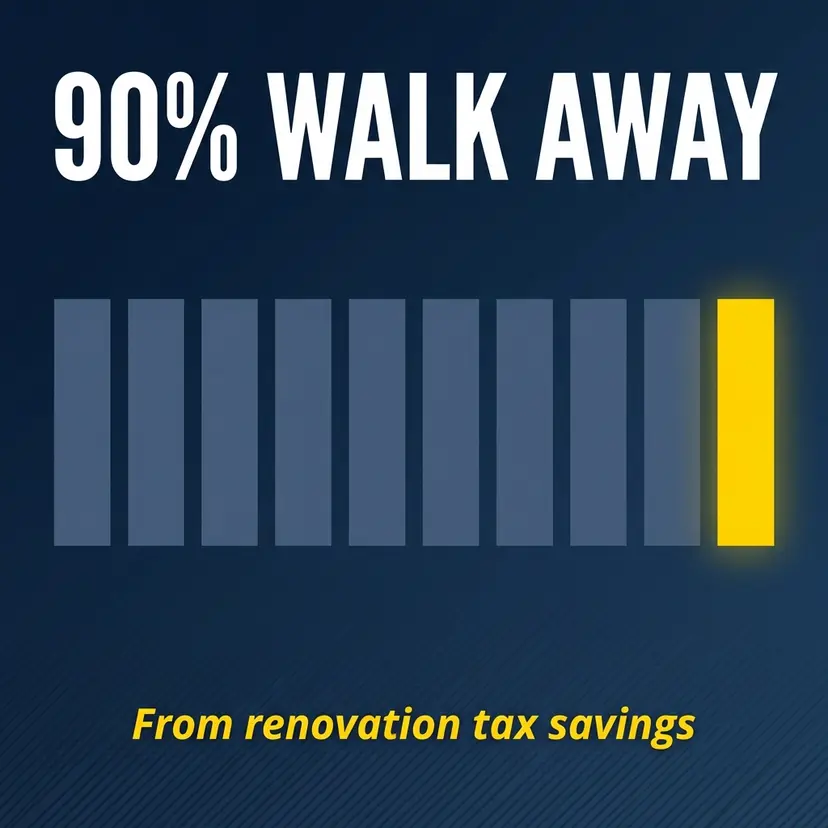
How to Turn a Renovation Into a Tax Strategy: A Step-by-Step Guide to PAD and QIP
TL;DR: Commercial real estate owners who renovate without using Partial Asset Disposition (PAD) and Qualified Improvement Property (QIP) are overpaying taxes on work they've already done. PAD lets you write off the remaining basis of components you …

July 28, 2026
How to Underwrite Syndication Pitch Decks: Spotting Fictitious Assumptions
When evaluating commercial real estate syndications, most passive investors make the critical mistake of trusting glossy, AI-generated pitch decks that project massive multi-fold returns. Learning how to properly underwrite these deals using raw fin…

July 21, 2026
Cost Segregation Look-Back Studies: How to Recover Depreciation Years Later
A cost segregation look-back study allows real estate investors to recapture years of missed accelerated depreciation without amending prior tax returns. By identifying and reclassifying building components into shorter recovery periods, such as 5, …

July 20, 2026
Your QOZ Tax Bill Is Coming December 31. Here's What to Model Now
TL;DR: If you invested in a qualified opportunity fund before 2027, the tax you've been putting off is due on December 31, 2026. No exceptions. A new law called the One Big Beautiful Bill Act made the QOZ program permanent, but it didn't push that d…

July 14, 2026
Why Gifting Real Estate to Heirs Early Can Be a Tax Disaster
Many real estate investors mistakenly believe that gifting property to their children while alive is the best way to avoid future estate taxes. However, in most cases, this strategy backfires by denying your heirs a crucial tax benefit known as the …
July 10, 2026
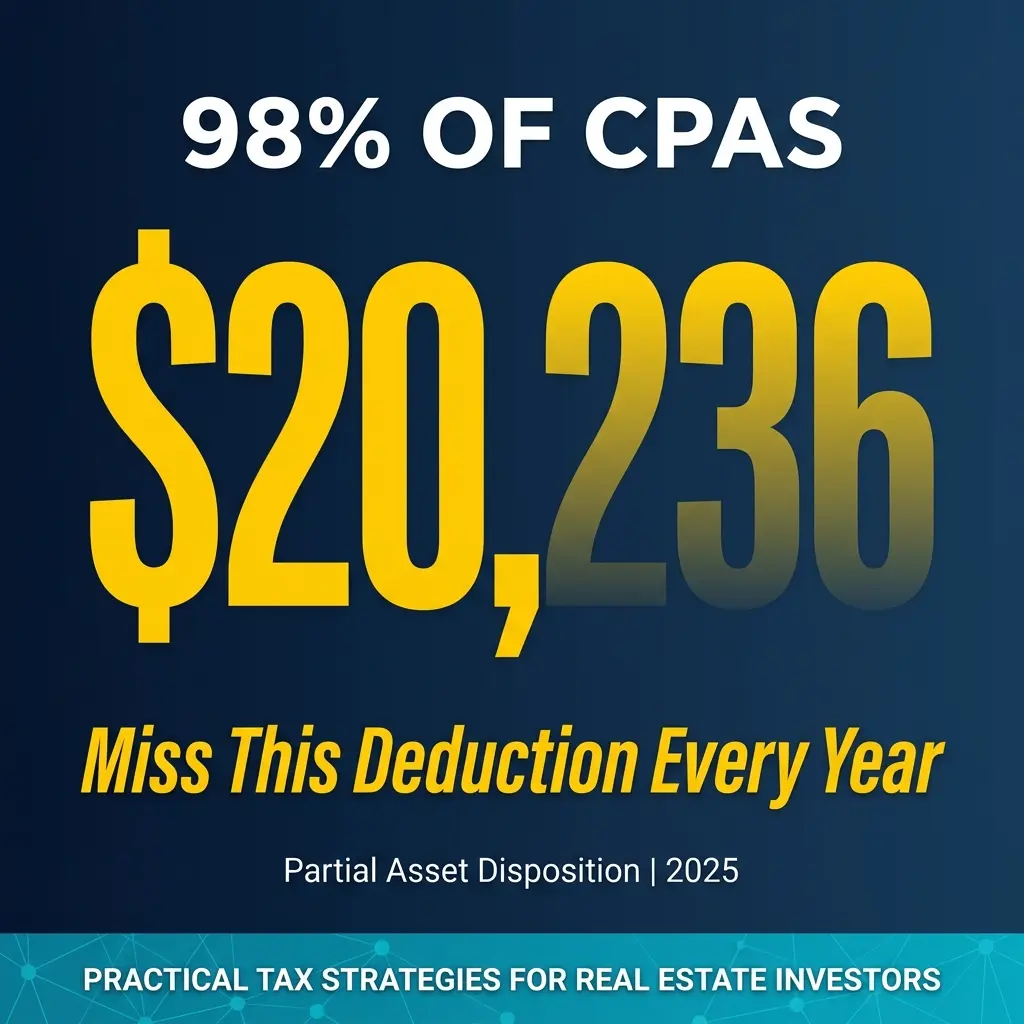
The Tax Deduction Most CPAs Never Mention - PAD
TL;DR: Partial Asset Disposition (PAD) is a tax election that lets real estate investors, both residential rental and commercial, write off the remaining basis of building components like roofs, HVAC, flooring, and plumbing when those components are…

July 7, 2026
Maximizing Real Estate Tax Benefits: Cost Segregation Synergy with Opportunity Zones
Discover how to supercharge your real estate investments by combining the powerful tax deferral of Opportunity Zones with the accelerated depreciation benefits of cost segregation studies. This post breaks down the strategic advantage of this often-…

July 2, 2026
The Complete Guide to Cost Segregation for Real Estate Investors (2026 Edition)
TL;DR: The One Big Beautiful Bill Act (OBBBA), signed in 2025, restored 100% bonus depreciation permanently for property both purchased and placed in service after January 19, 2025, with a cost segregation study. Property purchased before January 19…
July 2, 2026
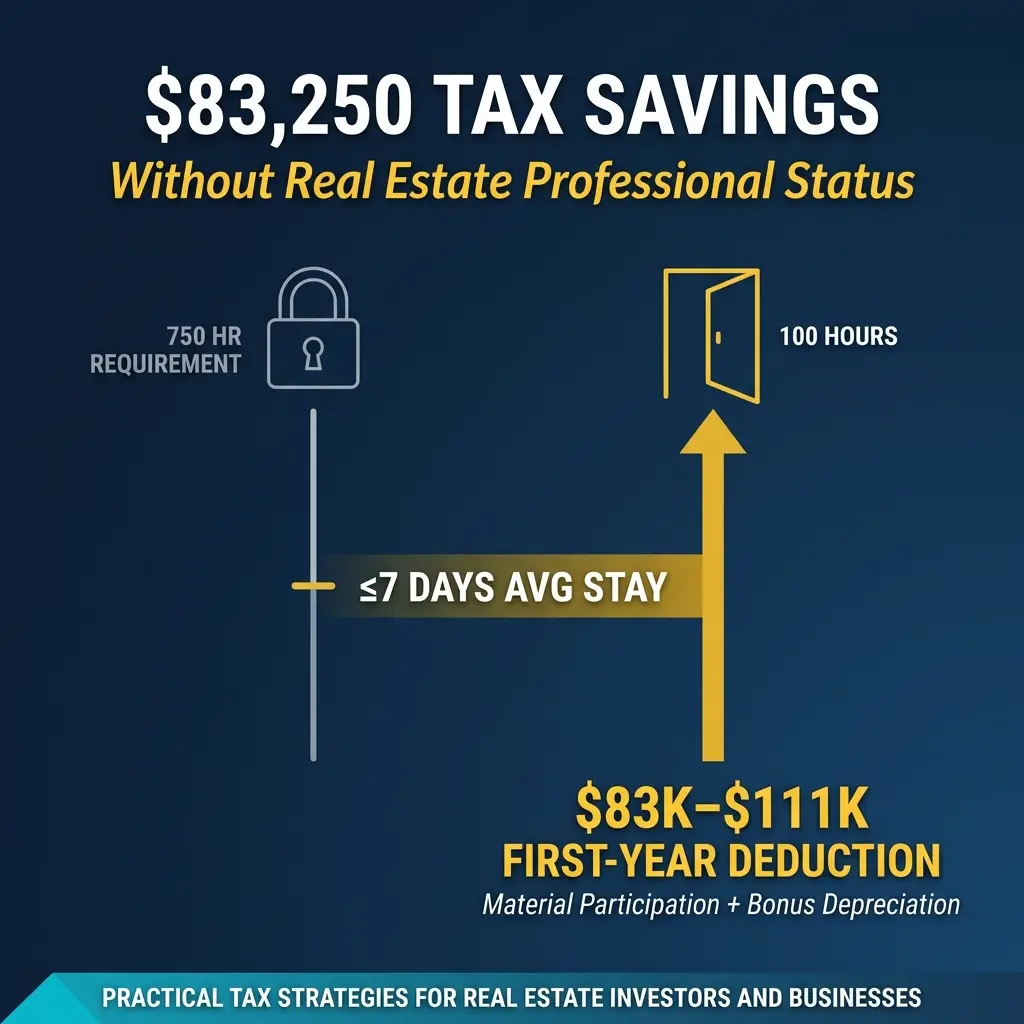
The Short-Term Rental Strategy Most High Earners Miss
TL;DR: High-earning W-2 employees don't need real estate professional status to offset active income with short-term rental losses. They use the Short-Term Rental Loophole. The material participation test (500 hours per year, or 100 hours if nobody …
July 1, 2026
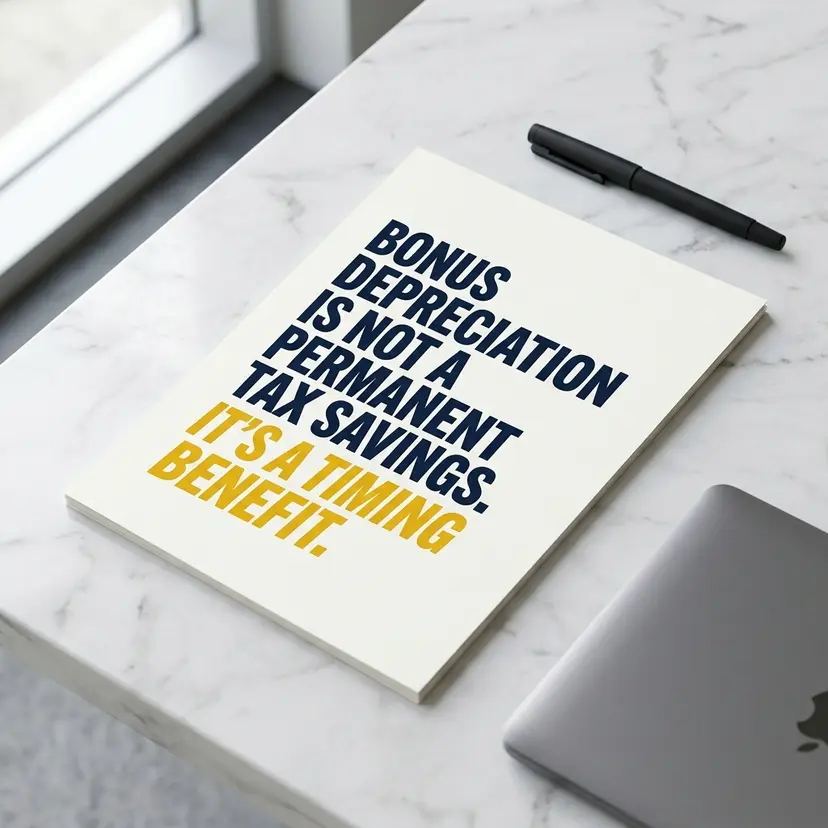
Bonus Depreciation in 2026: What Real Estate Investors Need to Know After the One Big Beautiful Bill
TL;DR: The One Big Beautiful Bill restored 100% bonus depreciation permanently for property acquired after January 19, 2025. This changes acquisition timing, cost segregation value, and the 163(j) interest deduction trade. Recapture at exit is still…

June 11, 2026
The Record-Keeping Nightmare: How Sloppy Books Can Cost Real Estate Investors Thousands
Welcome back to the blog, where we unpack the crucial conversations from our latest podcast episode on 7 Tax Traps. In this installment, we’re diving deep into a topic that strikes fear into the hearts of many real estate investors: the dreaded IRS …
June 11, 2026
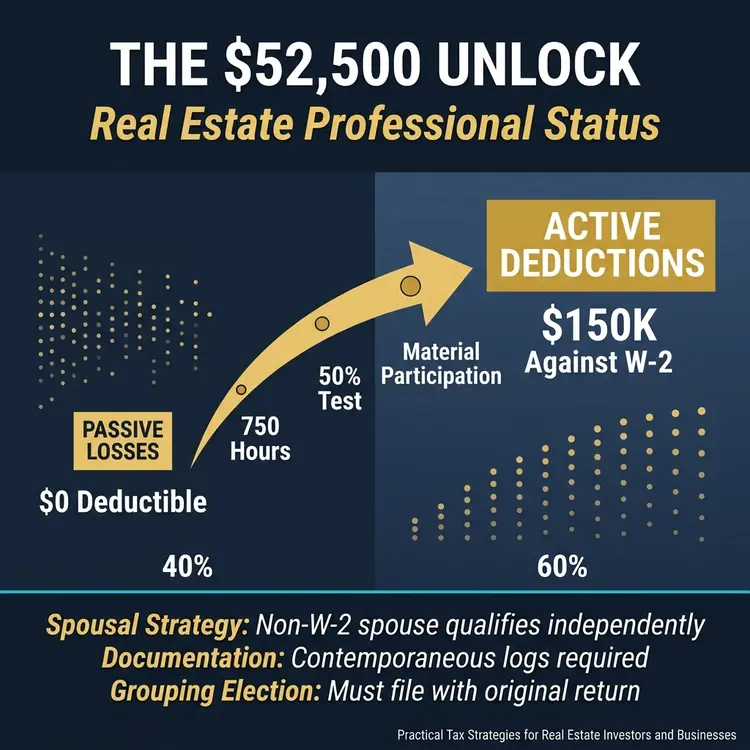
How to Qualify as an IRS Real Estate Professional: The Complete Documentation Strategy
TL;DR: The IRS Real Estate Professional designation lets property investors deduct rental losses against W-2 income and business profits. You need 750+ hours in real estate activities and more than 50% of your work time in real estate. Miss the docu…

June 2, 2026
Maximize Your Legacy: 721 UPREIT for Landlords' Estate Planning
Tired landlords can leverage the 721 UPREIT for seamless wealth transfer. This strategy allows you to exchange appreciated real estate for OP units, deferring capital gains and simplifying estate planning for your heirs, offering a sophisticated app…
June 1, 2026
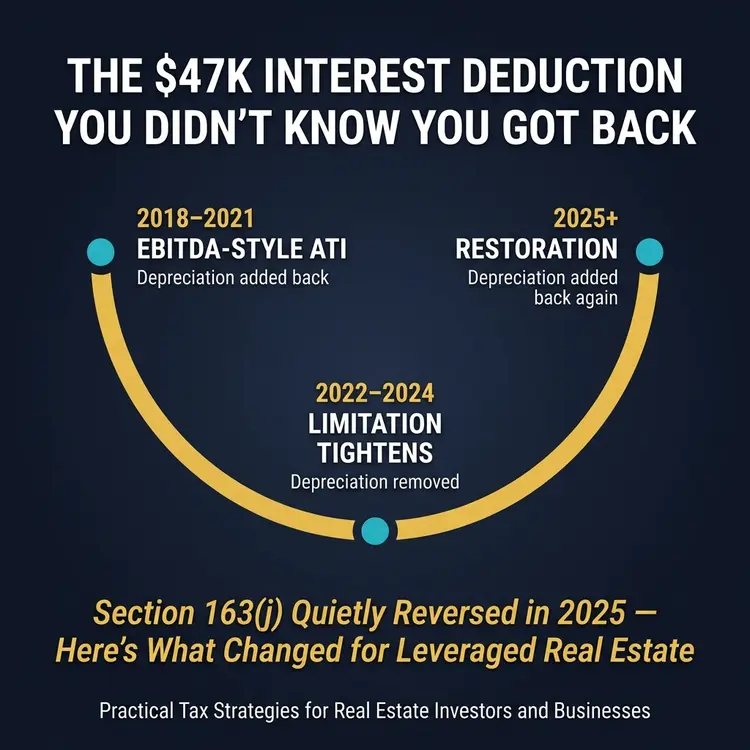
The Interest Deduction Game Just Changed, and Most Real Estate Investors Missed It
TL;DR: The One Big Beautiful Bill Act made Section 163(j) more generous for 2025 tax returns by adding depreciation back into the interest limitation calculation. This means leveraged real estate investors lose less interest deductions to the cap, …
May 15, 2026
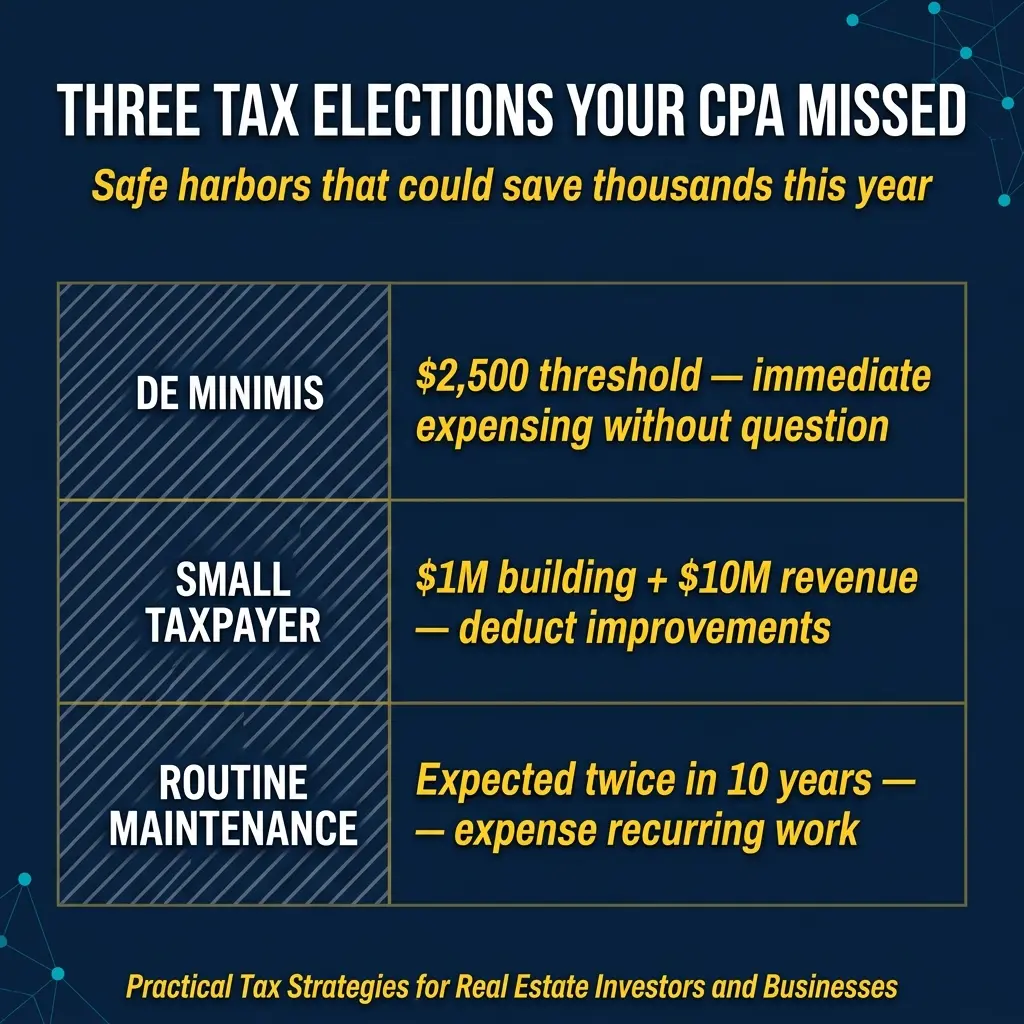
IRS Safe Harbor Elections: 3 Tax Deductions CPAs Miss
TL;DR: Three IRS safe harbor elections let you immediately expense repairs and equipment that most CPAs are capitalizing. The de minimis safe harbor ($2,500 threshold), small taxpayer safe harbor (improvements under $10,000), and routine maintenance…
May 12, 2026
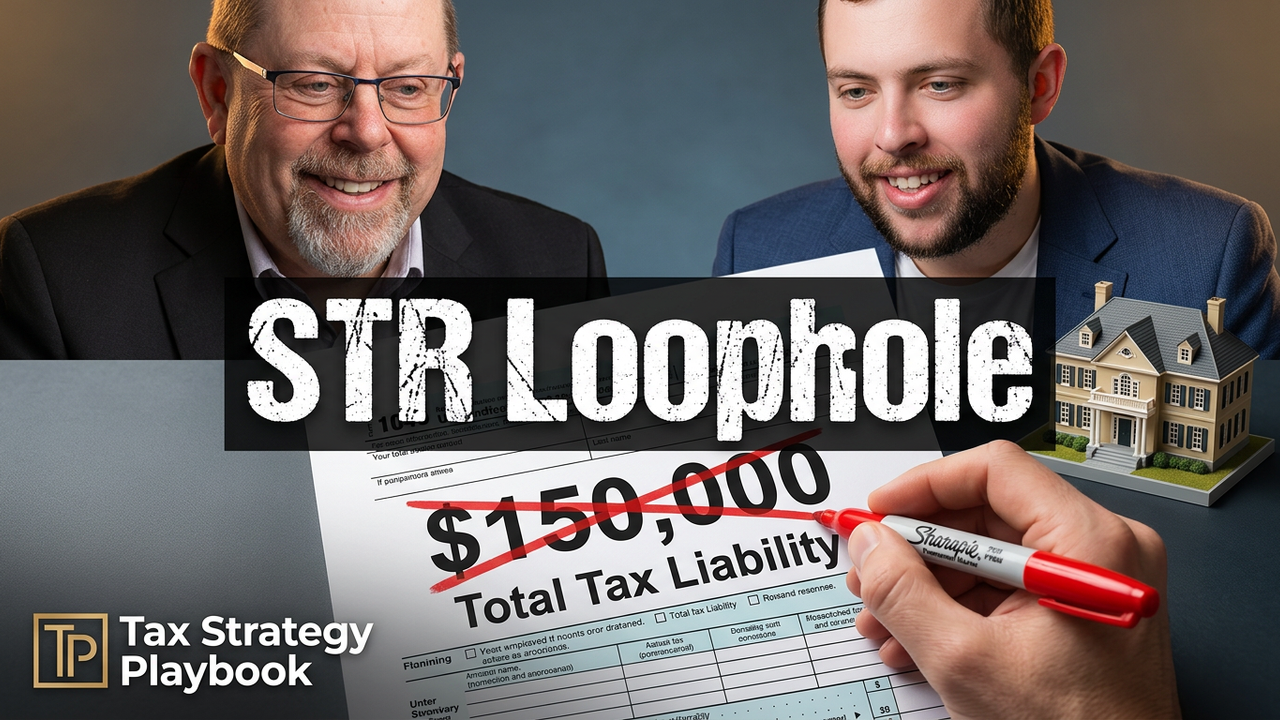
Unlocking Short-Term Rental Tax Benefits: A Beginner's Guide
Welcome back, fellow tax strategists and real estate enthusiasts! In our latest podcast episode, Short-Term Rental Tax Strategy: Crush Your W‑2 Bill With Cost Seg, we delved into one of the most potent, yet often misunderstood, strategies for signif…