Unlocking Short-Term Rental Tax Benefits: A Beginner's Guide
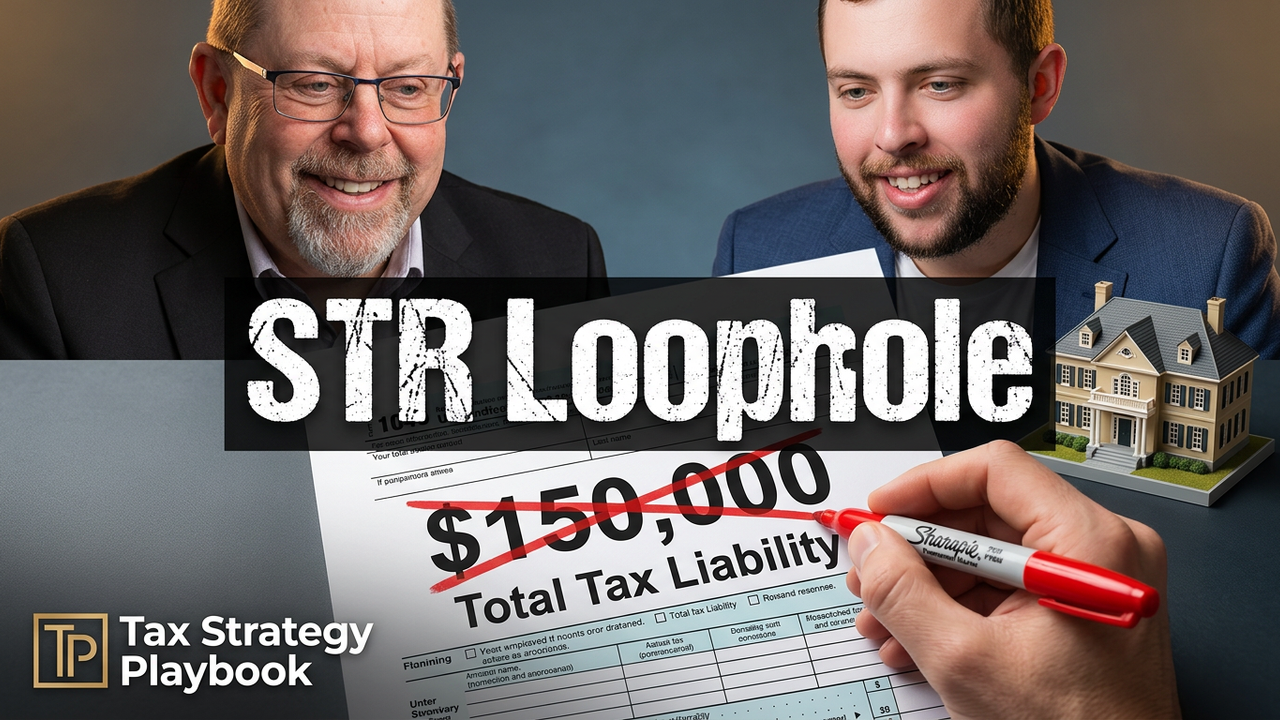
Welcome back, fellow tax strategists and real estate enthusiasts! In our latest podcast episode, Short-Term Rental Tax Strategy: Crush Your W‑2 Bill With Cost Seg, we delved into one of the most potent, yet often misunderstood, strategies for significantly reducing your tax burden: the short-term rental "loophole." This blog post is designed to be your comprehensive guide, expanding on the core concepts we discussed and providing you with the foundational knowledge to understand how this powerful tax strategy can benefit you. If you're tired of watching your hard-earned money disappear into the IRS coffers, this is the place to start. We'll break down what this "loophole" truly is, who stands to gain the most, and the essential requirements to unlock these incredible tax advantages. So, buckle up, because we're about to unlock a world of tax savings!
What's the Short-Term Rental 'Loophole'?
Let's start by demystifying the term "loophole." In the context of short-term rentals and taxes, it's not about finding some obscure, illegal way to avoid paying taxes. Instead, it refers to leveraging specific provisions within the tax code that allow real estate investors, particularly those with short-term rental properties, to deduct a surprisingly wide range of expenses, often resulting in significant paper losses that can offset other forms of income. Think of it less as a loophole and more as a smart, legal utilization of tax laws designed to encourage investment in housing and hospitality.
The core of this strategy lies in the IRS's classification of short-term rental activities. For tax purposes, if you rent out a property for an average of seven days or less per rental, the IRS generally treats this as a business or a trade. This classification is crucial because it opens the door to a multitude of deductions that are not typically available to landlords of long-term rentals. These deductions can include not only the usual expenses like mortgage interest, property taxes, insurance, and repairs but also more sophisticated strategies like depreciation, which we'll explore in detail later. The ability to deduct losses generated from these rentals against your W-2 income or other business profits is what many refer to as the "loophole." It's a powerful mechanism that can dramatically reduce your overall taxable income, effectively "crushing your W-2 bill" as we put it in the episode.
The key differentiator is the active nature of the short-term rental business. Unlike simply owning a long-term rental property where your involvement might be minimal, running a successful short-term rental operation often requires significant time and effort. This can include marketing the property, managing bookings, handling guest communications, cleaning and maintenance between guests, and providing amenities. The IRS recognizes this active involvement and provides more favorable tax treatment compared to passive rental income. This active participation is the bedrock upon which many of these tax benefits are built.
Who Can Benefit Most from Short-Term Rental Tax Strategies?
This powerful tax strategy isn't a one-size-fits-all solution. However, certain individuals and groups stand to benefit disproportionately. At the top of this list are high-income W-2 earners. If you're earning a substantial salary from your job, you're likely in a high tax bracket. This means that every dollar you can deduct from your taxable income has a significant impact on your overall tax liability. Short-term rental losses can directly offset your W-2 income, meaning you pay less tax on that salary. This is a game-changer for many professionals who feel like they're constantly working just to pay taxes.
Business owners, especially those with profitable businesses, are another prime group. Similar to W-2 earners, business profits are taxed as income. The ability to use losses from a short-term rental operation to reduce your business's taxable income can lead to substantial tax savings. This is particularly attractive if your business income fluctuates or if you're looking for ways to legally reduce your business's tax burden without sacrificing the core operations of your company. Imagine reducing your business's tax bill simply by operating a short-term rental property. It's a brilliant synergy.
Real estate investors who are already involved in the industry but might not have considered short-term rentals are also well-positioned to benefit. If you already understand the principles of property management and acquisition, the transition to short-term rentals can be relatively smooth. You can leverage your existing knowledge and potentially existing properties to generate higher returns and, importantly, unlock these enhanced tax benefits.
Crucially, this strategy can be particularly beneficial for individuals who do *not* qualify as real estate professionals. In the tax world, being a "real estate professional" allows for more liberal deductions of passive losses. However, meeting this stringent requirement can be challenging. The short-term rental strategy, with its active participation component, often allows individuals to achieve significant tax deductions without needing to meet the formal real estate professional status. This broadens the accessibility of these powerful tax-saving tools to a much larger audience.
Finally, individuals looking for diversification in their investment portfolios can find short-term rentals appealing. Beyond the tax benefits, short-term rentals can offer higher cash flow potential than traditional long-term rentals due to premium pricing. The tax advantages simply enhance the overall financial attractiveness of this investment vehicle.
Key Requirements for Unlocking Tax Benefits
To successfully leverage the tax benefits of short-term rentals, it's essential to understand and meet certain IRS requirements. These aren't meant to be insurmountable hurdles, but rather guidelines to ensure that your activity is considered a genuine business endeavor and not just a hobby designed to generate tax losses.
Understanding the '7-Day Rule'
The cornerstone of the short-term rental tax strategy revolves around the IRS's "7-day rule," formally known as the "seven-day average rental period" rule. This rule states that if you rent out a dwelling unit for an average of seven days or less per rental period, the rental activity is generally not considered passive. Instead, it's treated as a trade or business. This is a critical distinction. For passive activities, there are strict limitations on deducting losses. However, for actively conducted trades or businesses, these limitations are significantly relaxed.
To determine if you meet the 7-day rule, you need to calculate the average rental period over the tax year. For example, if you have 10 rentals in a year, and each rental is for 6 days, your average rental period is 60 days / 10 rentals = 6 days, meeting the rule. If you have one rental for 30 days and another for 10 days, your average is 20 days, and this specific property might not qualify under the 7-day rule for that year if it's the only rental. It’s important to look at the property on a property-by-property basis.
It's crucial to accurately track all rental periods. This includes understanding what constitutes a "rental period." Generally, a rental period is any period for which the dwelling unit is rented at a “fair rental price.” The fair rental price is essentially what you would charge an unrelated person for the use of the property for that period. This means you can't artificially inflate or deflate rental prices to manipulate the average. Furthermore, the 7-day rule applies to each dwelling unit individually. If you have multiple units on a property, you would assess the rule for each unit.
When your rental periods average more than seven days, the IRS will generally consider your rental activity to be passive. This means your losses will be subject to passive activity loss rules, which can limit your ability to deduct them against non-passive income (like W-2 wages or active business income) in the current year. While there are exceptions and nuances, adhering to the 7-day rule is the most straightforward path to unlocking the full potential of this tax strategy.
How Cost Segregation and Bonus Depreciation Play a Role
Once you've established your short-term rental activity as a trade or business by meeting the 7-day rule, you can unlock even more powerful tax benefits, primarily through depreciation. This is where strategies like cost segregation and bonus depreciation come into play, and they are absolutely critical to understanding the true power of this "loophole."
Depreciation, in essence, allows you to recover the cost of your property over time by deducting a portion of its value each year on your tax return. However, traditionally, residential rental properties are depreciated over 27.5 years. This means each year, you only get a small fraction of the property's value back as a deduction.
Cost Segregation is a powerful tax planning tool that allows you to accelerate depreciation deductions. It involves dissecting the components of your real estate asset (the building and its land improvements) into different categories based on their expected useful lives. Instead of depreciating the entire building over 27.5 years, a cost segregation study identifies assets within the property that have shorter depreciable lives, such as carpeting, decorative lighting, countertops, landscaping, and specialized systems. These shorter-lived assets can then be depreciated much more rapidly, often over 5, 7, or 15 years, instead of 27.5 years.
This acceleration means you can claim significantly larger depreciation deductions in the early years of owning the property. For a short-term rental operating as a trade or business, these accelerated depreciation deductions can create substantial "paper losses" that can offset your other income.
Bonus Depreciation is another game-changer. Bonus depreciation allows businesses to deduct a large percentage of the cost of qualifying new or used assets in the year they are placed in service. For example, if bonus depreciation is 100%, you can deduct the entire cost of qualifying assets immediately. This can be combined with cost segregation studies. Any assets identified in a cost segregation study that have a depreciable life of 20 years or less are generally eligible for bonus depreciation. This means you can take a significant portion, or even all, of the cost of these shorter-lived assets as a deduction in the first year.
The combination of cost segregation and bonus depreciation is where the magic truly happens. Imagine buying a short-term rental property. A cost segregation study identifies $100,000 worth of assets with shorter depreciable lives. With 100% bonus depreciation, you can potentially deduct that entire $100,000 in the first year, creating a significant paper loss that can offset your W-2 income or business profits. This is a primary driver of the "crushing your W-2 bill" concept discussed in the podcast. It's essential to work with qualified professionals, such as cost segregation specialists and CPAs, to ensure these studies are performed correctly and that you are taking advantage of all eligible deductions.
Real-World Impact: Slaying Your Tax Bill
Let's paint a picture of the real-world impact. Consider Sarah, a high-earning software engineer who takes home a six-figure salary. She's been paying a substantial amount in federal income taxes for years. Sarah decides to purchase a small condo in a popular tourist destination and converts it into a short-term rental, actively managing it herself. She ensures she meets the 7-day rule, averaging only 5 days per rental. She also engages a cost segregation firm to analyze her condo purchase.
The cost segregation study identifies $50,000 worth of personal property (like appliances, furniture, fixtures, and some structural components) that have shorter depreciable lives. With 100% bonus depreciation in effect, Sarah can immediately deduct that $50,000 in the first year. On top of that, she has her regular rental expenses like mortgage interest, property taxes, insurance, and repairs. Let's say these regular expenses, combined with the depreciable basis of the property itself, generate another $20,000 in deductions (even after accounting for straight-line depreciation on the remaining long-term assets). This results in a total of $70,000 in deductions from her short-term rental activity.
If Sarah's W-2 income places her in a 32% marginal tax bracket, those $70,000 in deductions can save her $22,400 in federal income taxes ($70,000 x 0.32). This is a tangible, significant reduction in her tax liability, achieved by simply investing in and actively managing a short-term rental property. Over time, as she continues to operate the rental, she'll continue to benefit from depreciation and other deductible expenses, further reducing her tax burden. This is the essence of "slaying your tax bill" – using smart, legal strategies to keep more of your hard-earned money.
Next Steps: Getting Started with Short-Term Rental Investing
If this strategy has piqued your interest, you're probably wondering how to get started. Here are a few actionable steps:
1. Educate Yourself Further:
You've taken a great first step by reading this post and hopefully listening to our related podcast episode. Continue learning! Read books, listen to podcasts, and follow reputable real estate and tax strategy resources. The more you understand, the more confident you'll be in your decisions.
2. Analyze Your Financial Situation:
Assess your current income sources, tax bracket, and available capital. Understand how much you can comfortably invest in a property and how much time you can realistically dedicate to managing a short-term rental.
3. Research Potential Markets:
Identify locations with strong demand for short-term rentals. Consider factors like tourism, business travel, local events, and regulations governing short-term rentals in those areas. Look for markets that are likely to keep you well under the 7-day average rental period.
4. Consult with Professionals:
This is non-negotiable. Before making any significant investment, consult with a tax advisor or CPA who is experienced in short-term rental tax strategies. They can help you understand the specific tax implications for your situation, advise on record-keeping, and guide you through compliance. You'll also want to work with a real estate agent experienced in investment properties and potentially a cost segregation specialist.
The short-term rental tax strategy is a powerful tool in the arsenal of any savvy investor or high-income earner. By understanding the fundamental rules, particularly the 7-day rule, and by leveraging advanced techniques like cost segregation and bonus depreciation, you can unlock significant tax savings and improve your overall financial health. Remember, this isn't about finding a loophole to exploit; it's about understanding and utilizing the tax code to your advantage, legally and effectively. We encourage you to dive deeper into this topic and explore how it can benefit you. Happy investing, and more importantly, happy tax saving!
We hope this in-depth exploration of short-term rental tax benefits has been as illuminating for you as it was for us to discuss in our latest episode, Short-Term Rental Tax Strategy: Crush Your W‑2 Bill With Cost Seg. This blog post serves as a companion, expanding on the crucial concepts we touched upon. Understanding these strategies is not just about saving money; it's about smart financial planning and maximizing your investment returns. Remember, the tax code is complex, but with the right knowledge and professional guidance, you can leverage it to your advantage. Don't hesitate to reach out to your tax professionals and explore if this strategy aligns with your financial goals. Until next time, keep strategizing!

CEO of Cashflow Strategies, Inc., Tax Strategist, Speaker, Educator
David “Mr. Cash Flow” Wiener is a nationally recognized authority on real estate tax strategy and cash flow optimization, and the host of The Tax Strategy Playbook podcast. As Founder and CEO of Cash Flow Strategies, Inc., David has spent decades helping real estate investors, business owners, and their advisory teams legally reduce taxes, unlock hidden cash flow, and put more money back into productive assets instead of into the IRS.
Over the course of his career, David has become especially known for his work with cost segregation, 179D energy-efficient commercial building deductions, and other engineering-based tax incentives that accelerate depreciation and free up capital. He has also built a long track record in cash flow and accounts receivable optimization, helping clients improve profitability and financial stability without simply “working harder” or taking on more risk.
David is a sought‑after speaker, trainer, and educator, with audiences ranging from national industry conferences to small mastermind groups and professional associations. He is known for his clear, practical teaching style and his ability to translate complex tax concepts into simple, actionable plays that investors and advisors can use right away. Whether he is speaking to CPAs, medical and dental practice owners, or real estate investors, David’s message is consistent: tax strategy is one of the most powerful—and most overlooked—wealth multipliers available.
On The Tax Strategy Playbook, David brings that same real‑world experience and teaching approach to the microphone. Each epis… Read More

What Counts as a Land Improvement, and Why Does It Depreciate Over 15 Years?