
Tax Strategy Fundamentals Posts
Core concepts every investor and business owner should understand before layering on advanced strategies — how tax planning actually compounds wealth, timing, and the foundational moves that make everything else work.

Sept. 8, 2026
Why You Must File IRS Form 3115 for Missed Rental Depreciation
IRS Form 3115 is the ultimate mechanism for real estate investors who bought properties years ago and never performed a cost segregation study. This four-page document allows you to catch up on every missed dollar of accelerated depreciation in a si…
July 23, 2026
Superseding Returns: The Tax Correction Tool Most Filers Never Hear About
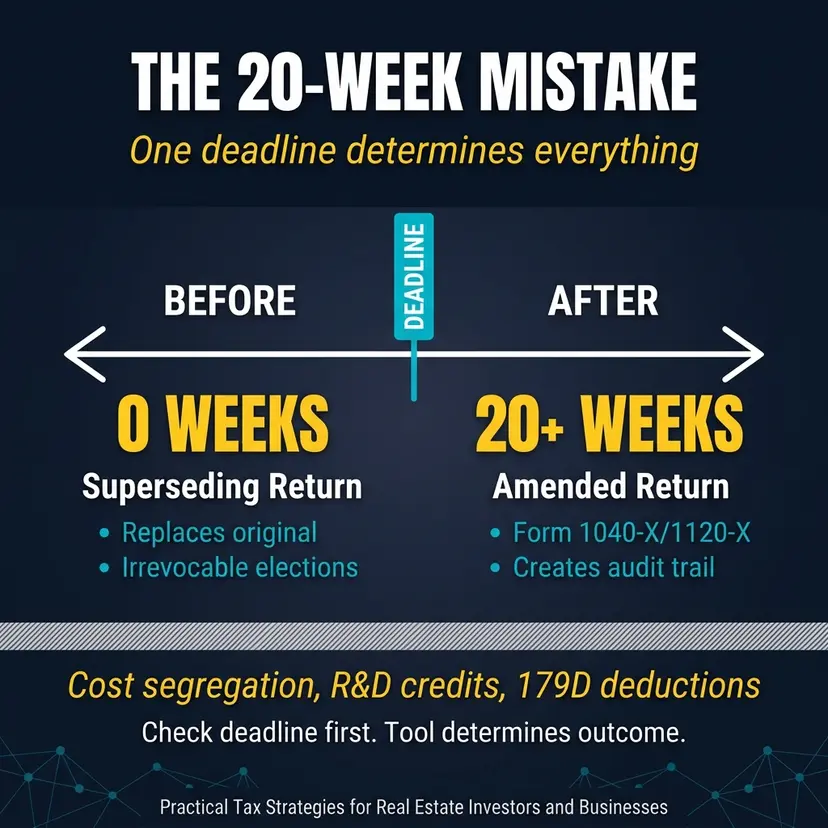
There are two ways to fix a tax return, and the one you can use depends entirely on timing. A superseding return, filed before the deadline, replaces the original completely. An amended return, filed after the deadline, adjusts specific items and cr…
July 11, 2026
The Augusta Rule: How to Rent Your Home to Your Business for 14 Days Tax-Free (And Why Most People Get It Wrong)
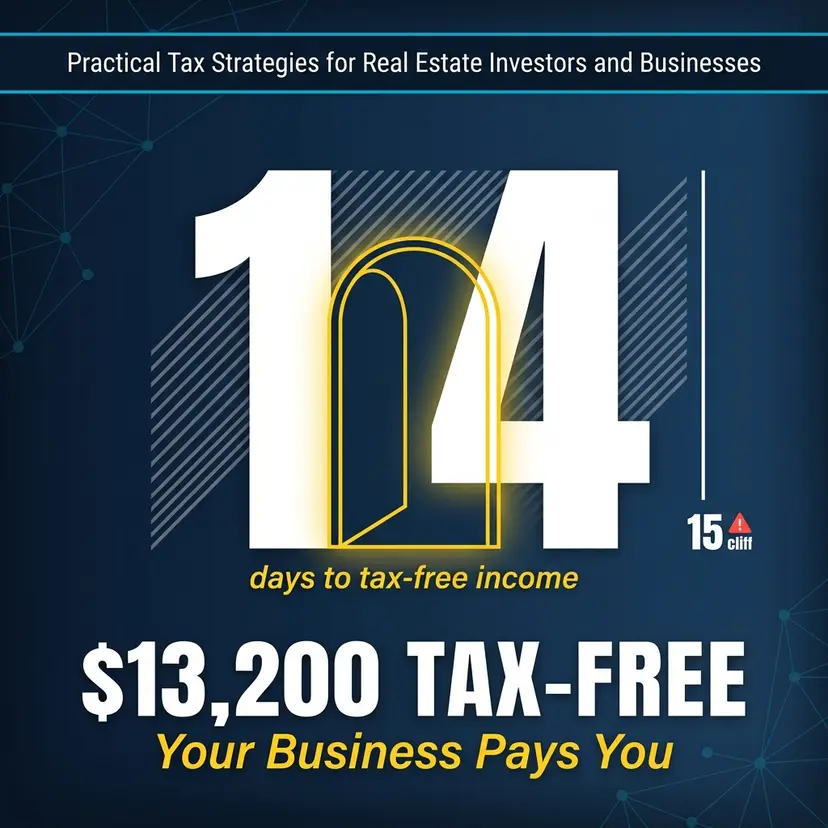
TL;DR: Section 280A(g) (The Augusta Rule) lets business owners rent their personal residence to their own business for up to 14 days per year, keeping every dollar completely tax-free. The business deducts the payment. The homeowner excludes the inc…

July 9, 2026
The Tax Strategy Most Business Owners Never Use
TL;DR: Most business owners focus on tax preparation (filing correctly) instead of tax strategy (planning ahead). Preparation looks backward at what you already did. Strategy looks forward and structures decisions to legally reduce your tax bill. Th…

June 16, 2026
Navigating the 'Lazy Zone': Proactive Strategies for Surviving Spouses Before and After Loss
The 'Widow's Tax Trap' often catches surviving spouses off guard, especially when they've relied on joint tax benefits. Understanding the proactive steps and the concept of the 'Lazy Zone' in cash flow planning can significantly mitigate this financ…
June 8, 2026
How Fractional Family Offices Work: Costs, Benefits, and Who Should Use Them
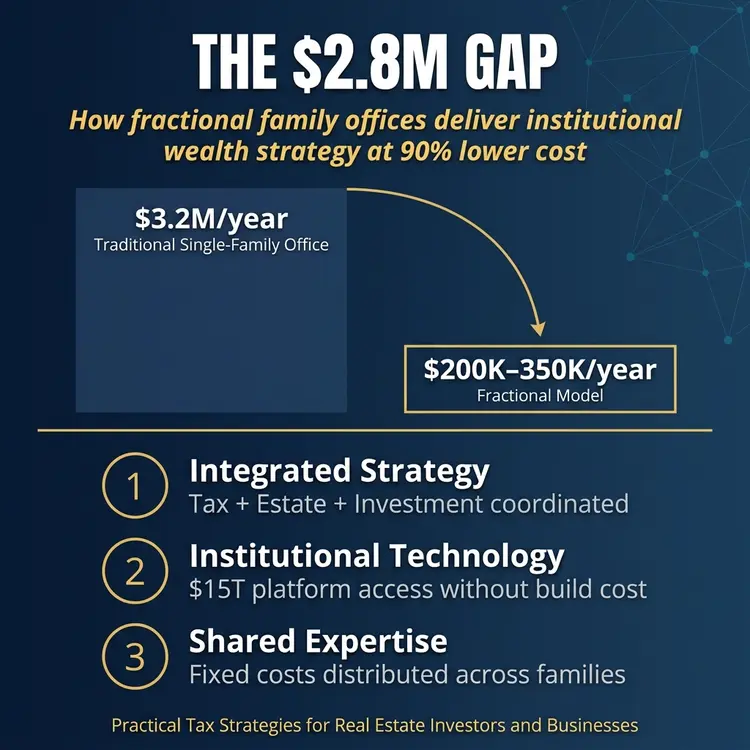
How Fractional Family Offices Work: Costs, Benefits, and Who Should Use Them Quick Summary: Fractional family offices share specialized wealth management teams across multiple families, cutting costs from $3.2 million to $100,000-$625,000 an…

May 26, 2026
The IRS Dirty Dozen: What Your TikTok Feed Doesn't Tell You
Welcome back to the blog, where we dive deeper into the topics we explore on the Tax Strategy Playbook podcast. In our latest episode, we tackled a pressing issue that's sweeping across social media platforms like wildfire: those seemingly amazing "…
May 25, 2026
The Math Behind Cost Segregation: How Breaking Down Your Building Accelerates Depreciation
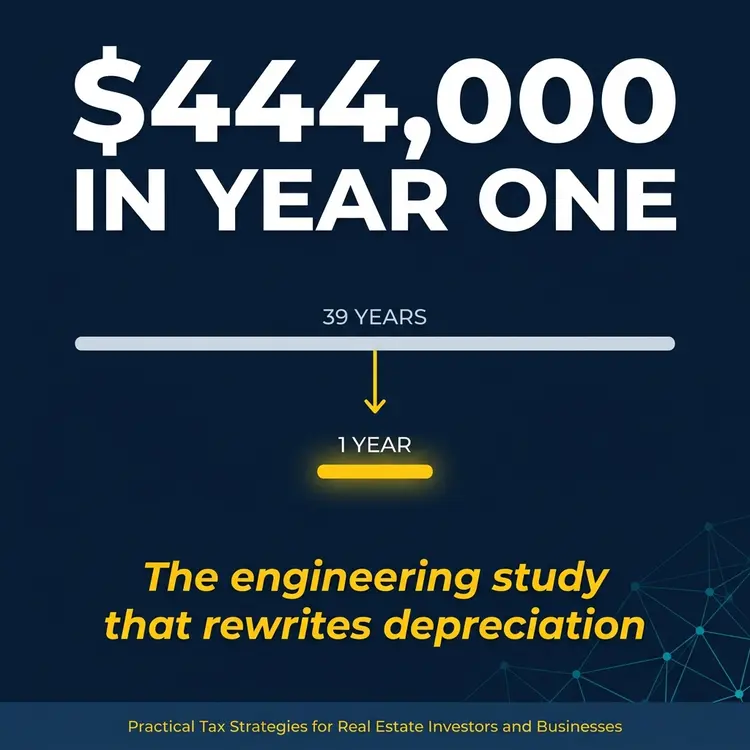
TL;DR: Cost segregation studies reclassify property components into faster depreciation schedules (5, 7, or 15 years instead of 39 years). Residential generally runs 20% to 40% and varies by building. Commercial depends on property type and asset cl…

May 21, 2026
Beyond Real Estate: How Oil & Gas Can Fill Your Tax Strategy Gaps
Welcome back to the Tax Strategy Playbook blog! In our latest podcast episode, titled $200K Investment → $81K Tax Savings? The Oil & Gas Strategy Explained, we delved into a fascinating and often overlooked tax strategy that can provide significant …
May 12, 2026
Unlocking Short-Term Rental Tax Benefits: A Beginner's Guide
Welcome back, fellow tax strategists and real estate enthusiasts! In our latest podcast episode, Short-Term Rental Tax Strategy: Crush Your W‑2 Bill With Cost Seg, we delved into one of the most potent, yet often misunderstood, strategies for signif…

April 6, 2026
Passive vs. Active Real Estate: Decoding the IRS's Big Distinction
Welcome back to the blog! In our latest podcast episode, "Your Rental Losses Might Be Useless Unless You Know This IRS Rule," we dove headfirst into a topic that can make or break a real estate investor's tax strategy: the IRS's classification of re…
March 24, 2026
Beyond the LLC: Understanding the True Tax Impact of Your Business Entity
Welcome back to the blog, fellow investors and business builders! In our latest podcast episode, we dove deep into a topic that many business owners, especially those in real estate, grapple with: the choice of business entity, LLC vs S Corp, and it…

March 23, 2026
How Cost Segregation and Bonus Depreciation Work Together
Cost segregation breaks your building into its components so the short-lived pieces depreciate over 5 or 15 years instead of 27.5 or 39. Bonus depreciation then lets you deduct those reclassified assets in full the year the property goes into servic…
March 9, 2026
Why Tax Strategy Is the Real Wealth Multiplier (with Greg Taylor)
Why Tax Strategy Is the Real Wealth Multiplier (with Greg Taylor) Most real estate investors think wealth is built only through finding great deals, raising capital, and managing properties well. But there’s a fourth lever that often gets ignored—a…