
 YouTube
 Apple Podcasts
 Spotify
 iHeartRadio
 Pandora
 Deezer
 Amazon Music
 Podchaser
 PocketCasts
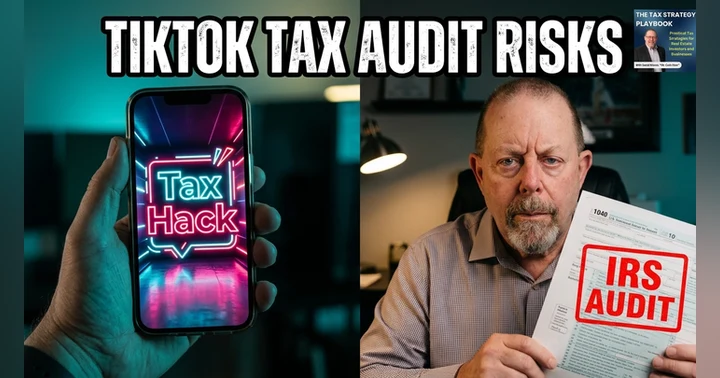
 Tax Strategy vs TikTok Hacks: 7 Viral Myths That Trigger Audits

Key Takeaways
- Relying on viral TikTok tax hacks and 'secret codes' is a dangerous path that can lead to IRS audits and significant financial loss.
- Sophisticated investors use documented expense policies and coordinated entity structures, not broad claims like 'writing off your whole life' or 'putting everything in an LLC,' to manage taxes effectively.
- Legitimate tax planning involves tools like 1031 exchanges, Opportunity Zones, and tax-loss harvesting, not promises of never paying capital gains.
- Understand the difference between a hobby and a legitimate business for tax purposes to avoid audit traps.
- Prepare for the 2025-2026 tax window by strategically timing income and deductions, utilizing depreciation, stacking retirement plans, and leveraging incentives.
Tax Strategy vs TikTok Hacks: 7 Viral Myths That Trigger Audits
Are you tired of scrolling through TikTok and seeing “tax hacks” and viral write-off tricks that could actually land you in hot water with the IRS? In this episode of The Tax Strategy Playbook, host David Wiener, also known as “Mr. Cash Flow,” cuts through the noise. He exposes 7 common social media tax myths that are actually audit bait and reveals the legitimate, long-term tax strategies that wealthy investors use instead.
If you’re serious about building wealth through smart, long-term tax planning, understanding crucial strategies like bonus depreciation and cost segregation, and ultimately keeping more of your hard-earned cash flow, then this episode is your essential playbook.
The IRS Gets Wise to Social Media Scams
David explains why the IRS has officially added misleading social media tax advice to its 2026 Dirty Dozen list of tax scams. He reveals how countless Americans are losing tens of thousands of dollars to deceptive “secret code” refund schemes and dangerously bad advice peddled on platforms like TikTok. You’ll gain the critical knowledge needed to distinguish between a flashy, viral tax hack and a real, defensible tax strategy that will stand up under IRS scrutiny.
Debunking Viral Tax Myths: What to Watch Out For
This episode dives deep into the most common and dangerous tax myths circulating online. David breaks down:
- Myth #1: “I turned my whole life into a write-off.” This common, audit-triggering claim is debunked, and David shares what sophisticated, wealthy families do instead with simple, documented expense policies.
- Myth #2: “Secret codes” and fake tax credits. Discover how “secret credit” and “enter this code for a massive refund” schemes operate, and learn how to build legitimate credit and incentive strategies based on your actual real estate or business activities.
- Myth #3: “You’ll never pay capital gains again.” This section cuts through unrealistic promises and clarifies how legitimate tools like 1031 exchanges, Opportunity Zones, installment sales, and tax-loss harvesting actually fit into a sound, long-term tax plan.
- Myth #4: “Just put everything in an LLC and you’ll pay no taxes.” David explains why this is a misleading oversimplification and details how sophisticated families strategically coordinate entities, asset protection, and self-employment tax obligations.
- Myth #5: Hobby “businesses” and questionable vehicle write-offs. Explore the common trap of treating hobbies as businesses solely for tax write-offs, the myth surrounding G-Wagon and heavy vehicle deductions with 100% bonus depreciation, and the perilous mindset of dismissing your CPA's advice in favor of internet trends.
Five Key Tax Plays for the 2025-2026 Tax Window
Beyond debunking myths, David provides actionable strategies for the upcoming tax years. He walks you through five essential plays for wealthy investors:
- Timing income and deductions strategically around the approaching tax cliff.
- Leveraging cost segregation and bonus depreciation for your real estate investments.
- Effectively stacking retirement plans and Health Savings Accounts (HSAs).
- Utilizing research and development (R&D) and energy incentives.
- Coordinating your entity structures so your operating businesses and investment assets work in harmony.
Are You a TikTok Tax Victim, Hacker, or Playbook Pro?
To help you assess your current approach, David introduces a simple 7-question scorecard. This tool will help you determine whether you’re falling prey to risky social media advice, engaging in potentially dangerous DIY tax hacking, or operating as a true Playbook Pro with a solid, defensible tax strategy.
Chapters:
00:00 Viral TikTok tax hacks vs real tax strategy
02:30 IRS 2026 Dirty Dozen and social media tax scams
06:10 Hack #1: “Turn your whole life into a write‑off”
11:40 Hack #2: Secret codes and fake tax credits
17:05 Hack #3: “You’ll never pay capital gains again”
23:20 Hack #4: “Put everything in an LLC and pay no tax”
29:15 Hack #5: Hobby “businesses” just for write‑offs
34:10 Hack #6: G‑Wagon and heavy vehicle write‑off myths
39:20 Hack #7: “Your CPA is old‑school, trust the internet”
44:00 Five real 2025-2026 tax plays wealthy investors use
52:30 The 7‑question scorecard: victim, hacker, or Playbook Pro
58:10 How to build your own tax strategy playbook and next steps
🔔 Subscribe for weekly episodes on legally reducing taxes, increasing cash flow, and building long‑term wealth with smart planning instead of risky hacks.
Frequently Asked Questions
What are the dangers of TikTok tax hacks?
TikTok tax hacks often promote misleading or fraudulent strategies that can trigger IRS audits, leading to significant penalties and financial loss instead of savings.
How does the IRS view social media tax advice scams?
The IRS has identified misleading social media tax advice as a major scam, adding it to the 2026 Dirty Dozen list due to the prevalence of 'secret code' refund schemes and bad online advice.
What are real strategies for avoiding capital gains taxes?
Real strategies for managing capital gains include utilizing tools like 1031 exchanges, Opportunity Zones, installment sales, and tax-loss harvesting as part of a comprehensive tax plan.
How do I differentiate between a viral tax hack and a real tax strategy?
Real tax strategies are defensible, based on established tax law, and often involve careful documentation and professional advice, unlike viral hacks which are often oversimplified or outright false.
David Wiener: If you're giving your tax advice from TikTok, you may be one trending sound away from an IRS audit. The IRS literally added misleading tax advice on social media to its official 2026 dirty dozen list of tax scams. That means your favorite creator telling you, I've turned my whole life into a write-off is in the IRS's eyes, sitting in the same penalty box as phishing emails and fake refund schemes. And while all that's going viral, something much less fun is happening in the background. Tax scams are exploding. In early 2025 alone, America's reported more than $5.7 million in losses to tax scams, with the average victim losing over $32,000. That's not, I made a small mistake. That's, there goes a year of college tuition money for my kids. So on this episode of the... tax strategy playbook, I'm going to do what the algorithm will never do for you. I'm going to pull back the curtain on seven viral tax hacks that are way more likely to get you audited than to make you wealthy. Then I'll show you the real plays the wealthy actually use as we head into this 2025-2026 tax cliff. If you're ready to stop gambling your future on 30 second clips and start operating from a real tax strategy playbook, stay right where you are. Welcome back to the Tax Strategy Playbook. I'm your host, David Wiener, known as Mr. Cash Flow, here to help you legally reduce taxes, increase cash flow, and keep more of what you work so hard to build. Today's episode is one that I've honestly been itching to record because I'm seeing a collision between two worlds. On one side, you have social media absolutely flooded with tax hacks, one weird tricks, and creators promising you'll never pay taxes again. And then on the other side, you have a very real internal revenue service that is now explicitly called out misleading tax advice on social media as a major tax scams category in its 2026 dirty dozen list. Add to that the policy side. We've got the one big, beautiful bill act of 2025 bringing back 100 % bonus depreciation for eligible property placed in service after January 19th of 2025. plus a broader 2025-2026 window where a lot of provisions are changing or expiring. This is a moment where you can either create a ton of wealth or create a mess that'll take you years to unwind. So here's what we're gonna tackle in this next 30 to 40 minutes. Part one, I'm gonna walk you through seven of the biggest viral tax hacks that I see on LinkedIn, Instagram, and YouTube. I'll explain why they're so attractive. what tiny grain of truth they're built on, and then where they cross the line into audit bait. Part two is I'm gonna give you the actual 2026 tax strategies, the specific boring but brilliant plays that wealthy families and well-advised business owners are running right now. And then toward the end, I'll give you a quick scorecard, seven questions that you can answer in your head just to see where you stand, whether you're a TikToks, that's hard to say. TikTok tax victim, a DIY tax hacker, or a Playbook pro. Let's start with the fun part, the bad advice. Hack number one, you can turn your whole life into a write-off. Just start an LLC and now everything is a business expense. You've seen the videos. Someone's walking through a designer store saying, all of this is a write-off. They're vlogging their vacation saying, the whole trip is a write-off because I talked about business once at dinner. Their dog, the emotional support C-suite. Here's why that's dangerous. The tax code hasn't changed just because someone added captions and a trending sound. For an expense to be deductible, it has to be ordinary and necessary for your trade or business, and it can't be primarily personal. So yes, if you're a serious content creator, there are pieces of wardrobe, sets, and travel that legitimately do qualify as business expenses. If you're a real estate investor, traveling to inspect a property, meet with brokers, or attend a conference is absolutely part of your business. But when somebody says, made my entire life a write-off, what they're saying is, I'm blurring the line between personal and business so hard that if I ever get audited, I'm going to have a very long, very uncomfortable conversation. What the wealthy actually do here is boring, but it's powerful. They have a simple written expense policy. What gets deducted? What doesn't? They document receipts, who they met with, what was discussed, where and when it happened, and they split up mixed use expenses. If something is 30 % business and 70 % personal, they take 30%, not 100%. If take nothing else from this section, take this. Wealthy people don't try to make everything deductible. They try to make everything defensible. Hack number two, claim this secret credit and get a massive refund. It's the secret code scam. The hook is always something like this. There's a secret credit almost nobody claims. Put this code on line X and the IRS will send you thousands. Sounds like entering a cheat code on a video game. Sometimes they're misusing a real credit. Sometimes they're inventing things entirely. Either way, the pattern is the same. Claim this credit even if you don't really qualify. Everybody's doing it. The IRS will never notice. And your CPA just doesn't know about it. The IRS has been extremely clear on this point. You are responsible for what's on your return, even if you got the idea from social media, a promoter, or even a paid preparer. If you fraudulently claim credits, you can face penalties, have to pay back the money with interest, and extreme cases deal with criminal charges. The playbook version of this is very different. Instead of secret credits, wealthy taxpayers build a deliberate credit and incentive strategy around what they're actually doing. Upgrading buildings or investing in energy efficiency? That may open the door to a range of energy and building incentives. Doing genuine innovation, software development, or process improvement? That might qualify for R &D Hiring from certain target groups? That's where workforce-related credits can come in. The credits aren't secret, they're just complex. And that complexity is exactly why the wealthy lean into them with proper documentation and in many cases formal studies. Hack number three, you'll never pay capital gains again if you do this one trick. The videos usually start with something very aggressive. If you're still paying capital gains tax, your advisor is ripping you off. I'll show you how the wealthy pay zero. Then they throw around a bunch of terms, rapid fire, tax lost harvesting, Opportunity zones, 1031 exchanges, installment sales, maybe a charitable trust, maybe life insurance. Here's the key nuance. Every single one of those strategies can be legitimate in the right context. But there's no universal one size fits all, never pay capital gains again button. Tax loss harvesting can help manage taxable gains in brokerage accounts. 1031 exchanges let you defer gains on qualifying real estate when you follow very strict timing and replacement rules. See our episode on 1031 exchanges for more information on that. And qualified opportunity funds can offer deferrals and potential exclusions, but they come with long holding periods and investment risk. Installment sales can spread a big gain over several years, smoothing out your brackets. Wealthy investors use these tools, but they're not treating them like hacks. They're building them into a larger plan. The variables they look at include, what's my time horizon? How concentrated will this make me in one asset or one area? How does this affect liquidity? What's the real after tax, after fee, after risk outcome? If you hear this one trick means you'll never pay capital gains again, what you're hearing is marketing, not planning. Hack number four, just put everything in an LLC and you'll pay no taxes. Starts with a grain of truth. Entity choice does matter. We did an episode on entity choice as well. But then it jumps off the cliff. If you just had the right LLC or the right Wyoming holding or this magical S-corp setup, you wouldn't be paying taxes. Let's clear up a really common misconception here. LLC is a legal label, not a tax strategy by itself. For tax purposes, an LLC can be disregarded, like a sole proprietorship, a partnership, an S corporation, even a C corporation if you elect that. The IRS doesn't give you a discount just because the letters LLC appear on your operating agreement. The tax impact comes from what the entity does, how income flows, how wages and distributions are structured, and how everything fits together. I can't tell you how many times I've met a new client who says, the internet told me to put everything in an LLC. And now their self-employment taxes are higher than they need to be. Their operating business and their valuable assets are stuck in the same entity. Their exit strategy is messy because the structure wasn't designed with a sale in mind. The real playbook entities look like this. Start with goals. Cash flow versus reinvestment. Likelihood of selling. Bringing in investors and long-term estate planning. Think about risk. Which activities are most likely to be sued and which assets need to be insulated. And then coordinate tax classifications with real-world roles. Who works in which entity? Who owns what? And how income is characterized. Wealthy families often use layered structures, operating companies, asset holding LLCs, limited partnerships, maybe trusts in the mix, but every box on the diagram has a clear job. it's a team, not a random collection of jerseys. Hack number five is turn your hobby into a business just for the write-offs. It's the hobby business idea. Love golf? Start a golf business and write off every round. Love travel? Start a travel blog and write off every trip. This one's especially tempting for entrepreneurs because you're wired to see opportunity. But the IRS is very clear. They look at whether you have a genuine profit motive. They don't expect every business to be profitable in year one or even year two, but they do look for signs that you're actually trying to make money. Do you have a business plan? Do you adjust things when you lose money repeatedly? Do you keep basic books and records? Are you pricing your offers to eventually be profitable? If the answer is no, and the activity consistently loses money, risk being reclassified as a hobby, and that means deductions are limited. and your other income can't be sheltered the way that you think they can. The wealthy person version of this looks very different. There's nothing wrong with turning something you love into a business. In fact, some fantastic companies are built that way. But the order of operations is build a real business model with real profit potential, operate like a business, books, offers, marketing, adjustments. And then third, enjoy the tax benefits that come from that reality. The tail doesn't wag the dog when taxes are concerned. The tax benefits simply amplify a real business. They don't justify an expensive hobby. Hack number six is the G-Wagon, the Range Rover, the free exotic car. The script is almost always, buy this heavy vehicle over X pounds. Put your logo on the door and the IRS lets you write off 100 % this year. You can drive a dream car for free. Okay, let's separate the truth from the hype. There are very real rules that allow accelerated or bonus depreciation on certain vehicles used in business, especially heavy SUVs and trucks. With 100 % bonus depreciation back for eligible property acquired and placed in service after January 19th of 2025, that can be a very powerful deduction for the right taxpayer with the right vehicle and the right use case. Here's what most every one of those viral videos skips though. Business use has to be real and it has to be substantial, not, I checked my email once while parked at the golf course. You need documentation, mileage logs, calendars, some contemporaneous record. There are annual limitations and changes in the law. And a deduction never makes something free. The math doesn't work. If you spend $100,000 on a car and you're in a 40 % combined tax bracket, the tax savings might be $40,000, but $60,000 still left your bank account. For the IRS, overstated vehicle deductions and fake business use are low-hanging fruit in an audit. The pictures we all post of our lives online, they make it very easy to see how much we're really using that car for business. The sophisticated version of this is to zoom out. Think depreciation strategy, not car hack. How do vehicles fit alongside your equipment, real estate and improvements? When does it make sense to accelerate deductions versus spread them? And how does that interact with your business income levels in specific years? And if you genuinely need a heavy vehicle for your business, fantastic. Let's make sure you get every dollar of depreciation you're entitled to, but let's start from the business need, not the Instagram post. Hack number seven is your CPA is old school. Just do what the internet does. It's more of a mindset than it is a maneuver. It says if your CPA tells you no, They just don't understand. They don't get modern tax strategy. The internet's more up to date. Now, there's a kernel of truth here. A lot of tax preparers are compliance-focused. They're fantastic at taking the information you give them and putting it on the right lines of the tax return. But they may not be proactively designing strategies with you. But the answer is not to swing all the way to the opposite extreme and treat random people on social media as your primary tax advisors. The reality is your CPA signs your return. They put their name and preparer number on it. They sit across the table from you if there's an audit. And if something goes sideways, they're involved in cleanup. The person in the viral video doesn't have any of that responsibility. Their incentive is views and engagement, not your long-term outcome. The playbook move here is to raise your standard for advisors, not abandon advisors entirely. Look for professionals who are willing to explain the why behind their recommendations. They'll model scenarios for you. If we do X versus Y, here's how it plays out. And they're proactive. They meet with you during the year looking forward, not just at filing time, looking backward at what already happened. Your tax strategy should not be crowd-sourced from strangers with ring lights. It should be designed by somebody who's willing to sign their name next to it. Okay, so now that we've torn down the hacks, let's build up the strategy. We're in that 2025-2026 window that is incredibly important because key provisions are scheduled to change. And laws like the one big beautiful bill of reset parts of the game, especially around bonus depreciation. So here's the five plays I want you to be thinking about. Number one, use the 2025-2026 window on purpose. First, we start with timing. The wealthy very rarely operate on file last year's return and operate on hope cycle. They look two to three years ahead and they're asking, what do I know is coming? Are there big income events or sales or bonuses or liquidity events? What do I know is changing in the tax law? And how can I match those two so I'm not surprised? For example, if you know you're gonna sell a property in 2026 and that gain is gonna be large, you might plan real estate acquisitions or improvements in 2025 and 2026 that bonus depreciation and cost seg deductions. You might stack retirement plan contributions so they land in the same years as those bigger income spikes. And you might consider whether to accelerate certain deductions into a year with high income or defer income into a year where you've got big deductions lined up. The key is that timing is intentional, not accidental. The 2025-2026 window is not something to be afraid of. It's actually something to plan around. Secondly, asset-based deductions. Instead of scrambling in December trying to find random expenses to write off, Wealthy business owners and investors focus on acquiring and improving real assets that grow their business and portfolio and that qualify for accelerated deductions. With 100 % bonus depreciation restored, techniques like cost segregation, Section 179 expensing, strategic use of bonus depreciation become major levers. Think about buying or significantly improving income producing real estate and use a cost segregation study to front load the deductions. Upgrade your equipment, technology and infrastructure in ways that actually make your business more productive. And make those decisions in years when your income is high so the deductions have maximum impact. Again, it isn't spend money to save taxes. It's invest in the right assets at the right time in the right way so the tax code becomes your partner instead of your enemy. Third, long-term shelters. This is the least sexy part of the playbook, which is exactly why it doesn't go viral and exactly why it's so powerful. Consistently, wealthy people max out retirement plans that fit their situation. Solo 401ks, SEP IRAs, defined benefit or cash balance plans for those with very high income and fewer employees. They use HSA accounts when available because they can deliver a rare triple tax benefit, deductible contributions, tax-free growth, tax-free withdrawals for qualified medical expenses. They use Roth accounts strategically, either through the backdoor Roth contributions or Roth conversions when it makes sense, so that they have some tax-free buckets later. Over 10 or 20 years, these boring moves can absolutely dwarf the impact of one clever short-term deduction. They give you control over when and how you recognize income, which becomes incredibly valuable in retirement or when you sell a business. Fourth, incentives. Instead of chasing secret credits, the wealthy build real incentive strategy that looks for alignment between what they're already doing and what the government is willing to reward. So ask yourself, are we improving or constructing buildings in ways that might qualify for energy or efficiency incentives? Are we conducting research, experimenting with new products or processes or software? That may qualify for R &D incentives when they're properly documented. And are we hiring in a ways that intersect with government priorities, certain target groups, certain geographies? These credits typically require documentation, sometimes third-party studies and in good coordination with your tax team, but they can lead to very meaningful, legitimate reductions in tax liability. especially for real estate investors and business owners who are already making these moves for business reasons. And then fifth, entity coordination. If you own multiple properties, multiple businesses or a combination of both, your entities should function like a coordinated system. So work through your advisor with these questions. Which income streams should stay active? Which should be structured as passive? Are your operating businesses properly separated from your high value assets like real estate, intellectual property and equipment? How does your structure impact self-employment and payroll taxes? And are you setting yourself up for clean exits if you sell and for smooth transitions if you want to bring in family members or others over time? Wealthy families often get to a place where they're not just asking, what's my tax bill this year? They're asking, how does this structure help or hurt me in the next 10 to 20 years? That's the level of thinking that keeps you safely in playbook pro territory instead of constantly chasing the latest hack. All right, let's bring this down to something you can act on right now. I'm gonna ask you seven questions. Answer yes or no in your head, in the car, at the gym, wherever you happen to be listening. Number one. Have you done any proactive multi-year tax planning that looks specifically at 2025-2026, or are you basically just filing last year's returns and moving on? Number two, if you own real estate with a total basis of over $100,000, have you ever done a cost segregation or similar study to accelerate deductions? Third, do you have written intentional strategies for your entity structure, or did you simply set it up in the way that somebody else suggested years ago and never revisited it? Four, are you constantly maxing out the right retirement and tax advantage accounts for your situation? Or do you mostly throw in whatever's left at the end of the period? Number five, have you explored legitimate credits like energy, building incentives or R &D that match what you're already doing in your business or investing? Six, could you sit down with a curious teenager? and explain in plain English why each major deduction in credit on your tax return is there. And number seven, do your advisors meet with you during the year to strategize and plan, or do you only talk to them at tax time when everything's already history? All right, so count up your yes answers. If you're at 0 to 2, you're in what I call TikTok tax victims mode. You're vulnerable to hacks because you don't really have a good playbook. That's the danger zone. But it's also where you can make the most important leap forward. If you're at 3 to 5, you're in DIY tax hacker mode. You're doing some good things, but it's kind of scattered. You might have a great move in one area and be leaving six-figure opportunities untouched in another. And if you're at six to seven, congratulations. You're a playbook pro with room to sharpen. You're thinking like a strategist. The next step for you is to tighten your documentation and layering with more advanced plays like coordinated entity structures, deeper cost segregation, or more sophisticated incentives planning. Wherever you landed, the point isn't to judge yourself, and I'm certainly not gonna judge you, but it's time for you to decide whether you wanna keep playing the hack game finally commit to a real strategy. Let's tie this back to where we all started everything. The IRS has made it very clear misleading tax advice on social media is now on their radar listed right there in the 2026 dirty dozen scams. At the same time, tax scams are costing Americans millions of dollars with average victims losing tens of thousands. The difference between a viral hack and a real strategy isn't just how much you might save, it's how well you protect what you've already built. So if you're serious about maximizing cash flow and minimizing tax over the next three to five years, or the rest of your life, another tax hack isn't going to get you there. You need a playbook that's structured to your life, your businesses, and your properties. That's exactly what we do inside the Tax Strategy Playbook. We identify where you're bleeding money to the IRS unnecessarily. We help design strategies like cost segregation, 179D and R &D studies where they truly fit your situation. And we help you understand how to coordinate your entities, your timing and your incentives so that everything works together instead of firing in random directions. We don't want to take the place of your CPA. We don't want to take the place of your tax strategist. We want to help you get the most out of your relationship with them. If you want to see what this looks like for you, the next step is simple. Follow the tax strategy playbook on YouTube, Apple podcasts, Spotify and all major podcast platforms. You can find them all at taxstrategyplaybook.com Would love it if you would give us a rating. Give us your comments. your suggestions for new topics that we might cover. And then share this episode with somebody who you know is following all those tax hacks on social media. Hit the link in the show notes and schedule a strategy call with me. There's no charge and we'll walk through your current situation, give you a quick score based on the questions we went through today and map out the next three moves. It'll move you closer to Playbook Pro status. Because at the end of the day, people who win the 2026 tax game not going to be the ones with the flashiest car on Instagram or the edgiest hack on TikTok. They'll be the ones with the best tax strategy on paper and the courage to actually implement it. Your move. See you on the next episode of the Tax Strategy Playbook.