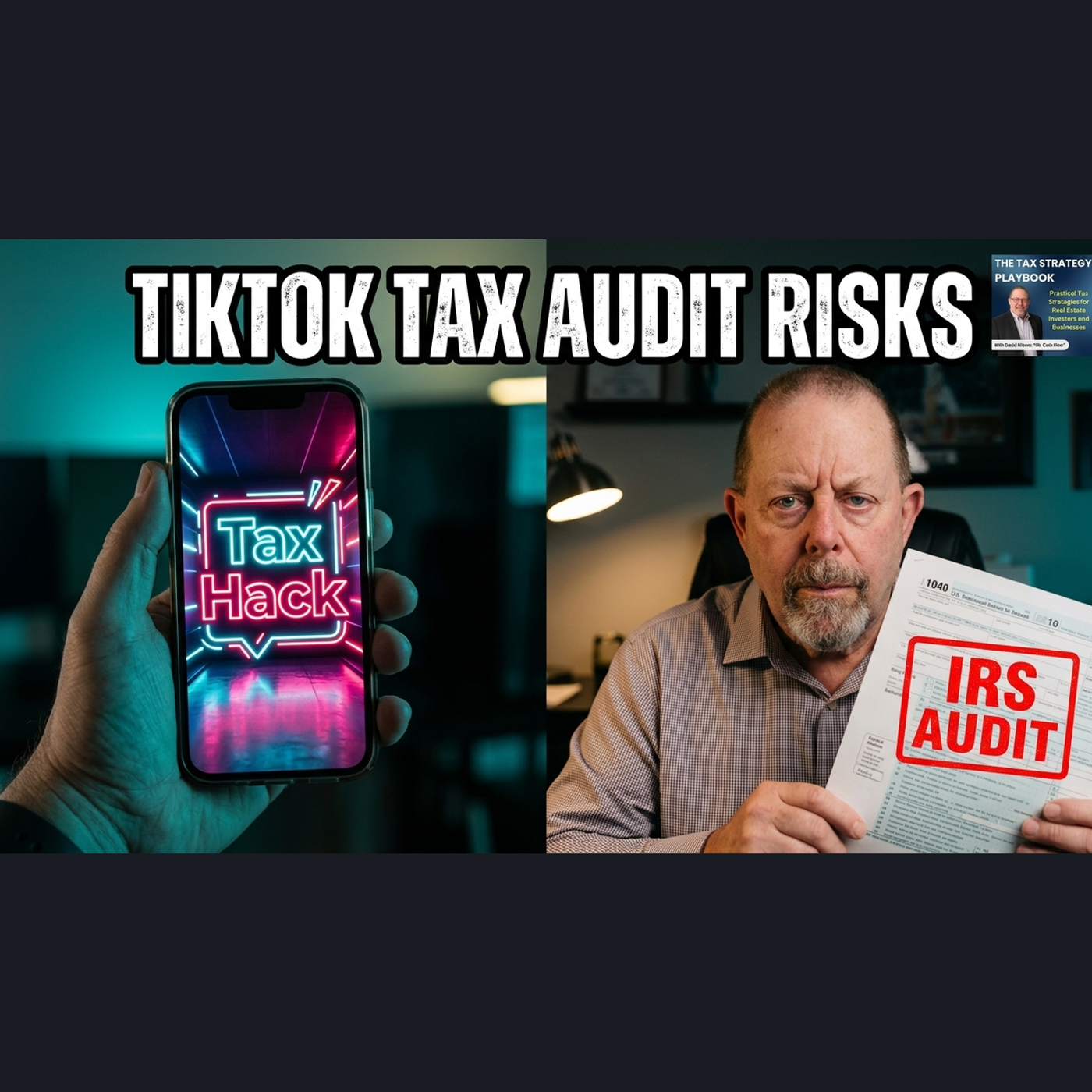
The IRS Dirty Dozen: What Your TikTok Feed Doesn't Tell You
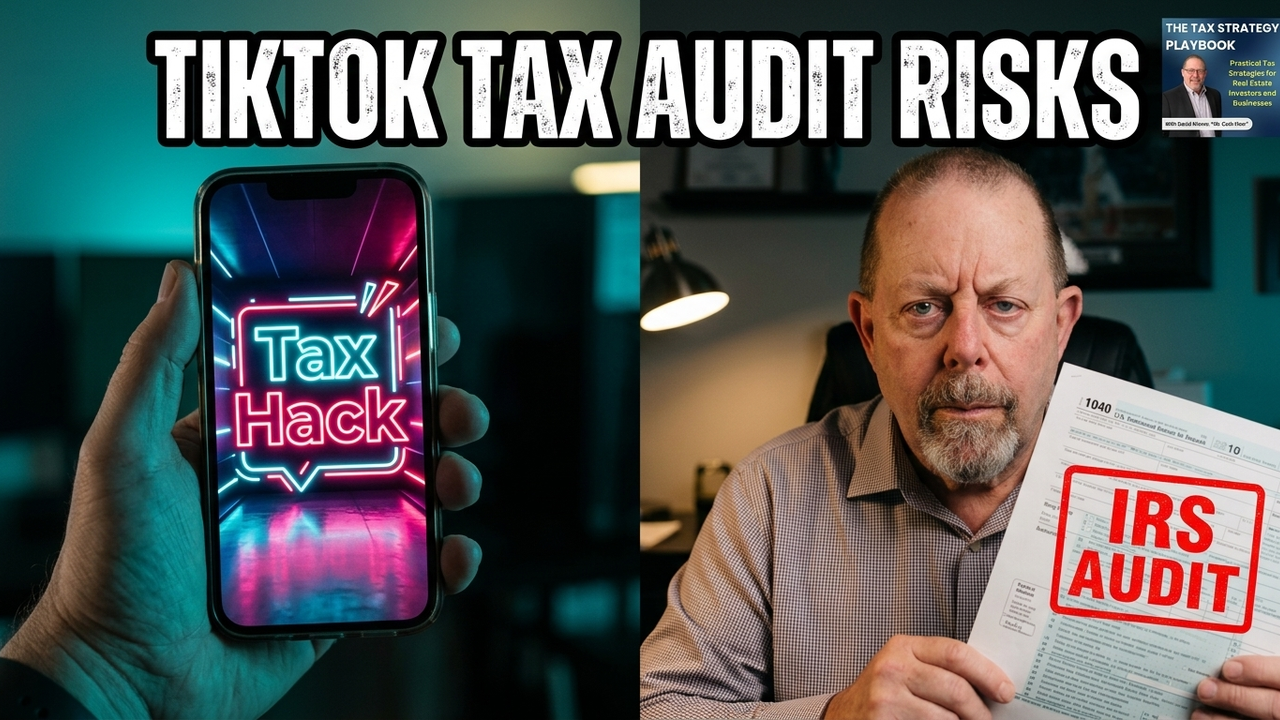
Welcome back to the blog, where we dive deeper into the topics we explore on the Tax Strategy Playbook podcast. In our latest episode, we tackled a pressing issue that's sweeping across social media platforms like wildfire: those seemingly amazing "tax hacks" that promise to revolutionize your financial life. We delved into why these viral tidbits, often found on platforms like TikTok, are not just misleading but can actively put you on the IRS's radar. Today, we're going to expand on that discussion, breaking down why the IRS is increasingly focused on misleading tax advice and what you absolutely need to know to stay out of trouble.
The digital age has democratized information in incredible ways, and that includes financial and tax advice. Suddenly, anyone with a smartphone and an opinion can reach millions. While this can be a powerful tool for education, it also opens the door to widespread misinformation, especially when it comes to complex subjects like tax law. This is particularly true for "tax hacks" that sound too good to be true – and in the vast majority of cases, they are. The IRS has taken notice, and their inclusion of misleading social media tax advice on the 2026 Dirty Dozen list is a stark warning. This blog post is your guide to understanding why these "hacks" are so dangerous, what they're really hiding, and how to build a legitimate, bulletproof tax strategy instead.
Understanding the IRS Dirty Dozen: Why Misleading Tax Advice is a Red Flag
The IRS's "Dirty Dozen" is an annual list highlighting common tax scams and schemes. For 2026, a significant new entry is "misleading tax advice" circulating on social media. This isn't a minor oversight; it's a deliberate move by the IRS to signal their increased scrutiny on the digital dissemination of potentially fraudulent or misleading tax claims. What does this mean for you? It means that if you've been relying on quick-fix tax advice from viral videos, you could be walking a very thin line.
The allure of these "hacks" is understandable. They promise simple solutions to complex problems, often suggesting ways to dramatically reduce your tax burden with minimal effort. They play on common desires: to pay less tax, to get a bigger refund, or to access hidden loopholes. However, the reality is that tax law is intricate and requires careful planning, not just a soundbite. When content creators simplify these complex laws to the point of being factually incorrect, or worse, intentionally misleading, they are essentially setting their followers up for potential audits and severe penalties.
The IRS isn't just looking for blatant tax evasion anymore. They are actively monitoring online platforms to identify trends in misinformation that could lead individuals to misrepresent their tax situations. The "Dirty Dozen" isn't just a list of scams; it's a public service announcement from the tax authority, flagging areas where taxpayers are most likely to be victimized or to inadvertently fall into tax-related trouble. By shining a spotlight on social media tax advice, the IRS is telling us that they consider these online "gurus" a significant risk factor for tax fraud and non-compliance.
Debunking Viral Tax Myths: What Your TikTok Feed Doesn't Tell You
Let's get down to brass tacks and unpack some of the most common and dangerous tax myths that have gone viral. We'll go through each one, explaining why it's a fallacy and what the actual, legitimate tax strategy looks like. Remember, the goal of this blog and our podcast is to equip you with knowledge, not to offer specific tax advice, which should always come from a qualified professional.
Myth #1: 'Turn Your Whole Life into a Write-Off'
This is perhaps the most ubiquitous and misleading "hack." The idea is that if you can somehow tie nearly every personal expense back to your business, you can deduct it all. This often involves nebulous claims about using personal vehicles for "business errands" or claiming your home office expenses are astronomical. The reality? The IRS has strict rules about what constitutes a legitimate business expense. Expenses must be "ordinary and necessary" for your trade or business. While some personal expenses might have incidental business use, claiming your entire life as a business write-off is a surefire way to trigger an audit. Legitimate strategies involve meticulously tracking actual business expenses, creating written policies for business use of personal assets, and ensuring a clear separation between personal and business finances.
Myth #2: 'Secret Codes' and Fake Tax Credits
You've probably seen videos promising "secret codes" or specific phrases to enter on your tax return that will unlock massive refunds or credits. This is pure fiction. The tax code doesn't operate on secret codes. Tax credits and deductions are based on specific eligibility criteria outlined in law. Attempting to claim credits you're not entitled to, especially by fabricating information or using non-existent codes, is tax fraud. Real tax credits and incentives exist, but they are tied to specific activities like investing in renewable energy, hiring certain employees, or investing in designated low-income areas (Opportunity Zones). The key is to understand the actual requirements for these legitimate incentives and to build your tax strategy around them, not to invent imaginary ones.
Myth #3: 'You'll Never Pay Capital Gains Again'
This is another enticing but ultimately false promise. Capital gains taxes are a fundamental part of how investments are taxed when you sell an asset for more than you paid for it. While there are strategies to defer or mitigate capital gains taxes, eliminating them entirely is rarely possible for most investors. Tactics like 1031 exchanges for real estate, Opportunity Zones, installment sales, and tax-loss harvesting are legitimate tools that can help manage capital gains. However, they are not magic wands that erase the tax liability forever. They are sophisticated strategies that require careful planning and execution, and they don't eliminate the tax entirely; they often defer it or reduce the amount of taxable gain.
Myth #4: 'Put Everything in an LLC and Pay No Tax'
The Limited Liability Company (LLC) is a popular business structure, but it's often misunderstood, especially on social media. Many believe that simply forming an LLC magically exempts you from taxes. This is far from the truth. An LLC is a legal structure that provides liability protection, but for tax purposes, it's typically treated as a pass-through entity. This means the profits and losses of the LLC are passed through to the owner's personal tax return and taxed at their individual income tax rates. While LLCs can offer flexibility in how they are taxed (e.g., electing to be taxed as an S-corp or C-corp), they do not inherently eliminate tax obligations. Sophisticated investors use LLCs as part of a broader tax and asset protection strategy, coordinating multiple entities and considering tax implications carefully, not as a tax-free haven.
Myth #5: Hobby 'Businesses' for Write-Offs
The IRS is very strict about distinguishing between a genuine business operated with the intent to make a profit and a hobby. Many people start a side project they enjoy and then try to claim all their expenses related to it as business deductions. If the IRS determines that your activity is not engaged in for profit, they will disallow the deductions. Factors they consider include whether you conduct the activity in a businesslike manner, the time and effort you put into it, and whether you have a history of generating profits. Trying to claim hobby expenses as business losses is a common audit trigger. Legitimate business deductions require demonstrating a true profit motive.
Myth #6: The G-Wagon & Heavy Vehicle Write-Off Illusion
There's been a lot of buzz around claiming massive write-offs for expensive vehicles like G-Wagons, often linked to bonus depreciation rules. While bonus depreciation and certain vehicle write-off rules can offer significant tax benefits, they come with strict limitations. The ability to deduct the full cost of a vehicle, especially a luxury one, is often tied to its gross vehicle weight and specific business use requirements. Misrepresenting the business use or attempting to claim deductions far exceeding the allowed limits is a red flag. Furthermore, the rules surrounding depreciation, especially for vehicles, are complex and have changed over time. Relying on a viral "hack" without understanding the nuances can lead to trouble.
Myth #7: Ignoring Your CPA for Internet 'Gurus'
This is a dangerous mindset that many social media tax hacks foster. They often position themselves as being more up-to-date or innovative than traditional tax professionals. The truth is, reputable CPAs and tax advisors have a deep understanding of tax law, ethics, and the importance of compliance. They are licensed and regulated, and their advice is grounded in sound legal principles. While it's always wise to stay informed, blindly abandoning the advice of your trusted tax professional for unsubstantiated claims from internet personalities is a recipe for disaster. True tax strategy involves collaboration with qualified professionals who can tailor advice to your specific situation and ensure you remain compliant.
Real Tax Strategies for Wealthy Investors: The 2025-2026 Tax Window
So, if those viral "hacks" are so wrong, what are the legitimate strategies that sophisticated investors and wealthy individuals use to manage their tax liabilities? The 2025-2026 tax window, especially with potential changes on the horizon, is a crucial time for strategic planning. Instead of chasing quick fixes, these individuals focus on long-term, defensible tax plays.
Key Tax Plays: Timing Income, Bonus Depreciation, and Retirement
One of the most fundamental strategies is timing income and deductions. Understanding when income is recognized and when expenses can be deducted can significantly impact your tax liability, especially when tax rates are expected to change. For instance, if you anticipate higher tax rates in the future, it might be beneficial to defer income or accelerate deductions in the current year. Conversely, if you expect lower rates, you might want to recognize income sooner. This requires foresight and a deep understanding of tax law and economic forecasts.
Bonus depreciation, especially for real estate investors, remains a powerful tool. It allows businesses to deduct a large percentage of the cost of qualifying new and used assets in the year they are placed in service. This can significantly reduce taxable income. Coupled with cost segregation studies, which identify and accelerate depreciation deductions on building components rather than the entire building over 27.5 or 39 years, bonus depreciation can provide substantial tax benefits. However, these strategies require proper documentation and adherence to IRS rules.
Retirement planning is another cornerstone. Wealthy investors often utilize multiple retirement accounts, such as traditional 401(k)s, Roth IRAs, SEP IRAs, and Solo 401(k)s, to maximize tax-advantaged savings. Health Savings Accounts (HSAs) also offer a triple tax advantage: tax-deductible contributions, tax-free growth, and tax-free withdrawals for qualified medical expenses. Stacking these different retirement and savings vehicles creates a robust plan for long-term wealth accumulation and tax reduction.
The Power of Entity Structures and Tax Incentives
As mentioned earlier, entity structures are important, but not in the simplistic way often portrayed online. Sophisticated investors use a combination of entities – LLCs, S-corporations, C-corporations, trusts, and partnerships – to achieve specific goals related to liability protection, asset segregation, and tax optimization. The key is to coordinate these structures so they work in harmony to achieve your overall financial objectives, not to treat them as a magic bullet to avoid taxes.
Furthermore, there are numerous legitimate tax incentives available for various activities. These include credits for research and development (R&D), energy-efficient investments, and investments in designated economic development zones. Identifying and strategically utilizing these incentives, based on your business activities and investment strategies, can lead to significant tax savings. This requires diligent research and understanding of eligibility requirements.
Are You a TikTok Tax Victim, DIY Hacker, or Playbook Pro? A Self-Assessment
It's crucial to assess your current approach to tax strategy. Ask yourself honestly:
- Do you frequently search for "tax hacks" or "write-off tricks" on social media?
- Do you believe there are "secret codes" or simple shortcuts to drastically reduce your taxes?
- Have you ever claimed expenses or credits without fully understanding the IRS rules or your eligibility?
- Do you rely more on online influencers than on a qualified tax professional for advice?
- Are you unsure about the legitimate ways to manage capital gains, depreciation, or entity taxation?
If you answered "yes" to several of these questions, you might be closer to being a "TikTok Tax Victim" or a "DIY Hacker" than a "Playbook Pro." A Playbook Pro understands that true tax strategy is about legitimate, defensible planning that aligns with tax law, not about exploiting loopholes or relying on misinformation. It's about building a long-term, sustainable approach to wealth management that minimizes tax liability legally and ethically.
Conclusion: Building Your Legitimate Tax Strategy Playbook
The allure of quick fixes and viral "tax hacks" is powerful, but as we've explored, it's a dangerous path that can lead to serious tax trouble. The IRS's inclusion of misleading social media tax advice on the 2026 Dirty Dozen list is a clear signal of their heightened focus on this issue. Instead of falling prey to misinformation, it's time to embrace a legitimate, well-thought-out tax strategy.
This blog post has served as an extension of our latest podcast episode, "Tax Strategy vs TikTok Hacks: 7 Viral Myths That Trigger Audits" (https://taxstrategyplaybook.com/tiktok-tax-myths/), where we delved even deeper into these specific myths and the real strategies wealthy investors employ. Remember, true tax efficiency comes from understanding the nuances of the tax code, working with qualified professionals, and building a proactive, defensible plan. Don't let your TikTok feed dictate your financial future; build your own Tax Strategy Playbook with knowledge, integrity, and sound advice.

CEO of Cashflow Strategies, Inc., Tax Strategist, Speaker, Educator
David “Mr. Cash Flow” Wiener is a nationally recognized authority on real estate tax strategy and cash flow optimization, and the host of The Tax Strategy Playbook podcast. As Founder and CEO of Cash Flow Strategies, Inc., David has spent decades helping real estate investors, business owners, and their advisory teams legally reduce taxes, unlock hidden cash flow, and put more money back into productive assets instead of into the IRS.
Over the course of his career, David has become especially known for his work with cost segregation, 179D energy-efficient commercial building deductions, and other engineering-based tax incentives that accelerate depreciation and free up capital. He has also built a long track record in cash flow and accounts receivable optimization, helping clients improve profitability and financial stability without simply “working harder” or taking on more risk.
David is a sought‑after speaker, trainer, and educator, with audiences ranging from national industry conferences to small mastermind groups and professional associations. He is known for his clear, practical teaching style and his ability to translate complex tax concepts into simple, actionable plays that investors and advisors can use right away. Whether he is speaking to CPAs, medical and dental practice owners, or real estate investors, David’s message is consistent: tax strategy is one of the most powerful—and most overlooked—wealth multipliers available.
On The Tax Strategy Playbook, David brings that same real‑world experience and teaching approach to the microphone. Each epis… Read More
What Counts as a Land Improvement, and Why Does It Depreciate Over 15 Years?