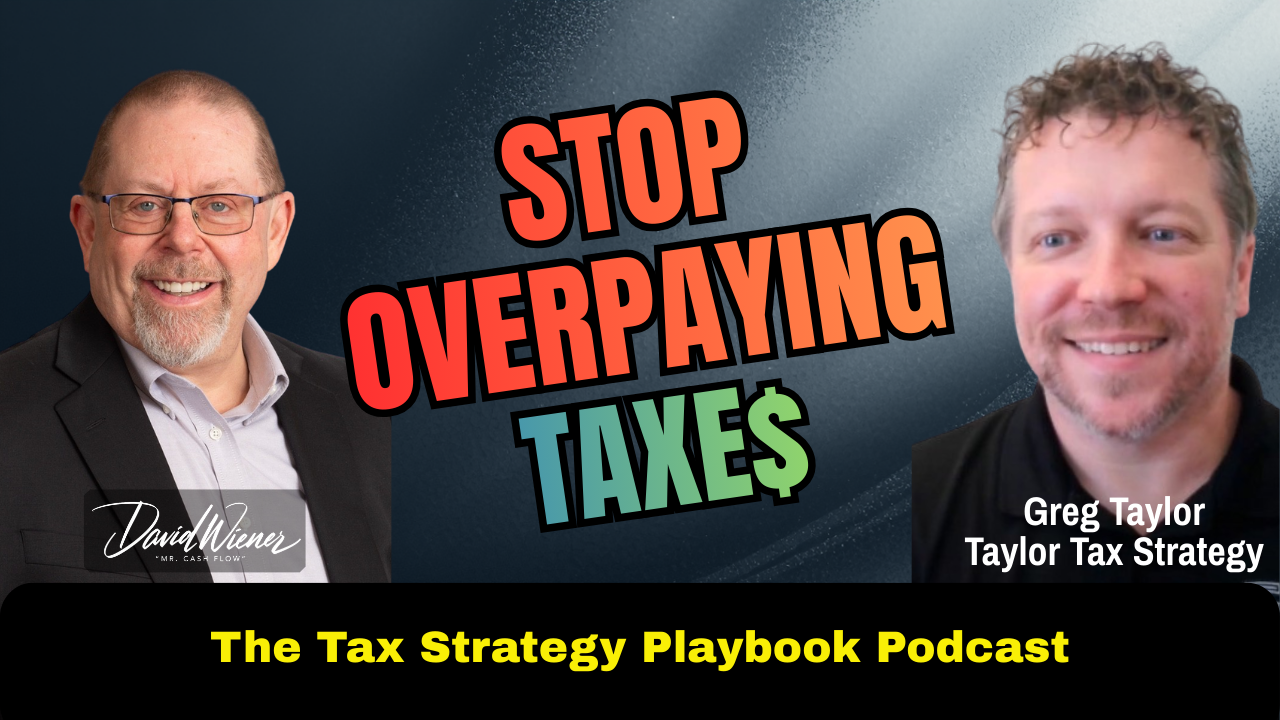
Why Tax Strategy Is the Real Wealth Multiplier (with Greg Taylor)
Most real estate investors think wealth is built only through finding great deals, raising capital, and managing properties well. But there’s a fourth lever that often gets ignored—and it may be the most powerful of all: tax strategy. In the first episode of The Tax Strategy Playbook, I sit down with tax strategist Greg Taylor to unpack how the right tax plan can turn every dollar you earn into a true wealth multiplier instead of a bigger check to the IRS.
In this conversation, we walk through how proactive planning can help you keep more of what you make, reinvest faster, and compound your wealth over time as a real estate investor. If you’ve ever wondered how sophisticated investors seem to grow their portfolios without simply “working harder,” this episode gives you a look at the tax playbook behind the scenes.
Episode Focus: Turning Taxes into a Wealth Engine
The core idea of this episode is simple: taxes don’t have to be a fixed cost; handled correctly, they become a controllable variable in your wealth formula. Greg and I talk about how the ultra-wealthy and serious investors design their tax lives on purpose, years in advance, instead of reacting to whatever their CPA says in March or April.
We frame tax strategy as part of your overall investing model, not an afterthought. That means every acquisition, every rehab, and every exit should be viewed through the lens of “What does this do to my tax position, and how can I use the code to my advantage?”
Who Is Greg Taylor?
Greg Taylor is an entrepreneur, tax strategist, and the founder of Taylor Tax Strategy, where he helps real estate investors and business owners legally reduce their taxes while growing their portfolios. Greg is known for showing clients how to move beyond simple compliance and into true planning: using entity structures, income classification, and real estate–specific incentives to unlock significant savings.
He regularly works with landlords, syndicators, and high-income earners to structure their income and investments in ways that minimize tax drag and maximize reinvestable cash. His approach is practical and results‑oriented, which makes him a perfect fit for our very first episode of The Tax Strategy Playbook.
Key Strategies We Discuss
Here are some of the themes and strategies we highlight in this episode, based on real situations Greg sees with investors:
• Why tax strategy beats “tax tips”
We discuss why one-off tactics are no substitute for a coordinated plan that integrates your income, entities, and real estate deals over multiple years.
• How real estate investors actually use the tax code
Greg shares how investors combine things like depreciation,
cost segregation, and the treatment of passive vs active income to offset taxes and free up capital for more deals.
• Short‑term rental and classification opportunities
We touch on how the way your income is classified (passive vs non‑passive, investor vs business owner) can completely change your tax bill, and where short‑term rental strategies sometimes come into play.
• Planning before the pressure hits
Greg explains why the biggest wins come when you plan before a big liquidity event or major acquisition, not after everything is already closed and booked.
Throughout the episode, we keep bringing it back to this question: “How do you design your tax strategy so every dollar you save goes directly to accelerating your wealth?”
Why This Matters for Real Estate Investors
Real estate offers powerful tools—leverage and tax advantages—that, when combined, can dramatically speed up your path to financial freedom. Many investors are already working hard on the leverage side, but they’re leaving huge amounts on the table by not fully using the tax side of the equation.
By understanding how to time deductions, structure entities, and match your tax strategy to your investing strategy, you can potentially redirect tens or hundreds of thousands of dollars over time back into your portfolio instead of sending it to the IRS. That’s what we mean when we say tax strategy can be a real wealth multiplier for real estate investors.
How to Use This Episode
As you listen, I recommend you:
- Note one or two ideas you want to bring to your CPA, tax strategist, or advisory team.
- Review your current portfolio and ask, “Where am I being reactive instead of proactive with taxes?”
- Identify at least one tax-related “lever” you could begin exploring this year, whether it’s rethinking income
classification, entity structure, or how you’re using depreciation.
Then, use this episode as the starting point for building your own Tax Strategy Playbook—a framework you can refine each year as your real estate portfolio grows.
Listen to the Full Episode
You can listen to “Why Tax Strategy Is the Real Wealth Multiplier (and How Real Estate Investors Actually Use It)” on The Tax Strategy Playbook at:
Be sure to subscribe, leave a review, and share this episode with another investor or business owner who you know is working hard, but may be giving too much away in taxes.