
Estate & Wealth Transfer Planning Posts
Passing assets to the next generation without passing along a tax problem — step-up in basis, which assets help heirs and which hurt them, and how depreciation and entity choices affect what your family actually inherits.

Sept. 2, 2026
Solo 401k vs SDIRA UDFI Rules: Which Account Avoids Real Estate Taxes?
Using retirement funds to purchase real estate through a non-recourse loan can trigger Unrelated Debt Financed Income (UDFI) in a self-directed IRA. However, real estate investors can completely sidestep this complex tax liability by utilizing a sol…

July 14, 2026
Why Gifting Real Estate to Heirs Early Can Be a Tax Disaster
Many real estate investors mistakenly believe that gifting property to their children while alive is the best way to avoid future estate taxes. However, in most cases, this strategy backfires by denying your heirs a crucial tax benefit known as the …

June 30, 2026
How a Stepped-Up Basis at Death Nullifies Cost Segregation Depreciation Recapture
For real estate investors who've embraced cost segregation, understanding the stepped-up basis at death is a critical estate planning strategy. This mechanism can effectively neutralize the depreciation recapture tax that would otherwise burden heir…

June 16, 2026
Navigating the 'Lazy Zone': Proactive Strategies for Surviving Spouses Before and After Loss
The 'Widow's Tax Trap' often catches surviving spouses off guard, especially when they've relied on joint tax benefits. Understanding the proactive steps and the concept of the 'Lazy Zone' in cash flow planning can significantly mitigate this financ…
June 8, 2026
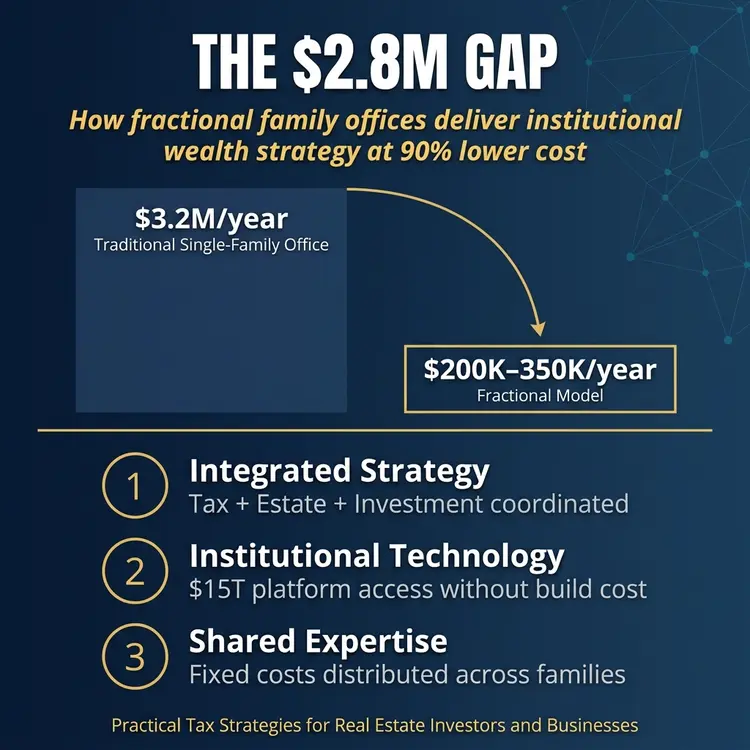
How Fractional Family Offices Work: Costs, Benefits, and Who Should Use Them
How Fractional Family Offices Work: Costs, Benefits, and Who Should Use Them Quick Summary: Fractional family offices share specialized wealth management teams across multiple families, cutting costs from $3.2 million to $100,000-$625,000 an…

June 2, 2026
Maximize Your Legacy: 721 UPREIT for Landlords' Estate Planning
Tired landlords can leverage the 721 UPREIT for seamless wealth transfer. This strategy allows you to exchange appreciated real estate for OP units, deferring capital gains and simplifying estate planning for your heirs, offering a sophisticated app…