

 YouTube
 Apple Podcasts
 Spotify
 iHeartRadio
 Pandora
 Deezer
 Amazon Music
 Podchaser
 PocketCasts
 The Wealth Elevator: What Happens When You Actually Run the Numbers?

Key Takeaways
- Most real estate investors drastically overestimate cash flow while underestimating taxes, maintenance, and the true cost of exits.
- As your net worth crosses critical mass past the one-million-dollar mark, traditional small rental properties often yield poor returns relative to their legal liability and operational headaches.
- Using conservative underwriting metrics—such as realistic rent growth and higher exit cap rates—strips away the marketing fluff found in glossy pitch decks.
- Successful accredited investors often diversify beyond small rentals into large apartment syndications, private equity, oil and gas, and alternative assets.
- Cost segregation studies and depreciation schedules offer powerful tax deferral advantages, but they must be modeled carefully against your long-term exit and 1031 exchange strategies.
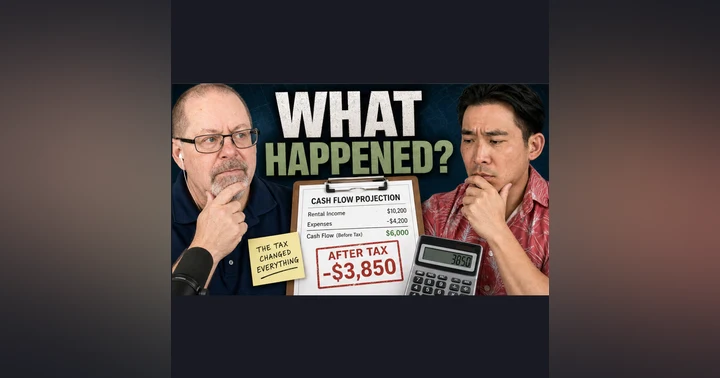
Most investors think they’re buying cash flow, but the ones who really build wealth know the deal either works after taxes, depreciation, and the exit… or it never worked at all. In this episode of The Tax Strategy Playbook, David Wiener (“Mr. Cash Flow”) and Lane Kawaoka (founder of The Wealth Elevator) rip apart the myths that keep real estate investors stuck in mediocre deals and show how high-net-worth investors really structure portfolios using syndications, alternative assets, and smarter underwriting.
If you’ve ever looked at a proforma and thought, “This looks too good to be true,” this conversation will change how you read pitch decks, how you underwrite deals, and how you balance cash flow today against long-term upside. You’ll hear why chasing a few thousand dollars a month in cash flow at a million-dollar net worth is often a distraction, how to stop mistaking “activity” for “progress,” and how to build a portfolio that actually supports financial freedom instead of just more headaches.
Lane shares his journey from engineer with 11 single-family rentals to accredited investor allocating across large apartment syndications, private equity, oil and gas, and even T-bills once you hit “critical mass.” You’ll hear exactly why he sold off his small rentals, reduced legal liability exposure, shifted into LP positions, and began underwriting deals using conservative, reality-based assumptions instead of rosy operator spreadsheets.
Inside this episode you’ll learn:
- Why most “cash flow” deals fall apart after taxes, depreciation, and realistic expenses.
- How accredited investors rebalance from small rentals into diversified commercial and alternative assets.
- The difference between activity vs. progress in your investing journey.
- How to underwrite syndication deals using PLs, rent rolls, and your own analyzer instead of trusting glossy pitch decks.
- When it makes sense to prioritize cash flow today vs. long-term upside across dozens of deals.
- Why you may be better off in T-bills or savings accounts than owning paid-off rentals with low returns and full liability exposure.
- How the “Wealth Elevator” framework changes your strategy at each net-worth floor, from under $1M up through $4M and $5M+.
🎁 FREE BOOK: THE WEALTH ELEVATOR
Lane is giving away copies of his book “The Wealth Elevator” to listeners of this episode. Listen through for David’s instructions on how to claim your copy.
Chapters:
00:00 Why most investors overestimate cash flow and underestimate taxes
02:15 Meet Lane Kawaoka: from engineer to accredited investor
05:11 The Wealth Elevator: floors of the wealth game
05:51 How beginners should underwrite single-family rentals
10:21 Legal liability and why many millionaires sell small rentals
10:57 Shifting into LP positions and institutional assets
11:27 Why pitch decks lie: PLs, rent rolls, and your own analyzer
13:02 Balancing cash flow vs. long-term upside in syndications
32:25 Why “traction” in saving matters more than any single deal
33:19 The one skill new investors must master: spreadsheet underwriting
35:26 Redefining financial freedom at higher net-worth levels
If you care about what happens after the spreadsheet, and you want tax-smart, risk-aware strategies for building long-term wealth, subscribe and turn on notifications so you never miss an episode of The Tax Strategy Playbook.
#RealEstateInvesting #SyndicationDeals #PassiveIncome #TaxStrategy #AdvancedTaxPlanning #AccreditedInvestor #WealthBuilding #CashFlowInvesting #BonusDepreciation #CostSegregation #TheTaxStrategyPlaybook #WealthElevator #AlternativeInvestments #ApartmentSyndication #FinancialFreedom #AfterTaxCashFlow
Frequently Asked Questions
What is 'The Wealth Elevator' framework?
The Wealth Elevator framework categorizes real estate investing into different net-worth floors, recognizing that your asset allocation, risk tolerance, and tax strategies must change as your wealth grows.
Why do syndication deals often look better on paper than in reality?
Operators often use aggressive, best-case assumptions for rent growth and exit cap rates in their pitch decks, which can artificially inflate projected returns.
When should high-net-worth real estate investors look at alternative assets?
Once investors hit a certain critical mass of net worth, they often diversify away from heavy commercial real estate exposure into asset classes like private equity, oil and gas, and T-bills for better risk management and tax benefits.
How does a cost segregation study impact real estate taxes?
Cost segregation accelerates depreciation deductions in the early years of a property ownership, resulting in substantial upfront tax savings that can be leveraged or deferred over time.
David Wiener: Most investors think they're buying cash flow, but the ones who actually build wealth know the deal either works after taxes, depreciation, and the exit, or it never really worked at all. Today we're unpacking why so many real estate investors overestimate cash flow, underestimate taxes, and how the gap shows up in your actual net worth over time. Stay with us, because my guest today is also giving away copies of his book The Wealth Elevator, and I'll show you exactly how to get one before we wrap. If you've ever looked at a proforma and thought this looks too good to be true, don't skip around on this one. The nuance in the middle might save you years of bad deals. Welcome back to the Tax Strategy Playbook. I'm your host, David Wiener, CEO of Cash Flow Strategies, and a tax strategy guy who lives in the world of cost segregation, depreciation, and deal structure so you don't have to. On this show we break down the real decisions b behind building long-term wealth, not just what looks good on paper. Today I'm thrilled to be joined by Lane Kawaoka, founder of the Wealth Elevator, to unpack why so many real estate deals look like winners up front. But tell a completely different story once you factor in taxes, risk, and the exit. Lane spent years helping investors move beyond chasing deals and start building real asset based wealth through syndications, accredited investor strategies, and long term thinking. And he's seen firsthand how easy it is to make mistake activity for progress. Let me say that again. And he's seen firsthand how easy it is to mistake activity for progress. Lane, welcome to the show. For listeners who might not be familiar with you, how do you describe exactly what you do today?
LANE: Well, I would say I â I kind of do it by experiencing it myself. â used to be an engineer a long time ago, built a portfolio of twelve or eleven rental properties by two thousand and fifteen, and then became an accredited investor, then kinda expanded into larger syndication deals. So I've kind of seen the beginning of wealth building and then in the middle and then kind of see what what happens when you kind of cross over the rainbow to some extent.
David Wiener: So what problem would you say are most of the investors you work with really trying to solve when they come to you?
LANE: Yeah, you know, most of the folks I work with are later in the game. So ages 45, 60 years old. They've got a, you know, greater than million dollar net worth. They might have done rental properties at one time, but they kind of understand that that stage of the game where they're looking for $10,000 to $20,000 of passive income a month to sustain the rest of their years in retirement, that the little rental property ain't just gonna cut it anymore. Right. So But you know, then again, you don't want to pile all your money into apartment buildings. â that was my mistake, right? Like I had 90% of my net worth in 2021 and that stuff, and that didn't end well, right? So kind of blending that with diversification. But how do you do that from an an alternative investment perspective, right? Because all they teach in the beginning, or at least what I did when I was getting started, was buying little rental properties, right? And but you know, you kind of expand from there.
David Wiener: And that's what a lot of our listeners have at this point. I think they need to know what comes in the future as well. When you when you look at your own portfolio now, what does it actually look like kind of in broad strokes?
LANE: Yeah, I mean, it I'm still a work in progress, right? Like, I mean, I still was very heavy in commercial real estate. And we we're an operator, right? Like we operate, we're the general partner of a lot of these large apartment buildings. â and that's where our expertise is. So we're never gonna get away from that entirely. But I've been, you know, over the last several years starting to diverse my portfolio into different asset classes that are not real estate, you know, more buying businesses, private equity. â in things that I sort of understand as a business owner. â oil and gas, right? You know, especially for the tax benefits there, especially for people unable to do real estate professional status. â you know, that's a big play, especially, you know, in these uncertain times that we're in right now. â not gonna say the W word, but you know, tends to perform well in those times. But, you know, also as I mentioned, you know, a lot of my clients are, you know, multiple multiple million dollar net worth net worths. There comes a plate a time where you realize you've hit critical mass or you have enough assets where heck, you could just put it into T bills and chill at that point, right? You know, obviously you don't want to have a in a portfolio entirely of that. So how do you build this kind of more diversified pool?
David Wiener: So And that's the idea behind the wealth elevator. So
LANE: Right. So the idea the idea is like you've got different stages of the wealth building game, different floors, so that in the book we kind of talk about and define these different floors because it's not just the same strategy all the way through. There's different paradigms.
David Wiener: Absolutely. So now that everybody has kind of a feel for who you are and how you invest, let's zoom out a little bit. Let's talk about the mental model behind your decisions, because that's where most people, I would think, quietly get it wrong. So when you look back at your own investing journey, what changed most in how you evaluate a deal?
LANE: I mean, in the beginning, right, when I was on the first floor of the wealth elevator, under a million dollars net worth, buying little rental properties, it it's in a way it's very tactile. Like get a spreadsheet out, you start to, you know, something rents for eleven hundred, you start breaking down all the expenses, taxes, insurance are the big one, and then your maintenance fee, your property management fee, and then your CapEx. Which, you know, 10 to 20% depending on which rules of thumbs you're using. And that's how you underwrite the deal, right? And you try to assume that some of these expenses are going to go up over time. You definitely don't assume that your rents are going to go up five percent every year, like all those other as tools analysis out there. and you try to buy in the p path of progress, right? To in a way get lucky with appreciation. But if you're not, you know, you try to cash flow. Right. So that's that's what you do on the first floor of the wealth elevator when you're buying your your own little rental properties.
David Wiener: So looking at the wealth elevator, how how does that help people see what they usually miss early on, like on that first floor of the of the elevator?
LANE: Yeah, you know, I think one mistake that people will make on the first floor of the wealth elevator, and and I made this mistake too when I was working my engineering job, what you're trying to do is replace your income because maybe you don't like your job, right? And you wanna get away from it. You wanna quote unquote retire. So you have this idea that if I just replace my salary five to ten thousand dollars a month, I would be able to now go part-time or retire my spouse. So I think a lot of emphasis from an investor comes to cash flow initially. So there's two ways you make money. â the cash flow way is so sounds more prudent from a perspective too, but there's also, you know, taking bigger risks where you don't get cash flow and like, you know, specifically like development deals where returns can be larger, but you don't have that, you have to delay gratification in a way. So I I was initially when I was investing, you know, my first eleven rental properties, you know, I mentioned had five in Atlanta, a couple â one in Indianapolis, Pennsylvania, then the rest in Birmingham, where I had these more Midwest rental properties. I was focused a lot on just cash flow. â and maybe I had with it these eleven rentals, maybe a few thousand dollars of passive cash flow every month after taxes, insurance, maintenance, the oopsie stuff that happens, right? â
David Wiener: There's always oopsies.
LANE: But you start to realize like when your net worth grows, like three thousand dollars a month isn't much. Right. I mean it's kinda s kinda sounds like this is when you start to go up the paradigms.
David Wiener: So in your case, what was the aha moment that changed your approach?
LANE: Well, it came two two ways, right? Like the thing that was pushing me was with eleven rental properties. I had maybe an eviction or two every single year, some kind of big catastrophe that happened every quarter, which was not a huge thing because I professional property management doing this as I worked my engineering job, which was my main thing at the time. That was how I made money to get more down payments to buy more and more of these rental properties. But after a while it got to be like a chore with dealing with these headaches that would happen pretty frequently. And all for what $3,000 a month. Now, some people out there would be like, wow, I kill for $3,000 a month. And I was the same, right? But when your net worth goes over a million dollars, that it just becomes more relative at that point. And what pulled me the other direction too at this point, this is around 2015 and 16, I started to interact with accredited, people with, you know, multi-million dollar net worth. And I started to learn the best practices that they did. And one of the things was legal liability, right? Like You know, I was lucky enough not to really get sued when I was owning these 11 rental properties on my own, but I didn't realize that I was exposed from you know slips, trips, and falls. You know, I had LLCs, but you know, you're the owner at the end of the day. The buck stops with you. And even if you wanted to, you know, you may be t it may be totally frivolous lawsuit, but y at the end of the day, you have to defend yourself and get the truth out there. And that may cost 50-100 grand. That comes out of your pocket anyway. So What a lot of these people who are million dollar net worth or greater were doing, they're selling off their little rental properties, re-leveraging too at the same time. â we can talk a little about like return on equity, but that's another from a mathematical standpoint. If you're paying down your properties, your return on equity goes way, way down. â you know, some of my investors, they have paid off properties and on their rental properties and they're making like two percent. And I'm like, for all the headache and legal liability, you're better off in a T bill from that perspective.
David Wiener: Heck, you're better off in you're better off in some savings accounts.
LANE: â that's kind of a no brainer, you know. Exactly. Exactly. â but you know, I was just kind of at this point in my investing journey as just kind of a sponge, right? Like you take financial advice from people who are that next level up, and to me, net worth does not lie. I don't care how old you are, it's what your net worth is at the end of the day. And especially if you built it on your own. And more importantly, I guess that so what these guys were doing is they were moving into LP positions and getting diversification.
David Wiener: Absolutely.
LANE: into more commercial assets, more institutional assets, high higher quality assets than the little single family home, mom and pa investor.
David Wiener: And I think that shift alone changes everything. Because once your your lens changes, you know the same deal reads completely differently. So let's talk about what separates a good a deal that just looks good from one that apps â actu let me say that again. So let's talk about what separates a deal that just looks good from one that actually performs. And if this part alone is already making you rethink how you look at deals. Hit follow or subscribe. This show is built for investors who care about what happens after the spreadsheet. So what's the biggest reason deals look great on paper but disappoint in real life?
LANE: Yeah, so let's talk a little bit more on syndicated deals, right? When you get a deal, you get a pitch deck, a PDF, right? And it's all shiny. And I mean, they're all nice these days. They're all AI generated anyway, right? â but what we like to do, I mean, our process I'll I'll just go through our process, right? Like we get the PLs and we get the rent rolls, right? Like I throw out that PDF all the time. It doesn't you know, th most of it is market data, right? Like as an investor, you should kind of know what's in there, even if you don't have access to CoStar.
David Wiener: Yeah, yeah.
LANE: â we've got access to CoStar too. â but so we can validate some of the numbers. But you know, step number one, take in the PLs and rent rolls. That's why I I like investing in apartments because you can kind of see what the run rate from two years in the past was. and you should sort of â maybe apply this to buying single family homes, but a lot of times you don't have that run rate because you're buying it from an owner occupied or it wasn't run as â rental property. So this is the kind of the a nice advantage to apartment investing.
David Wiener: Right.
LANE: But we we load up into our own analyzer, start to use our assumptions, and we kind of throw out the assumptions that the syndicator operator starts uses because they're always rosy and â and this is where we start to, you know, level different deals from different sources and try to pick the best one, right? â so that's kind of I mean, we can go into more detail of course, right? Reversion cap rate rank increases per year. What are good assumptions and some of these big movers on the spreadsheet? But that's that's step one.
David Wiener: How do you how do you personally and and how would you recommend somebody balance cash flow today versus long term upside when you're looking at a deal?
LANE: I mean this is this is the hard part, right? Because like operators and syndicators, they're gonna use certain numbers on the spreadsheet that are may drastically increase the projected return to ridiculous numbers, right? Like, you know, we may look at a deal and the operator says hundred twenty percent return in five years, for example. But when we use the right assumptions, we decrease the reversion cap rate, for example. or you know Instead of assuming that the rents are going to go up three percent every year, we say one and a half percent, that 120% is may go down to 40% in five years. And at that point, it's like, no, why why do this? That's not enough. Buffer it there. but you know, once you get enough of these data points, you start to kind of understand when you normalize a lot of these deals, right? And take out the fictitious projections out there, what's kind of normal and customary. But for the most part, you've kind of got Two types of deals out there, ones that are more development based, where you know you're trying to, you know, double your money essentially and with no cash flow. And of course, when I say double your money, it's plus or minus 50%, right? On these things, right? But on the other side is more of these yield type of deals. So you're buying an existing property and there's not too much going on with it. You might do a little bit lipstick on a pig, but you'll eventually flip it and sell it, right? So there is a pop at the end.
David Wiener: Right.
LANE: You know, used to be, you know, sometimes it's maybe one half to one third of the total return you'll get is through cash flow. And maybe two thirds of it is through the pop at the end. But these are I mean, I'm speaking in really in terms of generalities, right? So I'm just kind of describing two different polarizing types of deals within the real estate world of, say, class B apartments, for example.
David Wiener: Sure. And there's and there's a point at which â an investor needs to to decide does he want cash flow today or does he want long term upside, you know, and figure out which works better for him, I would assume.
LANE: Correct. And that's for one deal, right? But you know, a good investor should be in dozens and dozens and deals and diversified.
David Wiener: And I imagine they balance those out i over the deals that they're in.
LANE: Right, right. And this is I think where like we always say like, you know, this is why we do retreats and community events where people can build relationships with each other. Because whenever you talk with each other, especially on the internet, it's all surface these days. And especially on the internet, you don't know who's legit and who's just a bot and who's a hidden review person. â you know, you never you always hear like, â what I'm trying to look for? Well, I'm looking for core plus the this profile of one half coming through cash flows to balance, you know, this and it's like, yeah, but that's Maybe two percent of your portfolio. What's the logic with the whole totality, right? Like you may be in things totally outside of real estate, total you know, private credit, T bills, life insurance, right? Like that's just the tip of the iceberg for this type of stuff. And that always gets lost unless you have a good relationship. And that's why we always encourage people to come out to our live events, meet other real people, get more intimate.
David Wiener: And like you said, that's how you learned, right? Talking to people.
LANE: Yeah, I mean yeah, I mean, but it's it starts there. I mean, it doesn't that doesn't happen overnight, right? Even in the first year, you're not gonna build enough rapport to get that information, right? But just to know that, you know, if I were to describe a perfect deal that I'm looking for to fit my my my â what my needs are, I guess, as an investor, â none of my investments fit that perfectly, right? It's a s it's a scatter chart, a weighted average of something like that for that. purpose â s
David Wiener: And I think people are really missing out when they focus too much on projected monthly returns. They're they're that's kind of short sighted, I would assume.
LANE: That is. But you know, that admittedly that where that comes from is a lot of people, especially when they're newer and they're more auditory. Whereas this more successful bit investors who are in dozens and dozens of deals, they're not floating out there on the internet, kind of flaunting how much money they have. That's stupid. You're a wealthy person. You need to kinda hide yourself to some extent. but yeah, you know, more in less experienced investors, they may be more auditory that, hey, this is what I'm trying to look for. But again,
David Wiener: Yeah.
LANE: As you're mentioning just previously, like it's more holistic. It's like, you know, you're looking for a piece in your portfolio. I guess maybe to use an analogy, like people like to do fantasy football, right? Like I don't know who's the best, you know, usually the best running. I don't I don't really follow base or football these days, but you know, you can't just pick all the best player, right? It's more about building a team of different positions. That's the way I would kind of think about building your portfolio. That said, I'm not a certified financial planner, so I'm not allowed to talk about this stuff. I don't
David Wiener: This is all opinion. â
LANE: Why I wouldn't, but you can't don't take yeah, don't take investment advice from me. But what I've realized out there talking to wealthy people who built their wealth on their own is that their pie charts, their asset allocation mix is all different. Totally different, right?
David Wiener: Sure, absolutely. And and we've got listeners f of the on the show who are brand new and first time investors and have one short term rental, all the way up to people who have large portfolios and some tax professionals who are listening just to kind of get some some ideas and some insight into some tax strategies that maybe they're not too familiar with. But if somebody's just looking at the pro forma, is there one red flag that sticks out that you'd have â look for?
LANE: Yeah, I mean I have a I have a full e-course on my website for free on this, but you know, like the top one is like reversing cap rate on a syndicated deal. Like if you were to pin it down, that is the one sell on the spreadsheet that can have you fudge the numbers the most. So you need to understand what the heck that number means. So what that is, it's a wild guess what the market is going to be in the future. So these commercial assets, they they sell for a certain cap rate. Let's call it the prevailing cap rate or what these assets are selling for. So I don't know if this is entirely correct today's, but let's just for an example, if you're in Dallas buying class B assets, so like 1980s assets in a okay area of Dallas, not a horrible area, but I think those assets today they might be trading for five and a half. Let's just call it that, right? Five and a half cap rate. So you want to use typical underwriting standards is you want to increase.
David Wiener: Okay.
LANE: The reversion cap rate to assume you're selling into a softer market. I know that's a little counterintuitive, but the higher the cap rate it is in the market, the less money you get at the sale, basically. So it Yeah, right. And and it is everybody, all the syndicators know it, so this is the easiest thing to fudge on the on their underwriting. So
David Wiener: And I think that's something that people overlook. People don't actually fudge, do they? They do. It's marketing.
LANE: â well it it's all a marketing thing, right? Like you you just you if if you're using this number and it makes the numbers go show three hundred percent return, that's easier to market. And it's not like you're lying or anything, you're using that type of assumption, right? So it's not it's not lying. It's gonna it's it's gonna come bite you in the end. So a sophisticated investor will normalize these types of deals to so like if it was a five and a half.
David Wiener: Of course. It i and it's a marketing piece after all.
LANE: prevailing cap rate going in, they may use the assumption that it's gonna be a six percent or six and a half percent to even more conservative on the exit, right?
David Wiener: Probably smart. And that's where things start to break down because the same deal can look completely different once you factor in taxes, depreciation, and your exit. So let's talk a little bit about how you quietly work taxes into your decision making. And if this is changing how you're thinking about how you're thinking about underwriting, send this episode to another investor friend who's still judging deals purely on surface level numbers. It might change how they look at their next acquisition. So how do taxes influence whether you move forward on a deal or you walk away?
LANE: Yeah, I mean we we've kinda have the this is written in blood for us. I mean, we learned by experience. I mean, I I bought a three hundred unit in Houston. Then when we got into it was a hundred fifty thousand a year for taxes, and I think now it's well over four hundred, maybe in four fifty today. So you're talking it was at two, three X. insurance went up, doubled in a lot of these places. You know, we had some par apartments in Gulfport, Mississippi. We sold those because the taxes just like tripled.
David Wiener: Wow. Yeah.
LANE: on us on that one. But you know, this is why like all these line items, like you need to kind of underwrite them conservatively, you know, assuming that they're going up. â you know, some but you know, that was in that time. So those that was unprecedented, right? Probably happen again. Who knows, right? But but you know, like I I would say like comfortably, like you know, if you're buying an apartment today, things have kind of stabilized, right? So this is a a lot less degree, but
David Wiener: That's that's that's pretty crazy.
LANE: If you're looking at buying an apartment today and you've kind of you looked at the trajectory of the taxes the last five years or so and it's been going up, I think it may be reasonable to assume that the taxes may go up another 20% just to have that safety factor in there. I certainly wouldn't think that it's gonna stay the same because nothing ever stays the same. I mean, we live in a right, right. So like there's certain areas where like
David Wiener: Well, and it depends on where you're at too, right?
LANE: There is a slack effect, right? Like it these things, they don't just go up linearly. They kinda 10% here, like, or even 20% here, right? Or you know, 0% sometimes. So that's unfortunately how it is. And this is why you need to create enough value. And you know, this is why we renovate the units to create that extra value in there at the force of appreciation to account for these things that you don't have control over, like taxes, insurance. These are uncontrollable expenses.
David Wiener: But you've got to have a f a way to figure â figure it in, you know, even if it's an estimation of how you figure it in. Where now you know I'm in the world of cost segregation and bonus depreciation and kind of that that sort of area. Where do tools like cost seg and depreciation actually fit into your decision process?
LANE: To some extent. Yeah. Yeah, so when you get into like an apartment deal, if it's a value add deal, right? I mean, there's always multiple strategies, multiple exit strategies. You know, but typically most times you try to guide to renovating most of the units and selling, which takes three to five years. And with that, you're kind of on that cusp You and I were kind of talking about like, well, what is that general rule of thumb that people will say, when does it make to do make sense to do a cost seg? â I mean, I'll I'll give my kind of my quick thing on on cost segregations, you know, you you you're you're gonna pay a sum of money. Sometimes it's relatively inexpensive. We we will pay, I mean, we'll do the full blown cost seg on a large commercial asset, â you know, five, ten grand. It's substantial amount of money, right? But it normally will create a better benefit in terms of taxes and, you know, save today for â the owner.
David Wiener: Especially now after the big beautiful bill.
LANE: Right, right. And it it's it's somewhat tough to quantify, but generally speaking, like you shouldn't do anything unless it overwhelmingly makes a lot of sense, right? So if you're the the general rule that I go off of is like, you know, say you have a ten million dollar building and you can't depreciate the land, but say on this ten million dollar building, just I'm just making this up, like four million of it is the land value and then the six million is the building improvement. What I've normally seen is about one third of that coming back as depreciation year one if you're doing the cost seg. So six million dollar improvement, two million dollars of depreciation in that first year. I'm caveating this, like a lot of factors, right? But just discussions, discussion sake. â so with that two million the deductions, you know, assuming I'm the only investor, right? This is where the syndication deals it kind of trickles down to the hundred plus investors.
David Wiener: Right.
LANE: You know, two million dollars of deductions at the 30 to 40 percent tax bracket, you know, should be a tax savings of like at least a million bucks. Well, no, no, a little under right. A little under two million bucks, right? Let's call it a quarter of a million. Quarter million dollars of tax savings today obviously pays for the cost seg study. But the thing about like I would hope so, right? Like, you know, this is you know, we're just dumb real estate investors here, right? So big numbers. But
David Wiener: Little under, yeah. I would hope so. Yeah.
LANE: You know, makes a lot of sense to do it in that case. You know. The only the only situation the only situation where it may not
David Wiener: I I could tell you I could tell you for sure I could tell you for sure that I've never charged two hundred and fifty thousand dollars for a cost segregation study.
LANE: Yeah, yeah. But the i the the calculation isn't as straightforward as that, right? Like at some point you're gonna sell this thing and with real estate, unlike investing in oil and gas or opportunity zones where those are the only two things that extinguishes the taxes. With real estate cost segregations, make no mistake, you're deferring it. And that can be a very powerful thing. If you're getting, what did we say, a tax savings of half a million?
David Wiener: Right.
LANE: And in ten years that grows to one million, right? As opposed to paying the taxes, and then you pay taxes in the end. Like, like that's very powerful stuff there. Don't get me wrong. But there comes a point if you were to do like the breakeven analysis. And you know, I think you and I kind of both agree like the three year rule should be you're if you're above that, generally makes sense to do the cost seg If you're less than that, you might want to run the numbers more fine finely at that point. But we kind of follow that same logic ourselves.
David Wiener: I yeah, I I think you need to model both ways anyway. â you know, there's always the 1031 exchange which is gonna defer it. There's there's like you say, oil and gas, there's opportunity zones where we've we've actually done â episodes the podcast on both of those, as well as the the Delaware statutory trusts and the 721 UPREITs There's all kinds of ways of affecting whatever your recapture might be later. But â yeah, it it's worth modeling it to see if it's gonna be, you know, â a good benefit to you. I would never recommend to somebody to do a cost segregation study if we ran a free estimate for â and we we looked at it and said, it's probably not gonna be a good idea. I'm willing to tell somebody that so that they don't make a mistake on that as well as maybe the deal that they made. So
LANE: Right, right.
David Wiener: How do you think about exit planning when you know taxes are gonna impact your real return?
LANE: I mean this is unique to us, right? Like we're in the value add business. We make our money when you're renovating units and individually on every unit, like you're bumping the rents up, right? You're increasing the net operating income. And with commercial assets and residential single-family homes kind of operate on the same thought process, but not as not as purely as commercial assets. If you increase the value Of the property by increasing the rents. â you know, it gets divided by the cat prevailing cap rate, and that's how much money the damn thing is worth. Right. So the name of the game is either increasing the income or or in turn decreasing the expenses. We're typically not doing it. Our expenses are going up because we're offering better amenities to better product, right? Which is why we typically see growth expenses too. But at the end of the day, it's â you know, some very simple income minus expenses equals profit. The more profit a building creates, the more value it goes up. So
David Wiener: And I think you'd agree too, in general, you need to know what your exit strategy is before you go ahead and get in.
LANE: Right, right. But y n you don't even know like you're playing in a world of you know, uncertainty and macroeconomic currents too. So it it can change quite quite quickly. I mean, look, we we bought a a couple of these like large plots of land, you know, like twenty acres, and we were gonna develop, right? We've developed multifamily apartments in the past. â we got into those deals and interest rates skyrocketed, right? Plus four percent. and
David Wiener: It can change, yeah.
LANE: I think it than tripled or quadrupled. I don't know exactly multiple, but like it just didn't make sense to do the build portion. So for us, the the smart thing to do was to just hold on to the land. And now we're land bankers at this point, just waiting for interest rates to subside. Very common situation. I mean, that's why you don't see the cranes in Seattle anymore, right? Like, I mean, just take one market. It doesn't make sense to build in this interest rate environment. Plus, you know, another thing too is like the demand. The the demand is a little soft these days 'cause of overbuilding in the years prior too. But this is where you have to kinda look at the the totality of â you know, y you you go in with your plan, right? You know what your exit strategy is, but there there needs to be a couple other exit strategies too, just in case things happen.
David Wiener: They say the only constant is change. So you you you gotta have an idea where you wanna go, but you also have to be flexible. And I think that's yeah, go ahead.
LANE: Right, right. So it I mean in in that situation, you know, the nice thing there is we don't really lose money, but we're kind of just stuck with this land, right? Which is kind of land is the closest thing in in real estate to like a commodity, like gold, right? The the the value doesn't skyrocket until you start to add value to it, put buildings and people on it. But you know, it kind of just stays in this innate state till better times, better market.
David Wiener: And I think the point of everything is you you're not just buying property, you're engineering an outcome. So so for somebody who's listening who maybe feels behind or completely overwhelmed, let's bring this down to a practical playbook that somebody can actually follow. And I'm going to encourage you to stick with us through the end because I'm going to ask Lane what he'd do if he had to start over again today. And that answer alone is probably worth the entire listen to this. So
LANE: Right, right.
David Wiener: If if somebody feels like they're way behind, what advice would you give them if they wanna build wealth but they feel like gosh, I'm I'm I'm way behind the eight ball?
LANE: Yeah, I mean it's always personal though, right? Like I kinda push back against that question. It depends on what floor of the wealth elevator you're at, what your net worth and what your income is. You know, if you don't it
David Wiener: Let's say somebody who's fairly low on the wealth elevator who who realizes they should have started twenty years ago, but they really haven't and they want to build some some real wealth.
LANE: Yeah, mean look, I don't cut I don't cookie cutter things. â you know, I don't I don't speed in things for people. If you don't make less than fifty grand a year and you're unable to save ten grand plus a year, I can't help you. You you have a either a budgeting problem, which is personal finance, or you have an income. Like you you gotta find â make a business or find a better job or go to c I'm not a fan of college, but â apparently college kind of helps with that, right? Gets you better get your better pay. â There are a lot of personal finance blogs, books out there getting out of debt. But, you know, the people I work with, they make multiple six figures and they're able to at least make, you know, save 10, 20 grand per year. And that's what I did on that first floor of the wealth elevator in my 20s and early 30s. Bought rental properties and just it's slow and steady, and it's just not a get rich quick scheme. But that's what got me over a million network.
David Wiener: But you never get there if you don't start, right?
LANE: You don't get there too if if you don't have some traction, right? And specifically in money, traction is being able to save a positive amount. You know, even I think five hundred bucks a year is very low. I guess it's a start, right? It's gonna take freaking forever if you're gonna do that. But you know, for practicality standpoint, like the people that I work with are saving at least ten to twenty thousand dollars a year. That's the first goal. And I can't help you with that.
David Wiener: Yeah.
LANE: That's just I mean, I was lucky enough to have a good engineering job. I didn't spend my money on things I didn't make. But, you know, I I think you gotta get yourself at least twenty five miles per hour going, right? Like I kinda help people go from forty to a hundred.
David Wiener: Well that's that's good advice. Looking back to where you were when you started, to where you are now, if somebody's evaluating their first few real estate deals, like you did when you were an engineer, what's the one thing they should focus on the most?
LANE: â they gotta be our spreadsheet junkie. â so I I mean I have a free analyzer on my s my website, I think go to thewealthelevator.com/turnkey â And just download that and just start playing with the numbers and start to build a a scatter chart, right? 'Cause I think in the beginning you don't know what's up, what's down, what's good, what's bad, right? But I think if anything, just start analyzing â
David Wiener: I think that would help a lot.
LANE: a particular property. And then you start to realize, â there's a kind of a trend, right? At this price point, this is how much rent I should get or net profit I should get by analyzing all these deals. â you start to build the lay of the land, right? Kind of like how we're talking earlier, like, whoa, you know, you got some deals that are all cash flow based, some that are more appreciation based. You know, nothing, nothing replaces you actually doing the work and analyzing these deals on your own and then starting to kind of have a working knowledge of What are the norm normalities out there in terms of deals?
David Wiener: I think if you absolutely are shooting for cash flow at the beginning, you could be hurting yourself in the long run. â there's gotta be some kind of a balance between cash flow now and and building wealth for the future. Am I right?
LANE: Yeah, and and I and I'll maybe I'll be a little pessimistic with this too. Like look, when I f when I started, I could buy properties at sixty grand that rented for nine hundred. In two thousand fifteen, yeah, two thousand fifteen, you're lucky to buy that same property that rented for a thousand bucks for eighty, ninety grand. Now that damn thing is hundred forty G's a year and it's like negative cash flow. So I mean I like look that I'm just stating the obvious here.
David Wiener: That's a little tougher.
LANE: And the reality is like, unless you're buying this thing is dilapidated into piece of junk, you're not gonna cash flow on this thing if it's turnkey. So you have to somewhat get your hands dirty, which is a lot more risky. So be careful of these remote turnkey outfits out there. or you have to jump into a general partner, you know, â syndicated deal where an experienced general partner is kind of running the ship for you and also has skin in the game, too. â you have to go into more audacious business plans. In this environment, which is not what people want to hear, but it's the reality.
David Wiener: Well, reality is important. So looking over your entire journey with this, and this is curious to me, how how has your definition of financial freedom changed from when you started to now?
LANE: I mean, before it was like, well, let me replace my engineering job. â and then it kind of switched to like, okay, let's as you start to up level and get around people on the second and third floor of the wealth elevator, right? Let me let me get to the two million, four million beyond. â I define in my book the third floor of the wealth elevators like four to five million net worth, because at that point you can kind of get out of these more riskier assets such as real estate rentals and et cetera where it's a lot of pain in the butt and â liability and you can just t-bill and chill and that's you know I think Mr. Wonderful said like true wealth is five million dollars in T-bills right you get to that point but you know what what what I do is you know we take people kind of getting to that level or they are already and we
David Wiener: Yeah.
LANE: You know, they they you know, a lot of these people they own like a million dollar home and they're making like twenty grand on it and even if the property had no expenses, they're only making two percent a year on. That's silly, right? Like it's absolutely silly to do that. â but you know, that conversion
David Wiener: Unless you really like unless you really like saying you're a real estate owner.
LANE: Yeah, it's an ego thing, but a lot of it's just like they look they you know, they'll say th things like, â I have a three percent mortgage. It's like, well, that that was great in the beginning, right? But as you paid down this property, your return on equity is more important, right? So that's what you compare with your alternative, which, you know, that's why you sometimes you compare it with T bills or life insurance at four or five percent. And with as much pain in the butt, headaches, it's a way less â in a better return and less headache or PITA pain in the ass is what we call it. So, you know, but you get the idea is that you have to kind of take on risks in the beginning and to get that critical mass to then when you get to if your your number is four or five mil, right? And then this is where it's different for everybody and this is why you get around other people that are kind of on the same trajectory. Because, you know, a couple with grown up kids that aren't financial liabilities anymore in their sixties may only need two million dollars at four percent in T bills or whatever. Whereas a family, you know, like my family is still growing, â you know, we're gonna need five, six mil to get that critical mass. So
David Wiener: And who knows where we're going, so who knows what you'll need in the future.
LANE: Yeah, yeah. All I need I all I know is you need more. So like I mean, taxes are going up. so that's that's another reason why I mean, kinda getting short on time, but that's another reason why like pay your taxes now might be the better way than to put it into a Roth, right? Again, I'm not giving any tax advice. I'm just telling you that what I kinda do, I kinda do a little bit both with my my portfolio. I you know, you don't know, you gotta hedge both ways. There is no right answer with this type of stuff.
David Wiener: Absolutely. Well, this has been great because it gives people a realistic way to move forward instead of just chasing the next shiny deal. Before before we let you go, I want to make sure people know how to stay connected with you and how to get that free copy of your book. â this has been tremendous. Thanks so much for taking the time to come on the Text Strategy Playbook and and show kind of how you really think about deals. If you'd like to know more about Lane and the Wealth Elevator, his contact information will be on the sh in the show notes at Taxstrategeplaybook.com. And like I mentioned at the top, Lane's giving away copies of his book, The Wealth Elevator. I highly recommend you get a copy of it if you intend to move forward with your real estate investing and build true wealth. If you want a free copy, you could do one of two things. You can DM me the word book on LinkedIn, or you can reply to my email address in the show notes. With book in the subject line. Either way, send me your name, email, and mailing address, and we'll get you the details on how to get your copy. Again, Lane, thanks so much for being with us. Before we sign off, three quick things you can do if this episode has helped you. Number one, share it with one investor who is relying a little bit too much on Proforma cash flow and not enough on after tax reality and building long-term wealth. Two subscribe to the Tax Strategy Playbook newsletter at Taxstrateglaybook dot com. You'll get free resources, including my twenty twenty six tax planning guide. That link is in the show notes as well. And make sure you're subscribed to the podcast on YouTube, Apple, or Spotify so you don't miss the next episode. One more time, Lane, thanks so much for joining me.
LANE: Yeah, thanks for having me, Dave.
David Wiener: I'm David Wiener, Mr. Cash Flow, and this is the Tax Strategy Playbook. Thanks for listening, and if this episode changed how you think about cash flow taxes and real wealth, I'll see you on the next episode next Tuesday. All right.

CEO
Seasoned Podcaster since 2016, my mission is to help professionals break free from traditional financial dogma and create passive income that supports their lifestyle, not just their retirement.
🏢 With past acquisitions totaling 10,000+ rental units and $2.1B+ in real estate, I’ve helped thousands of high-income professionals rethink their approach to wealth—moving beyond Wall Street and into assets that generate real financial freedom.
I’m available for remote or in-person podcast interviews to discuss author insights, passive wealth-building strategies, tax strategies, and the mindset shifts required to break free from the 9-5 grind.
🏆 Writer of the 2025 Pencraft Award winning book (200+ reviews on Amazon) The Wealth Elevator.