
Cost Segregation & Depreciation Posts
How cost segregation studies, bonus depreciation, and accelerated depreciation actually work — what qualifies, what the deductions are worth, how recapture is triggered, and how to build a study that holds up.
Sept. 26, 2026
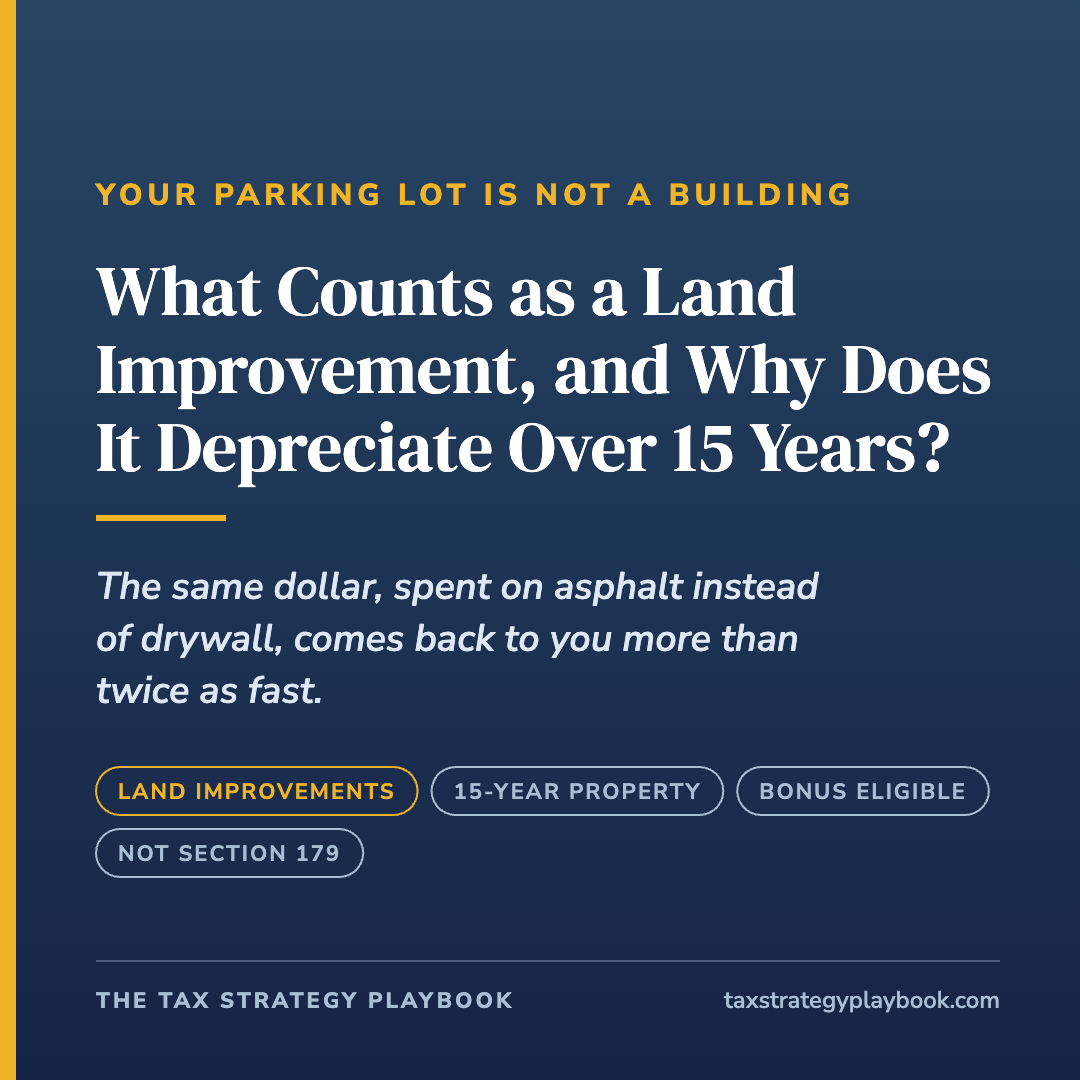
What Counts as a Land Improvement, and Why Does It Depreciate Over 15 Years?
TL;DR: A land improvement is anything built on the dirt that is not the building itself. The parking lot, the sidewalks, the fence, the landscaping, the site lighting, the storm drains. The IRS puts those in their own asset class, separate from the …

Sept. 24, 2026
Can Startups Use the R&D Credit Against Payroll Taxes?
TL;DR: Yes, and it is one of the most overlooked pieces of money in the startup world. A qualified small business can apply up to $500,000 of federal R&D; credit per year against its payroll taxes instead of its income taxes. That distinction is eve…

Sept. 22, 2026
Why Mobile Home Park Cost Segregation Studies Yield 80 Percent Accelerated Depreciation
Running a cost segregation study on a manufactured housing community can unlock up to 80 percent of the purchase price in 15-year land improvements. By separating the land and infrastructure from tenant-owned structures, real estate investors can ma…

Sept. 17, 2026
Who Qualifies for the 179D Deduction Now That the Sunset Has Passed?
TL;DR: More people than you would guess, for years to come. Congress ended new 179D eligibility for projects that begin construction after June 30, 2026, and that date is behind us. But the deduction did not vanish on July 1. Buildings that started …
Sept. 16, 2026
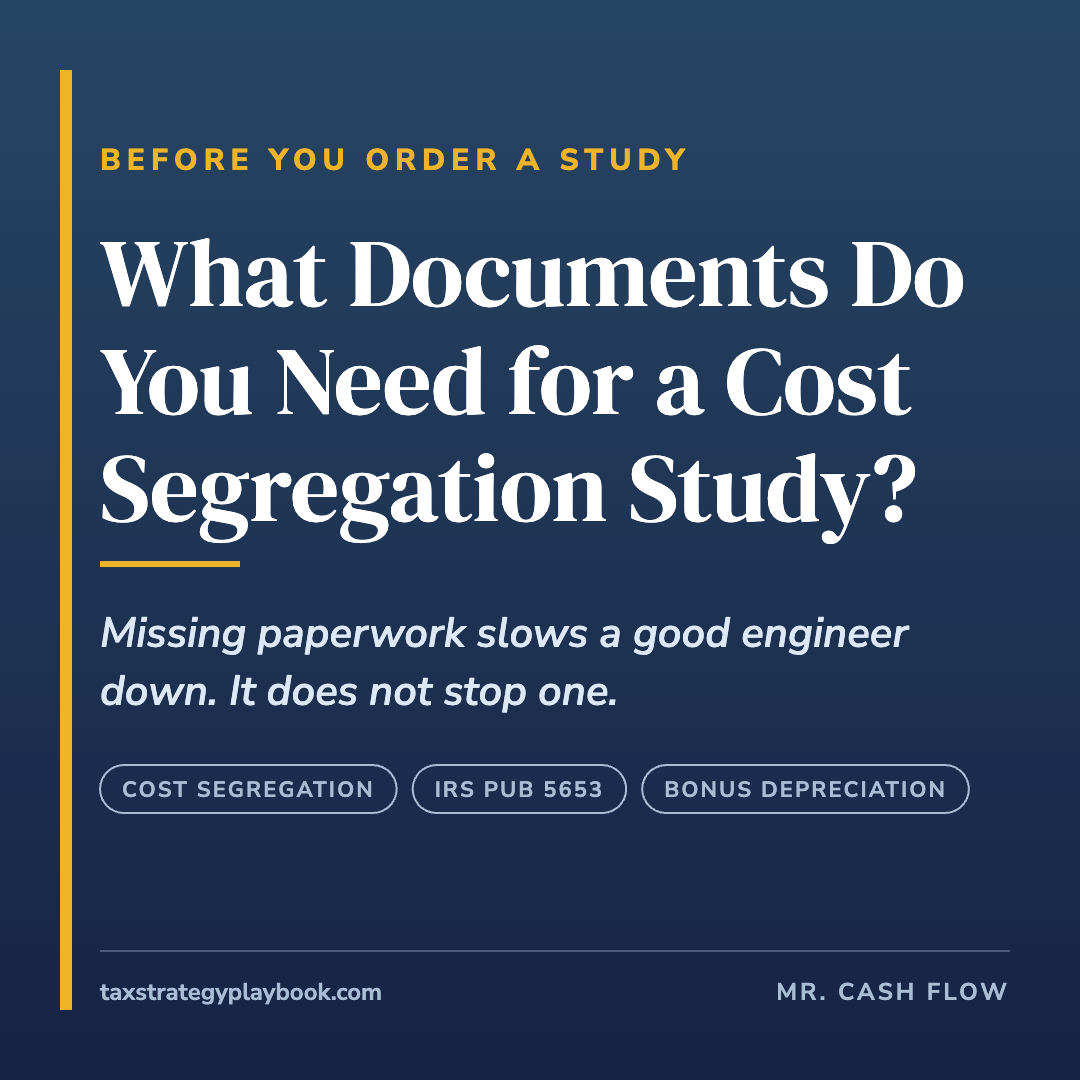
What Documents Do You Need for a Cost Segregation Study?
TL;DR: Less than most owners fear, and none of it to find out whether a study is worth doing. What documents you need for a cost segregation study depends on how the building came to you. Buy it, and the closing statement and purchase agreement carr…

Sept. 10, 2026
What Happens When You Sell a Property After Cost Segregation?
TL;DR: You pay some of the benefit back through depreciation recapture, and you keep the rest. Depreciation you claimed on reclassified 5, 7, and 15-year components gets taxed on sale, some of it at ordinary income rates, while regular building depr…

Sept. 8, 2026
Is Solar Still 5-Year Property? What Changed for Projects That Started After 2024
TL;DR: Congress removed solar and wind from the five-year property list for anything that began construction after December 31, 2024. A separate five-year route is still open, but it runs on a different clock and a different set of definitions. Clea…

Sept. 8, 2026
Why You Must File IRS Form 3115 for Missed Rental Depreciation
IRS Form 3115 is the ultimate mechanism for real estate investors who bought properties years ago and never performed a cost segregation study. This four-page document allows you to catch up on every missed dollar of accelerated depreciation in a si…

Sept. 3, 2026
Does Cost Segregation Trigger an IRS Audit?
TL;DR: No. There is no evidence that a properly done cost segregation study raises your audit risk, and the IRS itself publishes a guide telling its examiners how to review one, which is about as clear a signal as you get that the agency considers c…
Sept. 2, 2026
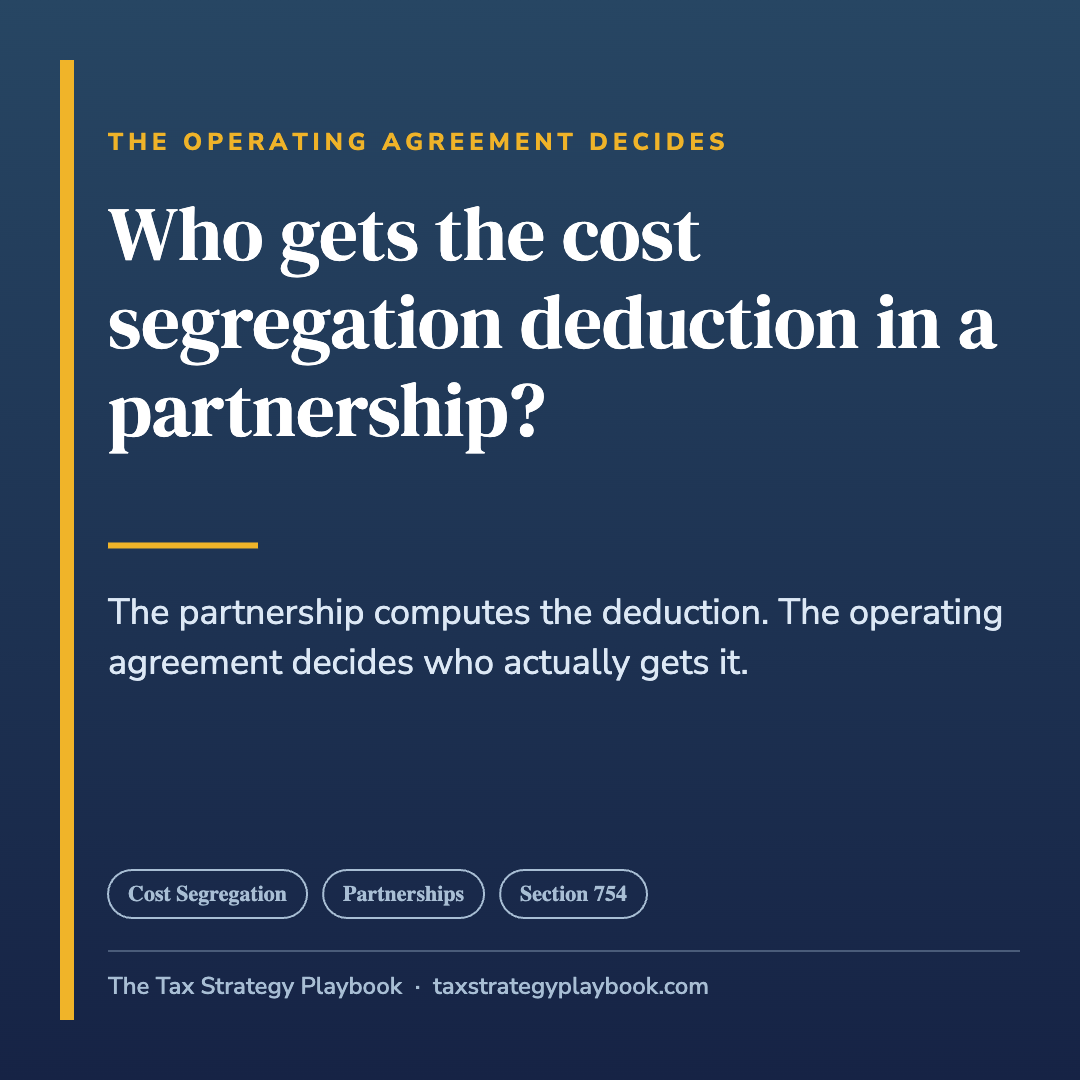
Who Gets the Cost Segregation Deduction in a Partnership?
TL;DR: Nobody at the entity level. Who gets the cost segregation deduction in a partnership is answered by the operating agreement, which splits the depreciation and sends each piece out on a K-1. Whether a partner can actually use their piece is a …

Sept. 2, 2026
Solo 401k vs SDIRA UDFI Rules: Which Account Avoids Real Estate Taxes?
Using retirement funds to purchase real estate through a non-recourse loan can trigger Unrelated Debt Financed Income (UDFI) in a self-directed IRA. However, real estate investors can completely sidestep this complex tax liability by utilizing a sol…
Aug. 31, 2026
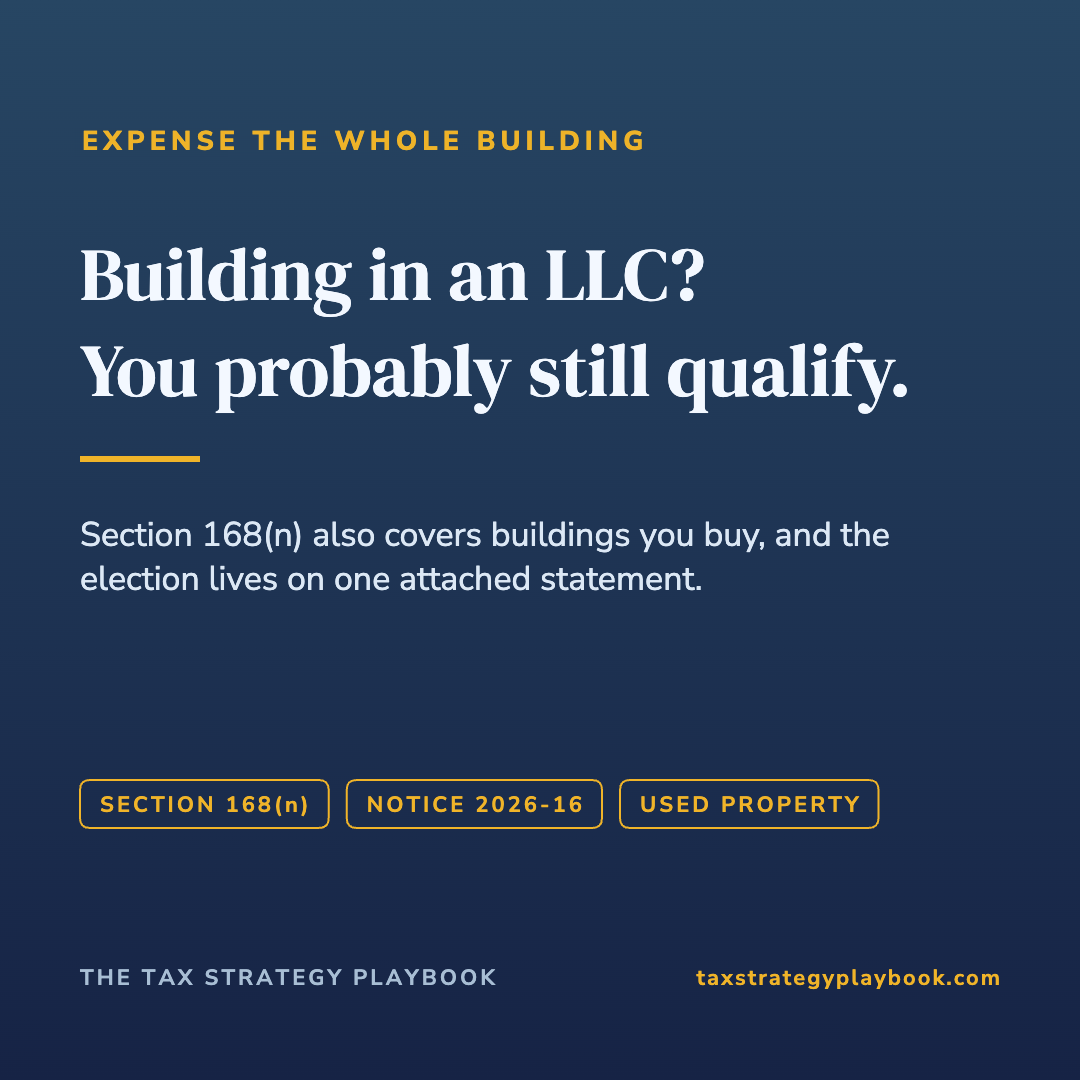
The 95 Percent Line Between Expensing Your Whole Factory and Carving It Up
TL;DR: Section 168(n) lets a manufacturer expense the building itself, not just the equipment inside it. IRS Notice 2026-16, released February 20, 2026, explains how. Buried in it is a 95 percent de minimis election. Clear 95 percent of "physical sp…

Aug. 27, 2026
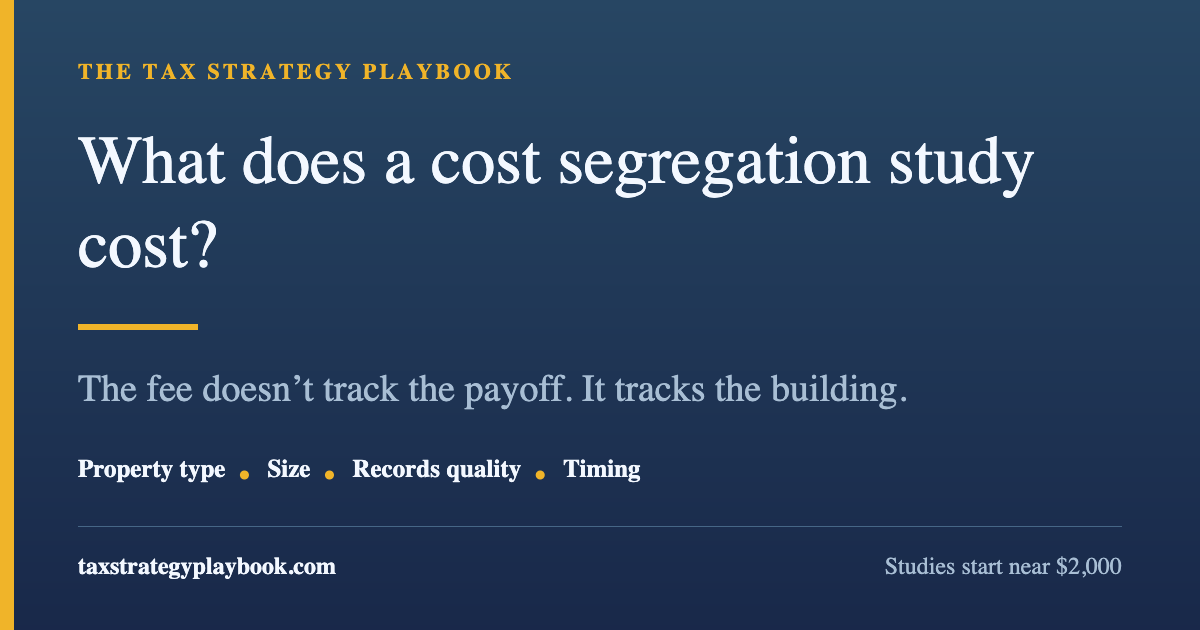
What Does a Cost Segregation Study Cost? (And How to Know If It Will Pay for Itself)
TL;DR: Most engineering-based cost segregation studies cost between $2,000 and $6,000 for residential rental properties and $5,000 to $15,000 for commercial buildings, with large or complex properties running higher. The fee for any specific propert…

Aug. 21, 2026
How Far Back Can You Amend a Tax Return? The IRS Deadline, and the Rule That Beats It
TL;DR How far back can you amend a tax return? Generally three years from the date you filed the original return, or two years from the date you paid the tax, whichever is later. The IRS calls that the Refund Statute Expiration Date, and when it pa…
Aug. 19, 2026
How to Read a Cost Segregation Proposal Before You Sign It
The short version. A cost segregation proposal is a scope document with a price on the bottom, and the price is the least useful thing on the page. Two firms quoting the same building can be selling two different work products. What separates them i…

Aug. 18, 2026
Cost Segregation Audit Support: How to Build the Ultimate IRS Compliance Folder
When the IRS requests proof for a high-value real estate tax deduction, having an organized audit compliance folder separates a minor paperwork review from a major financial penalty. Discover the exact five documents you must assemble today to ensur…
Aug. 8, 2026
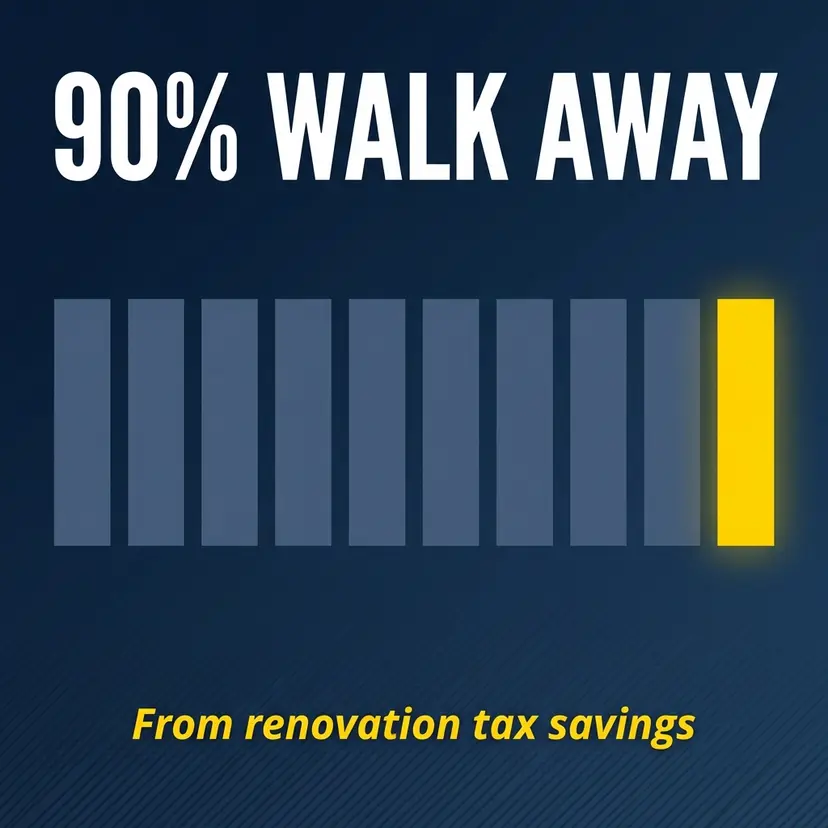
How to Turn a Renovation Into a Tax Strategy: A Step-by-Step Guide to PAD and QIP
TL;DR: Commercial real estate owners who renovate without using Partial Asset Disposition (PAD) and Qualified Improvement Property (QIP) are overpaying taxes on work they've already done. PAD lets you write off the remaining basis of components you …
July 23, 2026
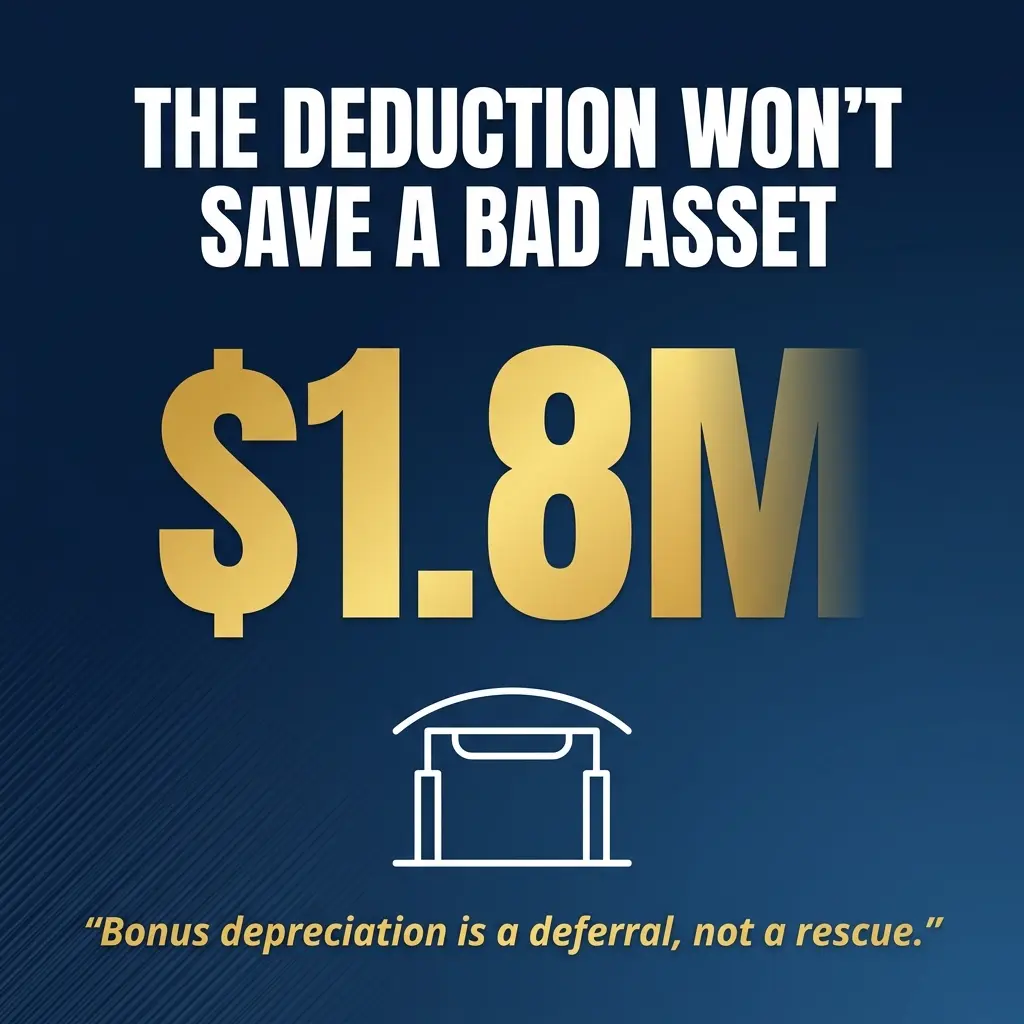
The Carwash Tax Advantage Is Real. The Deal Still Has to Work.
TL;DR: The One Big Beautiful Bill Act permanently restored 100% bonus depreciation in 2025, and carwash properties are built to take full advantage of it. These assets regularly qualify for large first-year tax deductions through cost segregation. A…

July 21, 2026
Cost Segregation Look-Back Studies: How to Recover Depreciation Years Later
A cost segregation look-back study allows real estate investors to recapture years of missed accelerated depreciation without amending prior tax returns. By identifying and reclassifying building components into shorter recovery periods, such as 5, …

July 15, 2026
One Year After the One Big Beautiful Bill Act: What Commercial Property Owners and Business Leaders Need to Know Now
TL;DR: One year after the One Big Beautiful Bill Act was signed into law, three tax strategies need your attention now: 100% bonus depreciation is permanent, R&D expensing is back, and Section 179D has a cutoff date that's already passed. Some deadl…

July 14, 2026
Bonus Depreciation Is Back at 100%, But Your State May Not Have Gotten the Memo
TL;DR: Federal 100% bonus depreciation is back permanently. But more than half of U.S. states don't recognize it, which means a strategy that saves you six figures federally can quietly create a real state tax bill in the same year. Knowing your sta…
July 10, 2026
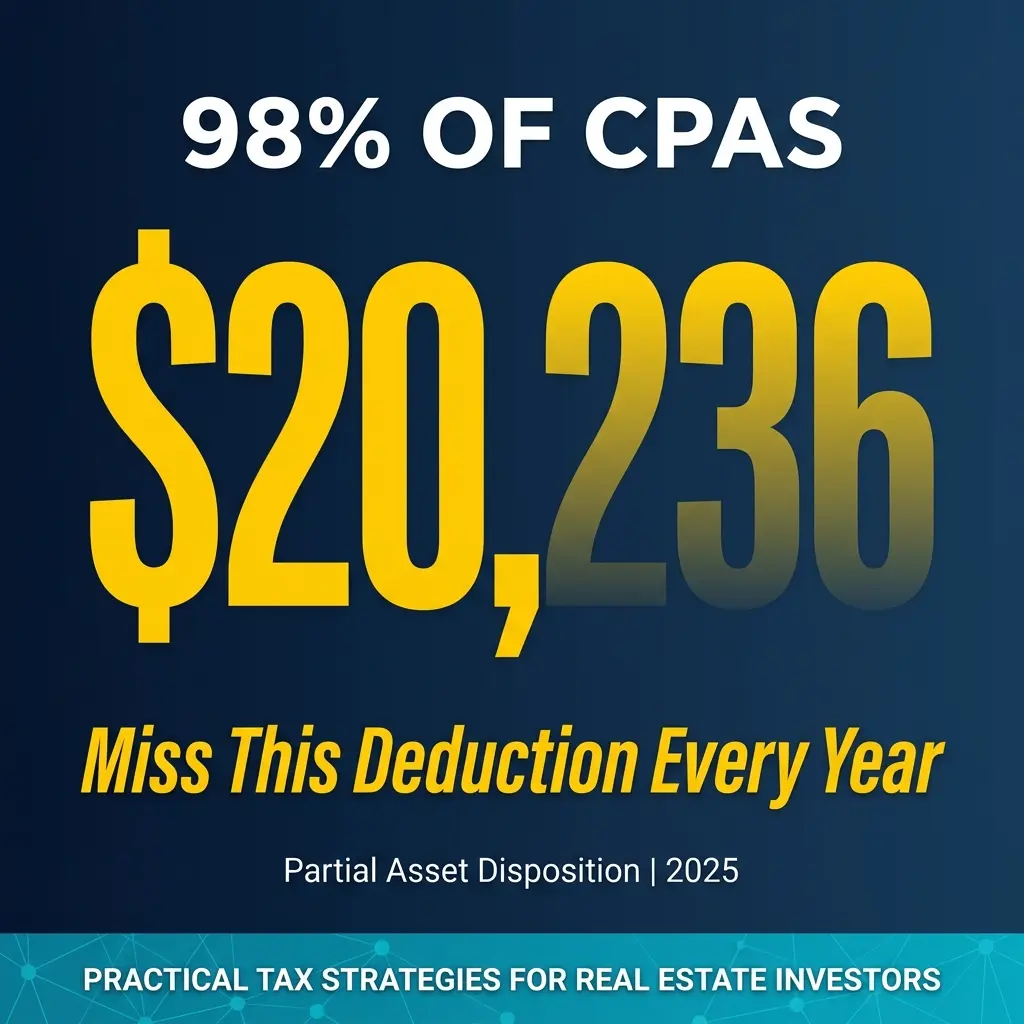
The Tax Deduction Most CPAs Never Mention - PAD
TL;DR: Partial Asset Disposition (PAD) is a tax election that lets real estate investors, both residential rental and commercial, write off the remaining basis of building components like roofs, HVAC, flooring, and plumbing when those components are…

July 7, 2026
Maximizing Real Estate Tax Benefits: Cost Segregation Synergy with Opportunity Zones
Discover how to supercharge your real estate investments by combining the powerful tax deferral of Opportunity Zones with the accelerated depreciation benefits of cost segregation studies. This post breaks down the strategic advantage of this often-…

July 2, 2026
The Complete Guide to Cost Segregation for Real Estate Investors (2026 Edition)
TL;DR: The One Big Beautiful Bill Act (OBBBA), signed in 2025, restored 100% bonus depreciation permanently for property both purchased and placed in service after January 19, 2025, with a cost segregation study. Property purchased before January 19…